In the spirit of Wimbledon, which began this week, I present a short story I wrote a decade ago, but have recently updated. Enjoy. And get out there and play tennis this summer.
The reinvention had to start with a new dynamic tennis story for Chet. In the past, Chet inhabited the role of a tennis scrapper, hustler, plodder, an indefatigable human backboard who wore down high school opponents like the Europeans always wore down the Americans on clay. Most high school players had no patience, no staying power on the court. That’s why so many scores were 7-6, 6-love and why Chet won most of his matches 2-6, 7-6, 6-love. He knew if he could hang with an opponent into the third set, he would always win. He always outlasted them. He did not have the tennis talent (or desire) to do this at the collegiate level, there was never any pretense about that, but in high school, the strategy took Chet a long way, to a 17-4 record in league and a fourth seed in the district tournament.
But that scrapper role was now history and Chet detached from it with perfect serenity. Chet knew he must assume a new role, the world beater in American culture, Mr. Love’s favorite obsession to teach about in class…Huck Finn, Sal Paradise, Thoreau, The Ramones, Jackie Robinson, Walt Whitman, Rachel Carson, Ida Wells, Upton Sinclair, early Elvis, early Brando, Orson Welles, Muhammad Ali, Lyndon Johnson and Jack Kramer. One of the books Chet read thoroughly for his project was Kramer’s autobiography, The Game: My Forty Years in Tennis. In fact, Chet could hardly put the book down. What interested him most was Kramer’s vivid retelling of his relentless lead role in the creation of professional tennis in the farcical era of amateurism. Jack Kramer had been a world beater in the finest American tradition, and his merry band of professionals barnstormed the world to places such as La Paz and Khartoum and played exhibitions in ice rinks and airport hangars with mosquitoes, nose bleeds and hangovers. In two decades, Kramer and company busted the ancient monopoly of tournament tennis and ushered the sport into the television age. There had been nothing like it in the history of professional sports and Chet knew that Jack Kramer, above all others, was responsible for the spectacular rise of tennis in America because he took it out of the elite clubs and into the city parks.
My new role, Chet envisioned, will also initiate a return to when tennis reigned, wood was king, American was thin, someone like Jimmy Carter could become President, when The Inner Game of Tennis was a monster bestseller and the basis for a PBS series, and when young boys would ride their bikes to the park, play tennis for hours while listening to Earth Wind and Fire and Stevie Wonder on the radio, and not need a hovering parent fretting over sunburn, dehydration, or obscene lyrics.
Chet reached into his bag, searching for something by feel. He found it. The Jack Kramer Autograph—the M-1 rifle of American tennis for almost two generations. He hoisted the racket aloft by its leather grip, then twirled it. He lowered the racket and moved his hand to its throat. He brought the racket to his noise and smelled: it smelled like wood, even after three decades of dank garaged exile! It was wood! This racket’s material had once been a stately hardwood tree grown from a seed! From the earth! What an exquisite piece of craftsmanship, of metaphor, a maple and ash laminate, lacquered, stamped with “Made in the USA” on the top of the frame. Chet swung a couple of lazy forehands with the Kramer. He had never hit with it before. The thought had never occurred to him.
In the spirit of Wimbledon, which began this week, I present a short story I wrote a decade ago, but have recently updated. Enjoy. And get out there and play tennis this summer.
Love-6, love-5. Changeover. Chet had won one point in the two games, a double fault when his opponent went for and missed a second serve ace by an eighth of an inch. As they switched ends, Chet’s opponent went directly to the fence and started laughing with his harem, an assemblage now swelled in numbers and attractiveness. He kissed one of the girls and another let him listen to a special song on her phone.
Chet sat down. It was over. His high school tennis career was over and he was finishing it losing love and love, totally alone, in a humiliating public arena. He reached into his bag looking for a solid candy bar and instead found Tricia’s unopened card. He pulled it out and tore open the envelope. Tricia had painted a watercolor tennis scene on the cover. Inside, she wrote, “Good luck at district. I wish I could be there.” Chet put the card back into the envelope. He went back into the bag for the candy bar. Instead, he pulled out a hardback book, The Inner Game of Tennis. Chet had skimmed it recently for his history project for Mr. Love’s American Civilization class, which entailed researching some lost aspect of American popular culture, collecting its artifacts, writing a ten-page paper, and making a presentation to the class utilizing the artifacts. The working title for Chet’s project was “The Rise and Fall of Tennis in America” and it was a historical study of tennis’ meteoric rise in popularity in the 1970s, the Studio 54 days of golden rivalries between Connors, McEnroe and Borg, the sexy placid domination by Chris Evert, the feminist landmark when Billie Jean King routed Bobby Riggs in the Battle of the Sexes on prime time television while Howard Cosell provided color commentary, when the Rolling Stones played, when Virginia Slims cigarettes sponsored the women’s pro tour, when the New Yorker routinely ran long fact pieces on tennis.
Mr. Love had suggested the topic to Chet and Chet was enthusiastic about it, but unsure what constituted tennis artifacts, or where he would find them. To this, Mr. Love said, “Go to thrift stores and notice patterns.” He also told Chet to discover the identity of the last male or female tennis player to win a Grand Slam singles event using a wooden tennis racket. This information might prove interesting to include in the paper, perhaps in the form of a trivia question in the opening paragraph.
Several weeks ago, Chet and Tricia had driven to Portland in her brown Pinto and hit ten thrift stores and it had been the best fun time of his life. After three stops, patterns emerged: the stores were full of wooden tennis rackets, many screwed in their presses, and also full of tennis instruction books, many never opened. Further patterns emerged: one racket model dominated—the Jack Kramer Autograph; one instruction book dominated—The Inner Game of Tennis. Jack bought a Kramer in mint condition for $5 and a heavily annotated The Inner Game ofTennis for $1.
Chet barely cracked the book and was certain the it would not end up in his paper’s bibliography. But now, The Inner Game of Tennis rested in Chet’s hands during a changeover with Chet behind love-6, love-5. He opened it at random and read one of the underlined passages, “Observe how you feel if you fail.” He turned to another page, “Only when the mind is still is one’s peak performance reached.” Then another, “It is a painful process to fight one’s way out of a deep mental groove.” And finally, “Let the flower grow.”
Chet observed his failure: there was no one who cared for him watching his last match as a high school tennis player. Chet stilled his mind: he heard nothing but the distant sound of a crow upset at something. Chet considered his pain: his reclusive groove was Crater Lake in depth, totally unknown in origin to him, and about ready to ruin his adulthood. He thought about a flower growing: could one actually burst forth from underneath the court he was now losing everything on? Chet thumbed the book’s pages again and came across a double starred passage: “Habits are statements about the past, and the past is gone.”
And just like that, Chet knew he must let go of everything he was as a solitary, yet successful young man, and pedestrian, yet successful tennis player. He did not care so much about the tennis but he did care about his family and Tricia and he was tired of being alone most of the time, a habit he orchestrated with superb clandestine skill all throughout high school.
Yes, it was time to let all of that go. It had never served any useful purpose. It certainly did not attract friends or dates, except Tricia, who had asked him out during journalism class in the winter, and later told him she did so because he had some mysterious loner quality that attracted her and it was the antithesis of the football jock she had recently broken up with. She was on the swim team and Chet loved sitting by himself in the bleachers while watching her freestyle in the humid Fir City Swim Center. She made it to state that winter, in three events, but Chet did not drive the hundred miles to see her compete.
Tricia as girlfriend had been a fluke winner, he was a perpetual mishit, and he knew now, at the moment of his competitive disintegration, that he must entirely reinvent himself as a human being. He had approximately a minute to do it because how he faced his greatest opponent in the last game of the last set of the last match of his high school career was the beginning of it all.
In the spirit of Wimbledon, which began this week, I present a short story I wrote a decade ago, but have recently updated. Enjoy. And get out there and play tennis this summer.
To this point in the lopsided match, Chet had employed various futile strategies to disrupt his opponent’s game: chip, lob, dink, come in, stay back, serve and volley, going for the lines, hitting down the middle, delay between points, speed up between points. Chet thought up these various strategies himself. Officially, a coach existed but Chet had not bothered seeking him out. The coach knew nothing about tennis, had never played the game, was morbidly obese, taught strength training and team sports in the school’s two fat-men physical education department, and only took the job for a few extra dollars and because the team needed an adult supervisor and no one on staff at Fir City High School knew anything about tennis—except Mr. Love—nor ever would since tennis had fallen so far out of the public’s imagination as a recreational sport or popular culture phenomenon since its heyday in the 1970s. About all the coach ever said to his players in embarrassing blowout moments such as these amounted to yelling, “you gotta suck it up!” or suggest drawing upon “intestinal fortitude.”
Who or what had created this youth tennis machine? Chet’s opponent seemed more the product of the Soviet Olympic bureaucracy or a sports apparel conglomerate sponsorship than a teenager from Oregon, a state hardly known for stellar tennis. Who was this kid? Before the district tournament, Chet had never heard of him. No one had. He came in unseeded, affiliated with a private Catholic high school not a member of the Timber Valley League. After the machine dispatched his first two opponents 6-love, 6-love while still wearing his warm-ups, a few enterprising players did some phone work and discovered he was ranked number one in the Pacific Northwest, had won the Washington boys’ championship in the fall without dropping a set, and then moved to Oregon so he could win the spring high school state tournament and thereby pull off a double victory heretofore unknown in the annals of Pacific Northwest youth tennis. He had quasi-legal endorsement deals from a dozen companies, a publicist, and a full tennis ride to any university in the country, although he was quoted in the press as saying he wanted to attend Stanford, at least a year before turning pro. He had Instagram sponsorship. He was a sophomore.
Before Chet sat down, he scanned the crowd. All his teammates had been eliminated in the early rounds and had rushed off to fast food jobs, get high or play video games. He did not see a familiar face: not his girlfriend Tricia, Mr. Love, his sister, mother, step father, father, step mother, or his last surviving grandparent, his beloved grandfather who introduced him to tennis while the other kids attempted the x-treme games they worshipped. Chet was not surprised by this collective absence. It had always been this way at his matches and it was all his fault. He never expressly told people not to come watch him play. Rather, he said things like, “Well, I know you have to work…it is a long drive to the match and that traffic is terrible…It is going to be a blow out…It will cost a lot of gas…I do not know when I am going to play and I do not want you to wait around…it is probably going to rain…”
And so on. Because Chet commanded respect from his family for his integrity, intelligence, hard work, straight A’s, and independence, which manifested in his propensity to seeing movies or eating restaurant meals alone, they left him alone, and never attended the matches, even the big ones, like the quarterfinals of the district tournament in Chet’s senior year. The family had always been a bit detached when it came to emotional support, but the love and allegiance were there. Just everything was implicit.
Tricia was absent too and that was also Chet’s fault. She wanted to come, but Chet undermined the idea. She even offered to give him a ride to the tournament site. If ever there was an adjective to best describe Tricia, it was taciturn, and when Chet said that she would be bored waiting around the complex for hours until he played, that it would waste her time, that he wanted to drive to the tournament alone to prepare himself, Tricia did not respond and gave away nothing in her face of the tremendous rejection she had received. She wished him luck and gave him a card.
I’m not sure why, but tennis keeps infiltrating my mind I’ve watched tennis film documentaries and read tennis books. I see tennis metaphors everywhere. I haven’t played in years but want to pick up the game that was once a major part of my life.
In recent months, I’ve written about tennis in poetry, fiction and memoir. Here are some excerpts:
Poem:
Most of these courts are gone now,
gone to seed, skateparks and the smartphone,
They’re never coming back,
but I am grateful I met you that way.
Short Story:
Several weeks ago, Chet and Tricia had driven to Portland in her vintage brown Pinto and hit ten thrift stores and it had been the best fun time of his life. After three stops, patterns emerged: the stores were full of wooden tennis rackets, many screwed in their presses, and also full of tennis instruction books, many never opened. Further patterns emerged: one racket model dominated—the Jack Kramer Autograph; one instruction book dominated—The Inner Game of Tennis. Jack bought a Kramer in mint condition for $5 and a heavily annotated The Inner Game ofTennis for $1.
Chet barely cracked the book and was certain the it would not end up in his paper’s bibliography. But now, The Inner Game of Tennis rested in Chet’s hands during a changeover with Chet behind love-6, love-5. He opened it at random and read one of the underlined passages, “Observe how you feel if you fail.” He turned to another page, “Only when the mind is still is one’s peak performance reached.” Then another, “It is a painful process to fight one’s way out of a deep mental groove.” And finally, “Let the flower grow.”
Short story:
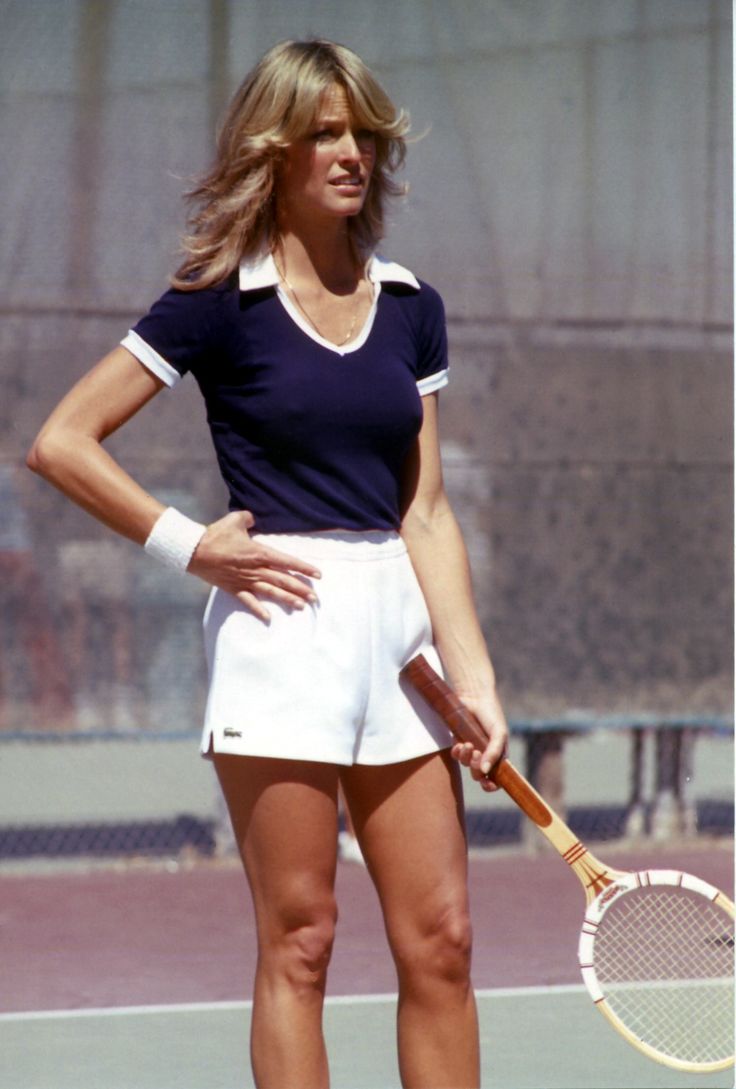
Once tennis reigned as America’s number one recreational sport. Now, it was pretty much dead all across the country. In the 70s, 35 million men and women took up the game, indoors, outdoors, city courts, private clubs, back yards, taking lessons, playing singles, doubles, mixed doubles, (oh the mixed doubles with strangers!) wearing shorts and skirts and panties, headbands, wristbands, velour pullovers, drinking white wine, smoking grass and swapping partners. Was there anything sexier in the history of American sporting life?
Memoir:
In my freshmen year, Oregon City belonged in the Wilco League with schools like Lakeridge, Lake Oswego, and Tigard, some of the best white collar tennis schools in the state. There was really no such thing as a best blue collar tennis school.
These schools had the best courts in the state, all newly surfaced with crisp nets. All their players were club members and played year round with professional coaches, traveling to matches around the region. All their players had multiple rackets and wore the finest Fila and Rossignol European apparel and tennis shoes. They had harems of teenage girls at their matches, where they routinely defeated us 6-0, 6-0 in 45 minutes or less, and that included the warm up. Once, the number one player from Tigard pulled up in a convertible sports car, an MG I think, and left the motor idling outside the court, won his match in a matter of minutes, and then drove away with his super model girlfriend, feathered hair somewhat blowing in the breeze.
It was a peculiar feeling getting your ass kicked every match, right out there in public, inside a galvanized fence. I did cry after one particular humiliation. There was just no way to beat them, let alone compete. They had it all and often laughed at us and our cheap gear and terrible form. I mean, we had player who whiffed first and second serves for the strangest double faults in tennis history!
Then, divine intervention from the merciful Gods of Tennis who wore nothing but all white. They surely saw us suffer and moved heaven and earth. It must have been Arthur Ashe, the compassionate graceful one, not the other American tennis assholes of my youth.
Oregon City switched leagues, out of the powerful old Wilco League and into the newly-established Timber Valley League. The Timber Valley League was comprised of rural Clackamas County timber and farming towns such as Molalla, Silverton, Estacada, Sandy, and Sweet Home.
Just like that, Oregon City was the best team in the league. I went something like 53-4 the next three years and made it to state my senior year, in doubles, where I choked in the first round, and never played competitive tennis again.
Memoir:
I used to play tennis with my dogs. We went through a lot of balls.
Memoir:
In high school, I took her on a date to play tennis, or rather I would try to teach her how to play tennis, and she whiffed on every single shot. I didn’t know if that was charming or a turn-off.
(If you found this post enjoyable, thought provoking or enlightening, please consider supporting a writer at work by making a financial contribution to this blog or by purchasing an NSP book.)
In Marcel Proust’s, Swann’s Way, the narrator “raised to my lips a spoonful of tea in which I had soaked a morsel of the cake.” Instantly, the character finds “exquisite pleasure,” forgets about life’s problems, yet wonders why the taste had made him so suddenly joyous. He asks: “whence did it come? What did it signify? How could I seize upon and define it?”
Today, this associative process is called a Proustian moment, and many of us experience these warm moments, because Proust felt, as an adult we sometimes come across a happy object from childhood.
My Proustian moment always comes whenever I toss a football.
Thirty-eight years ago on Thanksgiving, my family played the last of its Thanksgiving football games. No film, video or photographs exist of the event. It’s documented only in my journal I kept for my Beginning Journalism class at Oregon City High School.
It was a generational affair pitting the male cousins (Matt, Darin, and Kirt) versus the uncles (Karl, Dan and Dale) as Grandfather watched. It began in the early 1970s as a diversion from the boring half-time show of the Dallas Cowboys game traditionally broadcast on Thanksgiving afternoon.
The routine was: watch Detroit lose in the morning, gorge on a feast prepared by the women, watch Dallas play most of the first half, then at the two-minute warning, change clothes, toss the football around (the weather never mattered), play our 45-minute game on a muddy field, come back in, not change clothes, feast again, and settle into a game that invariably saw Cowboys’ quarterback Roger Staubach pull it out at the end.
As the years passed, the game evolved from a friendly Kennedy family photo op to an intense rivalry. Grandfather kept score as he prowled the sidelines, never cheering, thinking about pie for dessert, shooting bad photographs, and proud to see his brood on the field.
I played quarterback for the cousins and we lost every game, usually as a result of gimmick special teams plays or trick touchdown passes. We came close a few times, and after an especially aching defeat in 1978 when we lost on a Hail Mary with the score tied, we pledged right there on the field to go all out and win the next year.
That meant ratcheting up the seriousness of the game so that’s exactly what we did. We repeatedly talked strategy on the phone in September. In October, I recall at some family gathering Darin gave Dale, the younger uncle, a tube of Ben-Gay, saying “You’re going to need this when the next game over.” Dale didn’t think it was funny.
About a week before Thanksgiving, the cousins met and an incident occurred that made me realize just how serious we’d become in pursuit of victory. In a discussion on how to thwart Dale’s big-play capability, Darin set up a wooden folding chair, coiled into a perfect three-point stance, and announced, “This is what I’m going to do to Dale.” He then exploded into the chair, sent it flying into a wall ten feet away where it shattered into a half dozen pieces. We were in a church at the time.
It would almost be literature if I could write the game was close, hinged on a final play. I cannot. We blitzed the uncles from the opening kickoff and won 49-14 on a dry field at Ainsworth Park in Northeast Portland. We scored on every possession. We seemed faster, more into it. We never let up on the uncles as they had on us in the earlier games of the rivalry. When the rout concluded, we all shook hands, and I remember feeling great in a way that I had never felt before.
We headed back inside, I think the women might of asked “who won?” and the two teams gathered up a second big meal, and caught the rest of the Cowboys’ game.
In six months Grandfather would be dead from a heart attack, Darin off to college, my dad no longer part of this family’s holidays because of divorce, and I would get my driver’s license. We never played football as a family again.
I’m not wracked by nostalgia for the victory, my family as it existed then and a wish for an American era when Woody Hayes was important and where Lucy would have always let Charlie Brown kick the football. I give thanks every Thanksgiving for the reason that I know I’m very lucky to recognize the exact moment when I experienced the best of my youth. I know what it signifies. Rereading the journal entry recently for the first time in three decades, I think I even knew back in 1979.
(If you found this post enjoyable, thought provoking or enlightening, please consider supporting a writer at work by making a financial contribution to this blog or by purchasing an NSP book.)
Today, June 7, 2017 marks the 40th anniversary of the largest public gathering in Oregon history: the downtown Portland celebration one day after the Trail Blazers won the NBA championship that attracted 250,000 people.
I missed it all, by not skipping school in seventh grade at Gardiner Junior High in Oregon City. I’ve documented that sad story in my 2007 book, Red Hot and Rollin’, an anthology of essays, memoirs, primary sources, oral histories and photographs, that commemorated the championship.
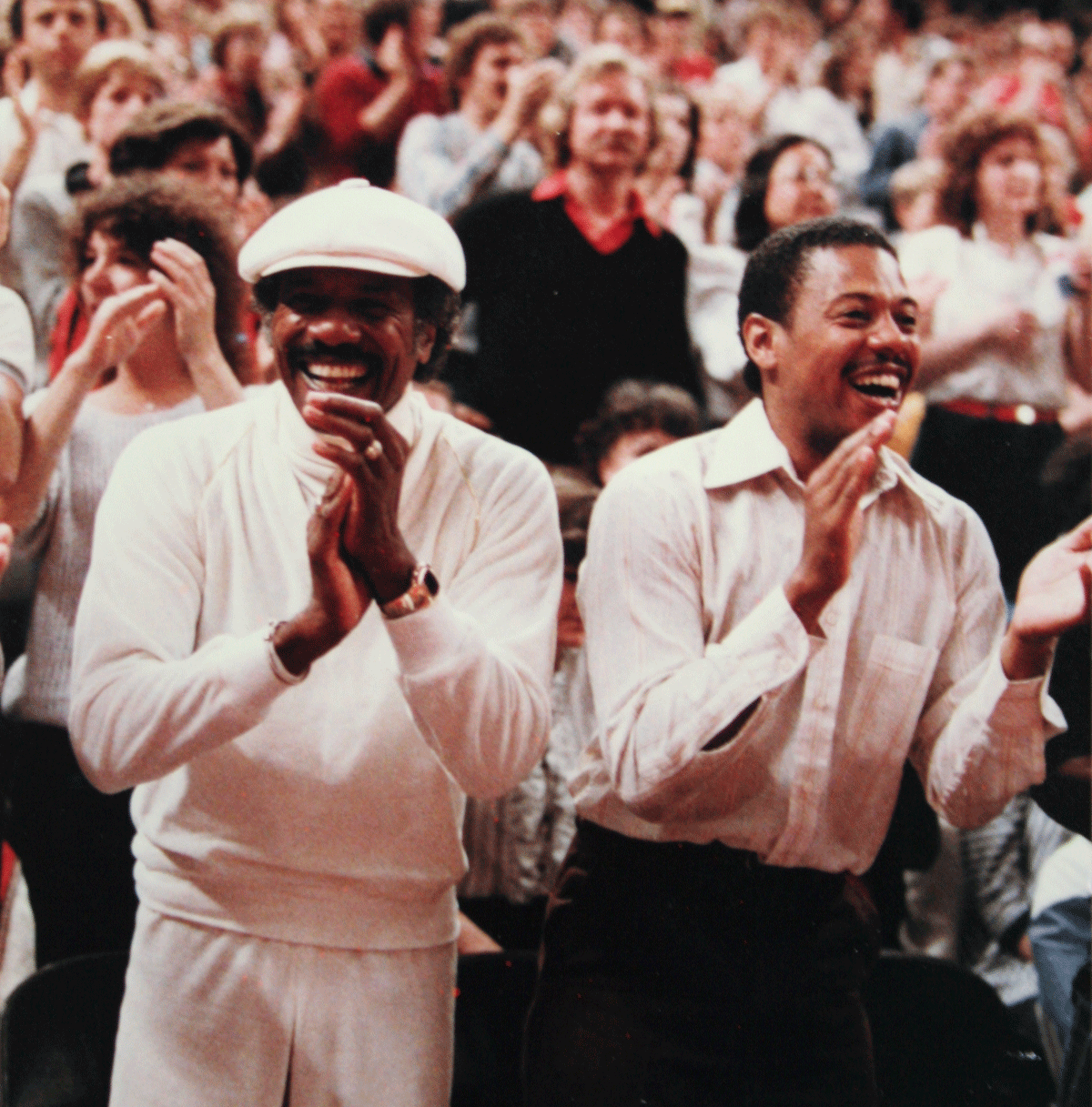
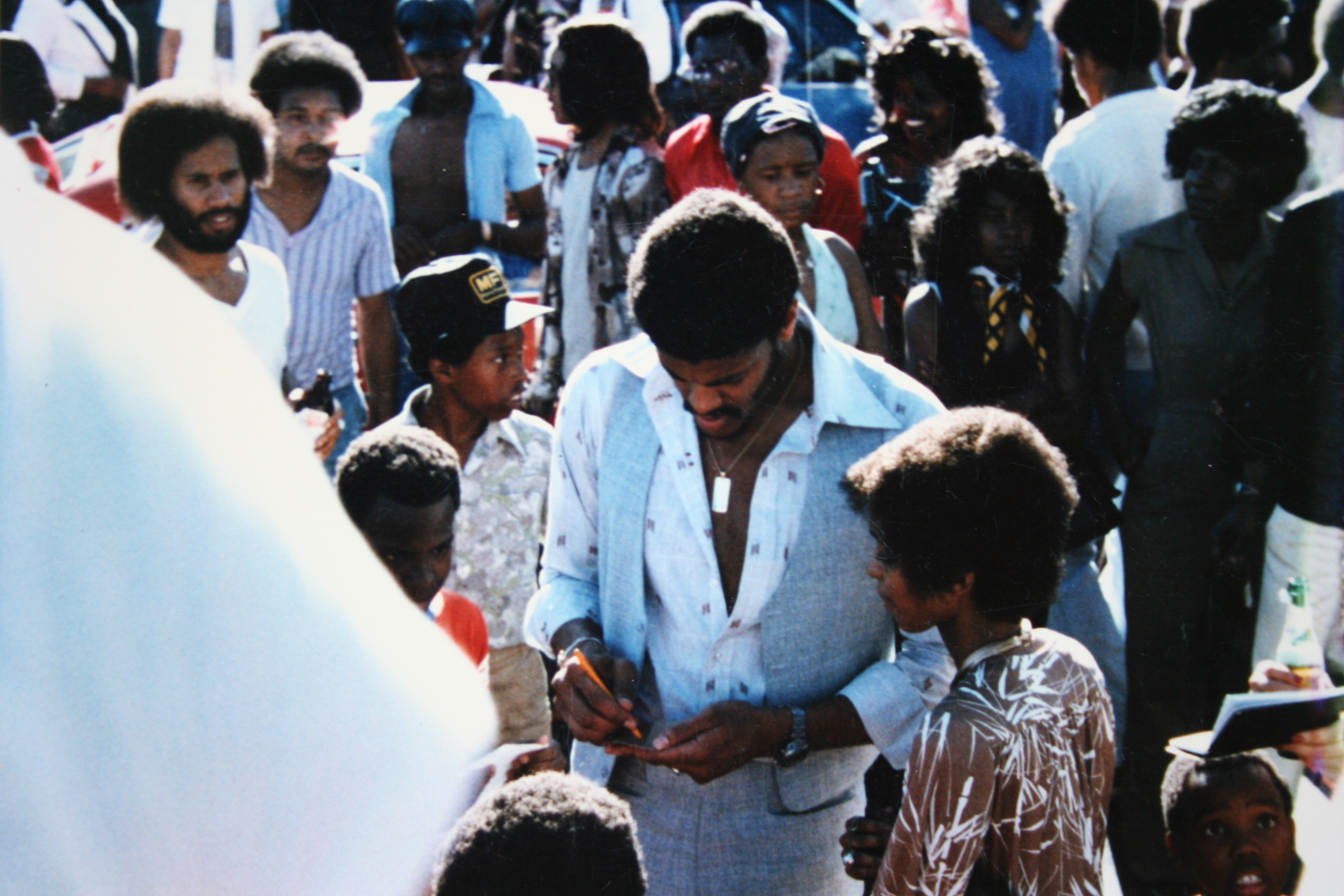
One of the oral histories was of Paul Knaals (pictured on left), a legendary figure in Portland’s African American community (still alive at 86 years old), who ran a nightclub called Geneva’s on Williams Ave. in 1977 and staged a legendary block party after the championship parade. His story of his incredible connection to the team from its founding in 1970 through that championship season was a highlight of the book and important, but overlooked part of African American history from that era. Paul was incredibly gracious with me during our interview at his hair salon, in the summer of 2006. I’ll never forget when he brought out the photo album, too. I put many of these mind blowing images in the book, but unfortunately, only in black and white. Well, in honor of that magical day 40 years ago, here is a reprint of Paul’s oral history, and some of photographs. Get down on this! Spread this post please. Even if you don’t like professional sports, read this and know this story isn’t really about sports.
Tickets
I bought my season tickets when drafted Walton in ’74 but before that I went to the games for free. When the team started in ’70, I went to (General Manager) Harry Glickman and says, ‘I run a club called Geneva’s and if you give me four tickets for every game I’ll bring some people to the game, every game. Get them interested. I could bring different people to the game and introduce them to the team.’ So he gave me four tickets. The seats were empty back then so why not?
In ‘72 he cut it to two. In ‘73 he gave me a press pass so I would sit down on the floor with the regular press guys, and bring my camera. Sometimes I wouldn’t even have film in the camera! In those days I would just sit with my legs crossed and pretend I was taking pictures. It didn’t matter. I just wanted to be at the game. Then they drafted Walton and that’s when I got my season tickets, in the second row, behind the basket. I knew getting into the game was going to be tougher.
Geneva’s
I purchased Geneva’s in 1968. My wife and I did. It was called Bess.’ We changed the name to Geneva’s. I named the club after my wife, Geneva. We went in and started our operation. We did some remodeling. Put down new carpet. It became popular, very popular, very fast. The Blazers were pretty popular with the black community in those days because the guys came around to the club. All the fellas would come around and people got to know them and that made it okay. Tanqueray really took off at this time. Tanqueary with grapfruit juice or Tanqueray straight. I went through tons and tons of the stuff that year. It was always Tanquerary. I don’t know if people just liked to say it, Tanquerary, sounds nice, don’t it?
We had another night club called the Cotton Club. And I had another bar named Paul’s. So I had three bars on this side of town with three distinctly different clienteles. The swingers went to Cotton Club. The working man went to Paul’s. And the uppity ups came to Geneva’s. I had to have a little dress code in Geneva’s.
Bill Walton
The dress code went well until Bill Walton started coming in. He was a hippie and all of his people were hippies and they would come in dressed any old way. He started coming in the second year he was in town, the year he was hurt. That’s where he hung out, at Geneva’s. I had seen Bill at practice, been watching him after he got hurt, and I said, ‘Bill, I got a bar called Geneva’s and nobody ever heard of a bone spur. You come in there, and it will be a situation where no one will even talk about basketball. They just want to talk with you.’ Two weeks later, I was back in the office and my barmaid called. Ruby says, ‘Mr. Knaals, there’s a reeeeeeal tall red headed white guy out here…’ I knew it was Bill and I went up to him and said, ‘Hey Bill. how you doing? Welcome.’ He had put on some weight, probably 240, because he wasn’t playing. So I introduced myself again and we talked a bit. And then later that night he came back in with 8 or 10of his people, hippie people, with all their backpacks. It was they who started all this backpack stuff. Everyone got one now.
So Bill came back and everyone says, ‘How come we got to dress when they don’t have to dress?’ So I says, ‘I guess you don’t have to dress no more because this is Bill Walton’s spot now. He ended the dress code! Bill drank Budweiser. That’s why he got that gut. No hard alcohol at all. He used to ride his bicycle over to the club in the day time. The black community loved Walton. They never gave it to him about not playing like the news media and white people did.
Geneva’s Soul Express
Well, the story of the Geneva’s Soul Express is, there was a bar on 14th called the Pantry and the owner had a bus, a little one like what carries senior citizens around today, and he was taking people to the games. I called him and asked him how the bus thing works. He says, ‘It’s the greatest thing in the world. Everybody comes in the bar, has dinner first, then rides to the game, then comes back, drinks.’ So I was watching this old bus on the lot at Coast Janitorial Service and went in and says, ‘Mr. Scott, you don’t really use that bus, how much you want for it?’
‘$1500.’
‘Okay, I am going to go get the money and you have the title ready for me when I get back.’
So I got together $1000 and I came back and says, ‘Mr. Scott, I got your money.’
‘Okay, Paul Knaals, count it out!’
So I count out ten $100 bills. He says, ‘Where’s the rest?’
‘Mr. Scott, you haven’t used that bus in two years. It’s just sitting on your lot. I got the money right here.’
‘Paul Knaals, you are too much! Okay.’
I had it painted up, and put the name Geneva’s Soul Express on it. I drove it every night of a game. I left work early to go home and change, then I’d pull up to the bar in the bus and call out, ‘Soul train rollin!’ and everybody would get up and go out there. The bus carried 28 people and was always full. I would pull the bus right up in front of the Coliseum, then park. There were only a couple of buses at first doing this, then four, then five, then more. Then a guy out who owned a club out on 82nd called up and asked how it all worked. So I told him. He got a bus, painted it the same color as mine and called it the Harvest House Express. Then one night, we got on our bus after the game, and there was this white guy sitting there, backing the back, and I took off, and we got half way to Geneva’s and he says, ‘You know what driver? I think I got on the wrong bus!’ I says, ‘Too late now brother, we not stopping til we get to Geneva’s! So he came in. He had fun, man did we have fun in Geneva’s that night. And I finally says to him, ‘You need a ride? He says, ‘Yeah.” So I got my car and gave him a ride home out near 82nd. After that, every now and then, he would just come to Geneva’s and park his car and he’d ride down with us and ride back.
The Playoffs
I traveled with my wife and some other people to the away playoff games. At Denver, when David Thompson missed those two free throws to send it into overtime, we were beating on the air conditioning ducts because we were way up top and you could hear the ducts, that pounding sheet metal sound. It was all you could hear.
Once we beat LA four in a row, I knew we were rolling.
When they played the championship series, I got a call and they said we’re going to Philadelphia for the games, so we signed up to go. And we got out of Portland on Thursday morning, the game was Thursday night. We lost that game and then the next one on Sunday. And everyone there was saying, ‘You guys are from Portland right? Answer me this: Why you fly all the way here, all that way, and you lose?’ So I started making some bets, in a bar we were at. I says, ‘Hey we’re going to win the championship. I can guarantee you that!’ So I start making drink bets.
When we flew back to Portland after the second game, the Philadelphia team was on the same plane. Dr. J, Darryl Dawkins, and all the guys, and when we got in that night, Dawkins came into the club. He was only about 19 at the time but I wasn’t going to kick him out. So I says, ‘Darryl you can’t drink.’ No I know he’s going to drink but I got to tell him anyway. So I had a little guy who was my doorman, and he was about 5’ 7,” kind of stocky, and I says, ‘Tim, I want him (Dawkins) out of the bar. He’s too young to be in here. I want him out of the bar.’
‘Which one?’
‘That guy in the corner.’
So he goes over to look at him and he comes back and says, ‘Mr. Knaals, you mean that big guy over there in the corner?’
‘Yeah, I want him out of here.’
‘I’m sorry, I’ll just have to quit my job because I can’t put him out.’
‘That’s okay Tim, that’s Darryl Dawkins and he plays for Philadelphia. I was joking.’
Dawkins tipped someone $20 that night, which was like $500. A lot of Sixers came in during the series. Even Dr. J.
The Party
The night before game six, I knew we were going to win, so I’m thinking, ‘We are going to need some barricades because I am going to barricade the street (Williams Ave)’ So I went down to seventh and Knott and they were doing some construction, and I took two barricades that weren’t going to be dangerous to anyone if missing from the construction site. I came down with the truck and loaded them up.
Everybody knew that if we won, there was going to be a party at Geneva’s. After the game, I came to the bar and the street started getting full and I put the barricades up. That was about three o’ clock? I did it myself. About 3:30 or 4, Mayor Neil Goldschmidt came by and he couldn’t get through. He was coming up to the club. And I went down and says, ‘Neil, how out doing? C’mon through.’
‘Paul, what are you doing with these barricades up here?’
‘Neil, you don’t want cars going through here. Look at all these people on the street!’
So he gets on a radio and called down and told the police to get some more barricades out here. He didn’t want anyone getting killed.
There was a party planned downtown but nobody went there. They came to my place. Then the media found out and all the television stations showed up. We opened up the street to let them come up and they got to partying and then asked us to whoop it up whenever they started filming. Everybody was screaming.
The night before I had a guy, he called himself Mr. Sweet Meats, set up for food. I says, ‘If we win the championship tomorrow, if you set up and we don’t win, I’ll pay you $25, and if we win, you’re on your own.’
And we won and people were out on the street buying everything. I had Mr. Sweet Meats selling hamburgers, hot dogs and sausages. We had another stand with popcorn. One woman had cooked a roast for Sunday dinner but she just came down and cut the roast up with bread, mayonnaise and sold sandwiches right there on the street.
There was a church just adjacent to Geneva’s on the next block, so when church let out, they just walked right over and started partying. A friend of mine, Lloyd Allen, was into music. And he had his friend bring a RV down, and they set up some music on top of it. People were out in the street dancing the Blazermania, you know, when you put your hands over your head and spin them like Walton used to do on the court. I had a couple of go go girls too, doing the Blazermania all over. They were Miss Rip City and Miss Blazermania.
Corky Calhoun showed up first. Then Luke came. Lloyd Neal came. Later that evening, Lionel Hollins. Then Johnny Davis. Herm Gilliam. Harry Glickman came with his wife and daughter, who was six years old. Coach McKinney and his wife came.
There was more action in the street but it was happening in the bar too. We couldn’t serve fast enough. I was behind the bar and couldn’t keep up with the drinks. And we were able to sell every beer that we had cold or warm. We was giving them a hot beer with a glass of ice. It was the only time my wife ever worked at the bar in all the years we owned it.
We had no trouble at all. All I was doing was every once and awhile I would take the money in a sack and put it into the safe. I took it out about six or seven times. We made about $6500 that day. What a take. Drinks were 75 cents or a dollar. We were rolling. I mean we were selling the beers distributors had given us that nobody wanted, mostly ales, and we got rid of every old bottle of ale from the basement. Everything was gone. What a day.
We had a couple of guys park their motorcycles on Williams Ave. and they just walked on through. The Gypsy Jokers were right down the street, that horrendous gang back then that traveled around. I never did find out if these guys were Jokers but they looked like it. They came in and started jamming just like everybody else. The title put Portland on the map. No one had ever heard of us before. The party here went into the early morning.

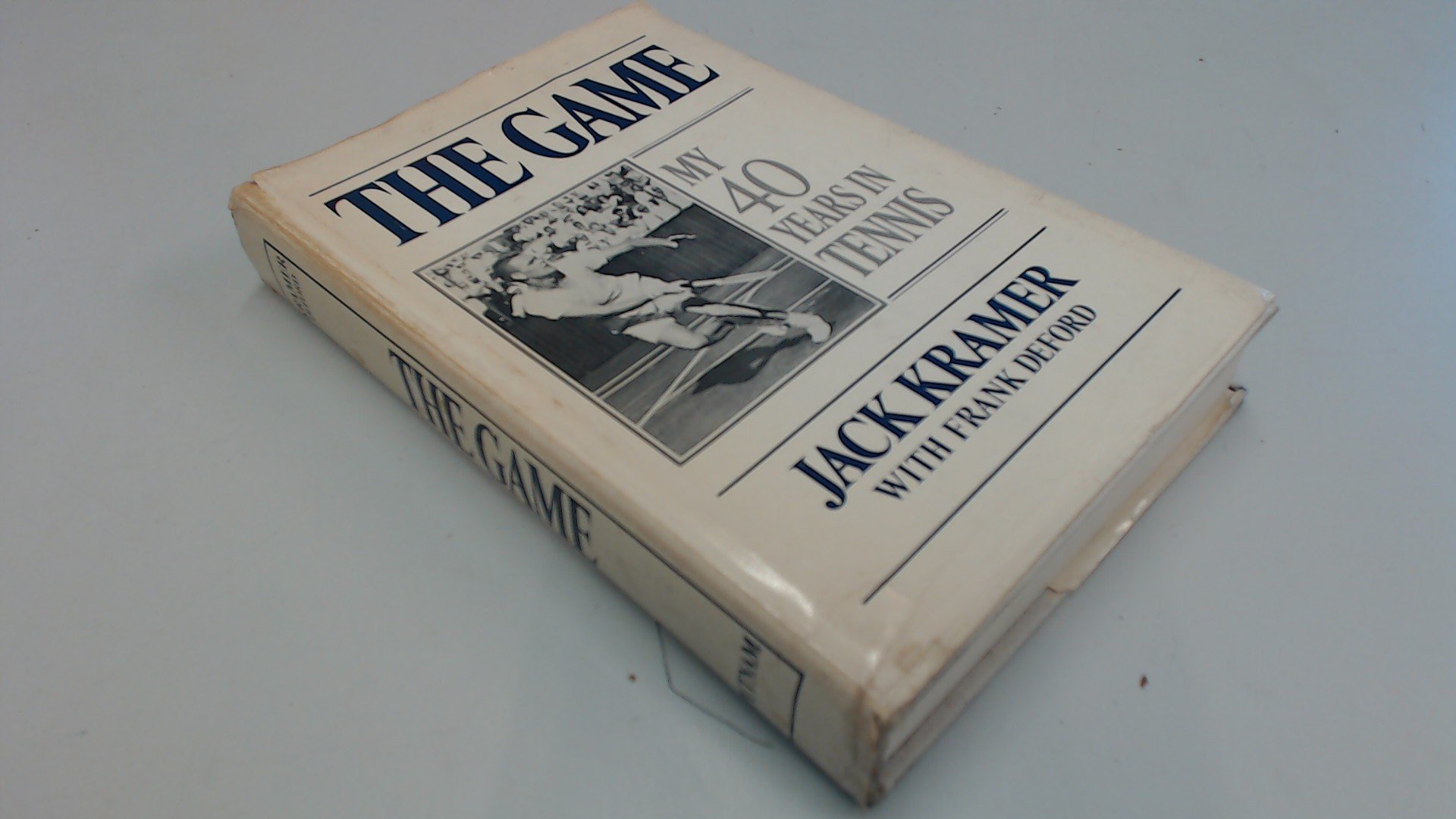 But that scrapper role was now history and Chet detached from it with perfect serenity. Chet knew he must assume a new role, the world beater in American culture, Mr. Love’s favorite obsession to teach about in class…Huck Finn, Sal Paradise, Thoreau, The Ramones, Jackie Robinson, Walt Whitman, Rachel Carson, Ida Wells, Upton Sinclair, early Elvis, early Brando, Orson Welles, Muhammad Ali, Lyndon Johnson and Jack Kramer. One of the books Chet read thoroughly for his project was Kramer’s autobiography, The Game: My Forty Years in Tennis. In fact, Chet could hardly put the book down. What interested him most was Kramer’s vivid retelling of his relentless lead role in the creation of professional tennis in the farcical era of amateurism. Jack Kramer had been a world beater in the finest American tradition, and his merry band of professionals barnstormed the world to places such as La Paz and Khartoum and played exhibitions in ice rinks and airport hangars with mosquitoes, nose bleeds and hangovers. In two decades, Kramer and company busted the ancient monopoly of tournament tennis and ushered the sport into the television age. There had been nothing like it in the history of professional sports and Chet knew that Jack Kramer, above all others, was responsible for the spectacular rise of tennis in America because he took it out of the elite clubs and into the city parks.