Nestucca Spit Press Meditations Blog
A Blog by Matt Love
  • Home
  • About
  • NSP Categories
    • NSP Meditations
    • Lost and Found
    • Writing
    • Driftwood Forts
    • Oregon Beaches
    • Of Walking in Rain
    • Oregon Coast_History
    • NSP Correspondents
    • Oregon Tavern Age
    • Astoria
    • Fiction
    • Poetry
  • Back to NSP
  • Contact
RSS
September 6, 2018

Oregon Tavern Age: Dive Bar Disquisition

Matt Love NSP Meditations, Oregon Tavern Age dive bars, Oregon tavern age, OTA

Let me take a break from chronicling Oregon Age Tavern life and dive into a disquisition on the phrase “dive bar” that I hope will offer some clarity on the subject as crystal clear as a shot of well vodka from the gun or making out with someone under a mountain waterfall.

Many OTA joints embrace dive bar status with pride. A few take considerable umbrage. Some are utterly indifferent to the semantics of it all.

What defines a dive bar? Perhaps it’s like US Supreme Court Justice’s Potter Stewart’s famous non-definition of pornography: “I don’t know what it is, but I know it when I see it.” Who decides a definition of a dive bar? Surely not a magazine writer visiting for the first time and writing up fluff. Is there a difference between an urban dive bar, say in Portland (if there are any left) and a coastal one, say in Coos Bay?

These are important questions for dive bar scholars to ponder, if there is such an academic field. (I think there is.)

I think about my forthcoming Oregon Tavern Age book, now over 45,000 words in length, scheduled for a winter release, but I keep adding to it, and I wonder has anyone ever written a book about a region’s dive bar culture. Doubtful. There is no money in this editorial venture, but many rich rewards in storytelling, and occasionally, free beer and fresh crab at Super Bowl parties or wakes.

I occasionally spot tourists in OTA country and I don’t begrudge their presence. On the contrary, I welcome their presence. One visit to OTA country can change a person’s entire perspective on many matters of American cultural life. One merely has to listen and observe and perhaps even participate in conversation.

I have a few rules of thumb for recognizing OTA country. There will be a framed and faded photograph of a dead dog or dead human behind the bar. There will be a typo on the food menu or drink special board. Someone will know who Roy Orbison is. There will be at least one jar of pickled grotesqueries. It opens at 9:00 in the morning.

One last thing; if you here a protracted conversation about stouts or IPAs, you are not in OTA country. If you hear a conversation about putting on a roof with a crushing hangover, you are.

September 5, 2018

Oregon Tavern Age: Empire Firsts

Matt Love NSP Meditations, Oregon Tavern Age Coos Bay, dive bars, Empire, Oregon Coast, Oregon tavern age, OTA, taverns

Sunday afternoon. The Empire District of Coos Bay. Urban renewal money spruced up the area not too long ago, including a gleaming new sewage treatment plant, but Empire still had the required grit to support an OTA joint. I decided that after driving through the district dozens of times the past two decades, it was time for a stop and search.

I parked my car off the main drag. No one was around. Coos Bay winds whipped through the streets. Scents of brine, fish processing, cannabis, conifers and exhaust fumes combined to create a titillating coastal perfume.

A minute later, I walked into O’ Brady’s and instantly recognized a quality OTA joint. There was a long wooden bar with five OTAs in conversation, worn plank flooring, one pool table, a stuffed bobcat straddling a piece of driftwood high on a wall, and an impressive display of Jim Beam commemorative bottles, once a decorative staple in OTA country, but disappearing, as are Jim Beam drinkers.

The day’s lunch specials were written on a fancy board:

Homemade chili

Chili con carne

Chili and chips

Chiliburger

Chili cheese fries

Chili to go

Chili corn dog

That was it—nothing but chili on the menu—another first in my OTA adventures.

I went up to the bar and met the bartender. She was wearing a short, black, macrame skirt—first time for that in OTA country. She greeted me like an old boyfriend and said her name was Jody. She had the sweetest-sounding bartender voice I’d ever heard in OTA country. It was a late-night, FM radio voice from the 1970s. I could listen to her talk about Led Zeppelin’s deep cuts for hours.

Jody set me up with an ale and then I repaired to the far wall, where several small and circular cushioned chair/stools, wooden on top, wrought iron at the base, were bolted to the floor. They were unlike any furniture I’d ever seen in OTA country and intrigued me. I sat down on one. It tilted and half spun, almost like an amusement park ride in hick county fair. I found myself smiling as a result.

A large OTA man in gray sweatpants commanded my attention. He was drinking beer from what appeared to be a hand-crafted, wooden and metallic goblet—something I’d never previously witnessed. I eavesdropped and learned he made the goblets, and, in fact, a young man at the bar was asking about them and admiring one, holding it aloft. I wanted one.

I got up to investigate the joint’s décor more closely. In short order, I encountered a framed poem adorned with a beautiful line illustration of a shrimp boat.

The poet’s name was Dale Cody and the poem was titled “Storms.”

I read it and fixated on a line: Will I bend or break?

That about sums up the eternal question facing every American in these times that try our souls. Will you break under the onslaught of fascism? Will you bend to help pick up your fellow American, or better yet, fellow non-Americans?

I encountered another framed Dale Cody poem, an elegy for an O’ Brady’s OTA regular, Sandy, who had passed away.

Dale was O’ Brady’s house bard. He was an OTA poet and undoubtedly dead. I wished I could have met Dale because I had some of my writing framed in OTA joints as well. We might have been the only writers to claim that distinction and I considered it a unique Oregon literary award that I alone had won—until now. I took great comfort in knowing there was a co-winner.

I went up to the bar and sat down. Jody materialized within seconds. She reminded me of my old girlfriend, Janet, who had died from cancer 25 years ago. I’d blown it with Janet, like I’d blown it with so many wonderful women over the years. And here I was alone.

Jody glanced at my notebook and I detected curiosity in her eyeliner eyes. I let slip I was working on book about places like O’ Brady’s, but didn’t have an Empire joint story in the book.

She wouldn’t stand for that oversight. She glided around from behind the bar and offered me a tour. Another first. I agreed. It was also my first tour narrated by a tour guide sashaying in a black macrame skirt.

Jody led the way to the row of mysterious chair/stools and explained they were salvaged from a shipwreck. She pointed to a framed newspaper article on the wall. I read it. In 1962, MS Alaska Cedar struck the North Jetty of Coos Bay and died on the rocks. Decades later, the owners of O’ Brady’s hauled the chair/stools into the joint and they were now bolted to the floor. Jody sat down on one of them and spun right, then spun left. She was smiling. Black macrame was blowin’ in the wind.

“Can you image what went on in these chairs at sea?” she said.

“Yes,” I said. That was all I could get out.

Jody played on the chair/stool a little longer and then continued the tour. She kept telling stories and introducing me to the regulars and a couple of long-time bartenders, including a 75-year-old woman who was still trucking on the day shift. The regulars started riffing more stories and told me about another OTA joint down the block that I simply had to visit. In fact, the veteran bartender got on the phone and called the joint, the Silver Dollar, and told them to expect me. Yet another first.

I asked about Dave. Jody told me he was alive! He came in every morning for a beer and left without saying much. My kind of poet.

The young man at the bar chimed in that Dave had written an unpublished manuscript about the illustrious McCullough Bridge in North Bend, an Art Deco masterpiece built in the New Deal with New Deal socialist ideals. Dave had given him a copy to read but he’d never got around to it.

I wrote and published a book about another Art Deco bridge masterpiece on the Oregon Coast, the Yaquina Bay Bridge, in Newport, designed by Oregon’s master bridge builder, Conde McCullough.

This was no accident, like meeting Jody was no accident. I knew then and there I had to meet Dave. I had to shake his hand and get a copy of his manuscript. I had to drink a beer with him and talk all things poetry and Conde McCullough. I might even abandon my vegetarianism for the homemade chili. It was probably made from elk.

It was time to leave but I needed some additional information before I departed.

I asked Jody what time O’ Brady’s opened. “Ten in the morning.”

I asked her what time it closed. “Whenever we feel like it.”

I almost asked her another question.
September 4, 2018

Oregon Tavern Age: Unions

Matt Love NSP Meditations, Oregon Tavern Age dive bars, Oregon tavern age, OTA, unions

I sat at the bar in OTA country and drank a dark ale.

An OTA man wearing a denim outfit from the 1970s limped in and stood near me.

“How are you?” said the female OTA bartender.

“Upright,” said the man.

She fetched him his usual: a shot of Coor’s Light. Yes, she filled a shot glass with Coor’s Light. He shot it, placed the glass on the bar, and moseyed over to the video lottery machines.

I surveyed the wall behind the bar. Cigarettes and pork rinds for sale. A mounted replica of Wyatt Earp’s .44 Peacemaker. UO and OSU crap.

Baseball played on television and two tables of OTA Trump supporters bitched about the state of America, even though their party controlled every branch of the government. They were in power but powerless.

It was strange listening to their conversations: every line was a talking point from Fox News. Every single line. Not a sole dissenter. These men had lost the capacity for original reflection, if indeed they once had it. I think many of them once did. Were OTA men in the late Nixon Presidency like this?

The ale sucked. I was going to order a draft of Rainier but the tap was blowing foam and the bartender seemed powerless to fix it.

Yes, America is going to hell. We can’t fix problems anymore. I think the last problem we solved was inventing HIV drugs that worked miraculously well.

Name me another one.

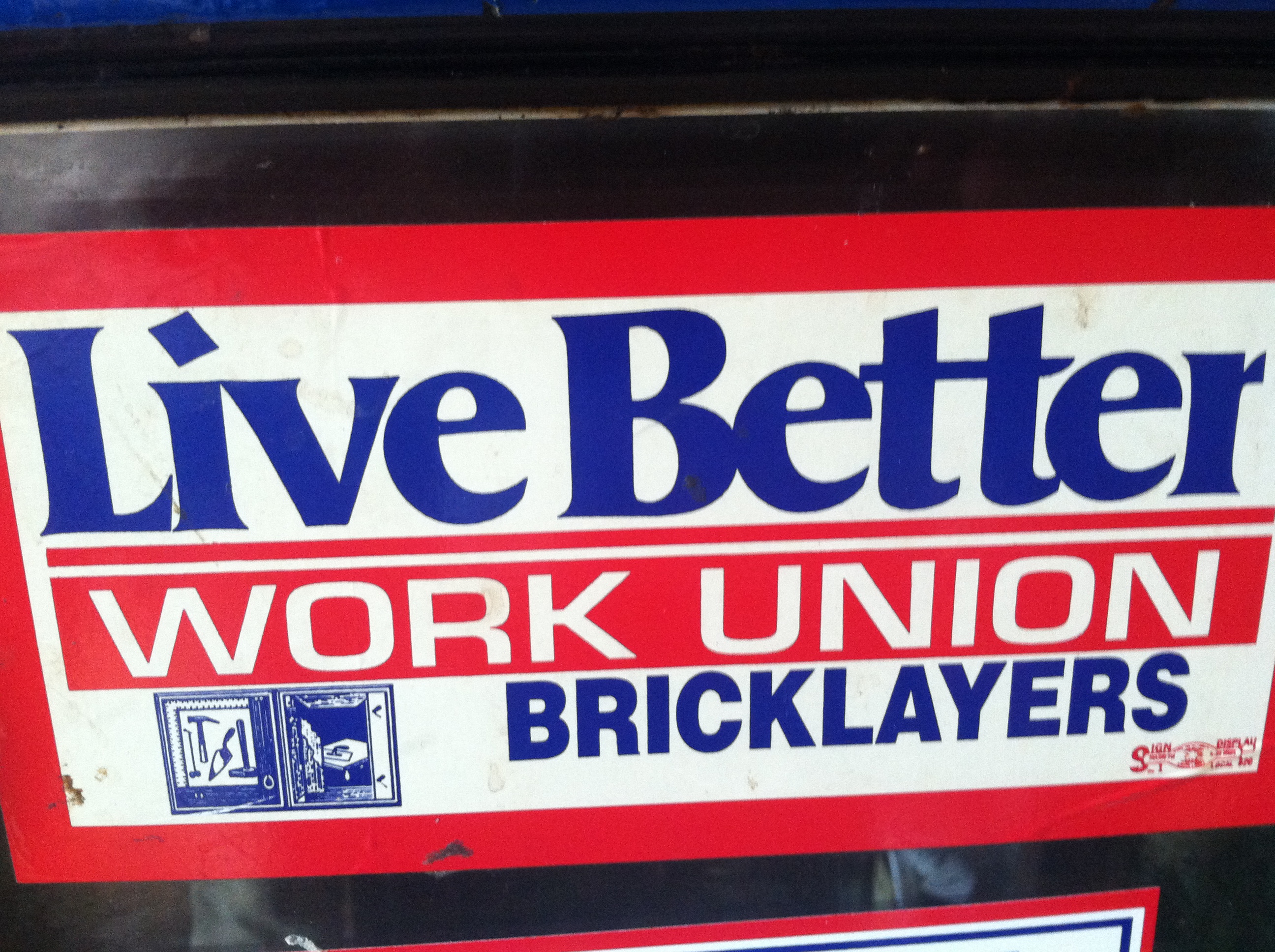
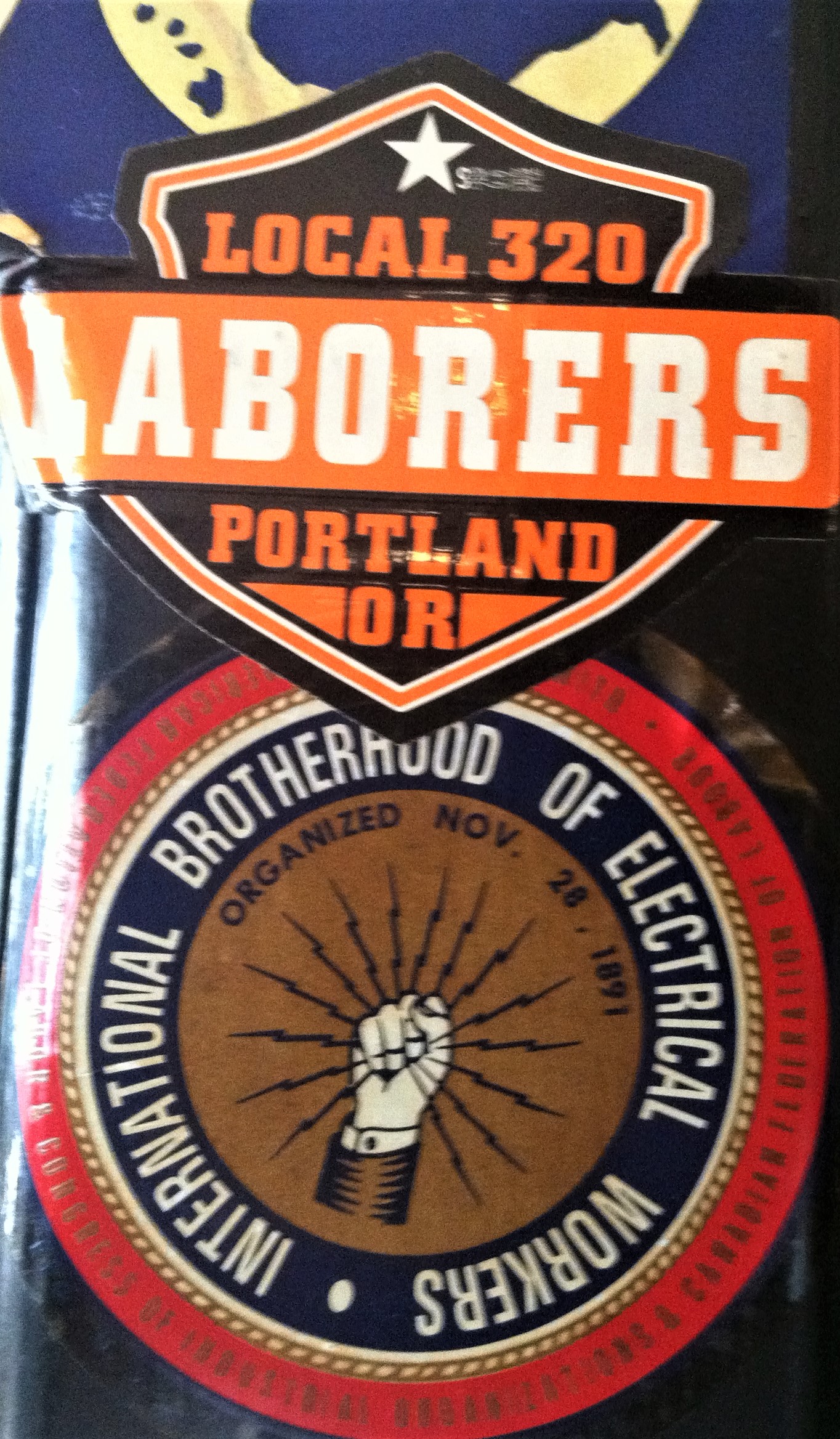
I looked at the ancient fridge: wood and glass. I was shocked by the number of union stickers plastered on it. Clearly, this joint had once been a union hangout. Perhaps they even held union meetings here.

I read the stickers and the trades they represented:

Plumbers

Ironworkers

Bricklayers

HVAC techs

Boilermakers

Painters

Carpenters

Road engineers

Pipefitters

Millworkers

These stickers represented not only trades, but a history lesson (if you knew any history) of the spectacular mid-20th century creation of a staunch middle class that became the envy of the world: excellent pay, benefits and a comfortable pensioned retirement where a man who had once made a living with his hands could drink beer at 2:00 pm after fishing for salmon all morning and then bitch mindlessly about the endless threats to American greatness.

Most likely, three quarters of the men at the Trump table benefited from the creation of that middle class. Now they didn’t want the same for their grandchildren or the wage workers paying for their Medicare. Let them eat food stamps. Fifty years ago, tens of millions of American workers were unionized, 25-30 percent of the workforce. What is it today? Five?

I finished my beer and left the bar. I walked out into the street and crossed the deserted rail line. I recalled reading something about employees at a couple of Portland-area Burgervilles trying to form unions. Several had been fired and alleged illegal retaliation by management. The NRLB was investigating.

From pipefitters and bricklayers to Walla Walla onion rings and blackberry shakes…there was a history lesson in that arc, too.

September 3, 2018

Oregon Tavern Age: Talking Turkey

Matt Love NSP Meditations, Oregon Tavern Age bars, dive bars, Oregon Coast, Oregon tavern age, OTA, rogue river park, secret oregon coast, taverns, turkey's

I sat at the bar at Turkey’s. Linda and Gary were to my immediate left, Kip to my far right, and two OTA brothers milled around behind me. Turkey was the bartender. A Grand Prix race played on television and the racers were E-cars and barely making a sound. That didn’t go over well with the OTA racing fans.

It was a brutally hot day along the Rogue River. It was Rainiers-chilled-in-the-river time. Then you sat in the river in cutoffs and drank Rainier. No craft beers allowed.

I asked Turkey about the exquisitely crafted trio of wooden pot pipes on display behind the bar. Turkey told me they were made from myrtlewood, Jesus wood, that only grew on the Southern Oregon Coast and in Israel. Turkey said a regular carved the pipes and gave them away. Turkey said it was a lot safer, germ-wise, sharing a pipe rather than sharing a joint. Everyone agreed. I said I had to own a myrtlewood pot pipe made by a Turkey’s OTA regular—right now—even though I didn’t smoke pot. Turkey said he’d hook me up.

Jesus Pot Pipe—great name for a stoner Christian rock band and believe me, in Oregon, there was such a musical niche.

Kip slid across a few stools and landed next to me. He was holding a homemade gizmo of wood and metal with one hand and a saucer of painted Styrofoam in the other.

“What is that?” I said.

“The Shepherd’s Hawk,” he said.

I got off my stool to better inspect. He handed the gizmo to me.

The Shepherd’s Hawk, Kip informed me, was his latest creation. It amounted to a beaver stick approximately three feet in length attached to a metal housing via screws and clamps (think plumbing). A hinge extended from the housing and fitted into a double-grooved slot on a saucer-shaped piece of Styrofoam that Kip had carved into an aerodynamic flier. The flier was painted yellow and black to resemble a swooping hawk.

I sipped my beer and assessed the gizmo while Kip continued his explanation. The idea was to draw the stick back like a Chuck-it! dog toy and then whip it forward, which released the hawk into the sky. He gave me a mini-demonstration of the arm motion but obviously didn’t release the bird inside Turkey’s, although I wished he would.

Kip claimed it could fly a hundred yards on the beach. He said he was registering the paperwork for a patent on Monday.

I told him I’d give him $15 for it.

He refused.

I raised the offer to $20.

No.

I upped to $25 and fanned the bills.

Kip wouldn’t budge. This particular stick and hawk were the prototypes for the patent. He invited me outside to his SUV to browse the rest of the stock. In the scorching sun, he offered me a sickly-looking stick and red saucer decorated with a German Iron Cross, sort of like the Red Baron.

Forget that! I pressed Kip again and he promised me the hawk after he had successfully registered his patent. We shook hands, and Kip got in his SUV and drove away. I went back inside Turkey’s to beat the heat with cold beer.

The subject of ospreys came up, perhaps because one flew by with a woodland creature in its beak and several of us saw it out the window. Gary recalled a time when he was scouring the hull of his boat in his driveway and he heard a thunk and the boat rattled. He looked up and saw an osprey soaring overhead. He looked inside the boat and saw a black snapper on the deck. The osprey had dropped it. Gary cleaned the fish and fried it up for lunch.

One of the OTA brothers then launched into a story about an osprey dropping an eel on someone’s deck not far from Turkey’s. They ate it for supper.

By this time, Tom had replaced Turkey as bartender and had overheard the osprey conversation.

He had an osprey-dropping-something-from-the-sky story to recount as well. There were six people in Turkey’s and three had osprey-dropping-something-from-the-sky stories. I wanted one.

Tom said a woman living up the road was weeding in her garden when an osprey dropped a five-pound steelhead and hit the woman on the back of the head. “It plowed her into the fucking ground, knocked her out cold. She had to go to the hospital!”

He didn’t know if they cooked the steelhead for supper. They probably did. A steelhead from the sky meant something in Oregon and when it didn’t, Oregon was dead.

The osprey stories drove the joint into a frenzy and Gary told me to ring the bell over the bar. That’s the kind of man he was.

I demurred. I was afraid. I’d never rung the “drinks-on-the-house” bell in OTA country before. Gary insisted and I rang the bell, and goddamn it, the peal felt righteous all the way down to my loins!

I wasn’t taking notes, but after the bell rang, I excused myself and ran to the car for a notepad. Upon my return, Tom had a new beer waiting for me in a chilled glass. I took a deep drink and scribbled notes.

A minute later I said to the bar: “I’ve got five bucks that says the next person who walks in here won’t have an osprey-dropping-something-from-the-sky story. No one took the bet.

September 1, 2018

The Last Oregon Campfire

Matt Love NSP Meditations, Oregon Beaches beach bonfires, beach campfires, oregon beaches, oregon camping, Oregon Coast

One afternoon a decade or so from now, (perhaps less) state officials will issue a quiet decree and release it through quiet channels. The media may report it.

The decree will permanently ban campfires on public and private land—year round. Officials will provide no reason for the ban because the citizenry knows the reason—the threat of wildfire on every acre of the state. The ban will not raise any public outcry because there hadn’t been campfires for years. The ban became permanent after Gold Beach and Tillamook burned to the ground in November in successive years—and it was raining on both occasions during the rainiest month in Oregon.

On the day the permanent ban goes int effect, a tiny group of old timers will gather at Oswald West State Park, not to protest the ban, but to hold a wake for a cultural tradition that had meant so much to generations of Oregonians, actually every generation of Oregon since the dawn of the 20th century.

The old timers will defy the ban and light a small beach driftwood fire, a few mere sticks. They will sit around the fire with their dogs, Hamm’s, acid, mushrooms, pipes, vapes, joints, jug wine, pints of Jack and Jim, marshmallows and hotdogs.

Someone will even poke a few holes in a can of Hamm’s for old time’s sake. They’ll all laugh and cough when they take a hit. A guitar will emerge, perhaps a harmonica. A retired rocker will run through campfire songs’ greatest hits, and perhaps write one on the spot called “The Last Campfire in Oregon.”

Then they will tell their campfire stories and they will run the gamut from innocent to salacious, from somber reflection to giddy bacchanalia. It will go late into the night and they might even see the dawn. And then that will be it.

August 31, 2018

Youngs Bay Coffee Shop—Late Summer

Matt Love NSP Meditations Astoria, coffee, matt love, Youngs Bay, youngs bay coffee shop

I am drinking excellent coffee in the Youngs Bay Coffee Shop. Yuban is dead.

Fog and smoke float through the shop. I keep thinking about the end of Oregon campfires. I want to write an essay about it. Or a tale.

It is early morning and summer wanes. I have nothing to do but wait for others. I grow weary of waiting.

Morning doves coo. I can see no birds.

The dandelions are curled up. A little more heat and they will release their yellow flowers. Then come the bees! I keep thinking about a short story where a man in a swank neighborhood mows around the dandelions in his lawn because he loves watching bees dance from flower to flower. And he wants to assist with the pollination of his world. His strange lawn draws the ire of the neighborhood lawn men and their rules for proper lawns. Tension ensues. Someone comes and mows his lawn when he goes out for groceries. The man is irate. More tension ensues.

The beach beckons. The latest installment of the fort message project has inspired some thoughtful, profane and hilarious writing.

I may have forgotten how to relax.

The big city burns up in heat and smoke and development.

I continue to downsize. There is little left that I own.

A distant reader wrote an extraordinary letter of appreciation thanking me for my books. He wants to read more. There will be more.

I wrote a letter to someone I haven’t seen or talked to in almost 25 years. I doubt the address is any good, but I felt compelled to try.

«‹ 236 237 238 239›»

Teacher of the Year: A Novella

By Matt Love

A reluctant teacher becomes advisor to a moribund high school newspaper. He meets the new editor, a dynamic 18-year-old senior, and together they begin a unique creative collaboration that revives the publication and slowly slides into gray areas. As the poet Octavio Paz wrote, “To realize itself, love must violate the rules of our world...committed by two stars that break out of the conception of love, which implies breaking away and a catastrophe..."

Teacher of the Year
Amazon's Kindle Edition $6.99

Teacher of the Year unfolds in an energetic mixture of epistle, stream-of-consciousness, narrative and meditations on the craft and alchemy of teaching. There is no other more authentic literary exploration into the agonies and ecstasies of teaching in the annals of American literature than this novella.


A Substantial but Incomplete Autobiography in Poems

By Matt Love

In perhaps the largest, most eclectic volume of previously unpublished poetry in the history of Pacific Northwest literature, Matt Love presents 148 poems written over a 30-year span.

As he writes in the introduction to A Substantial but Incomplete Autobiography in Poems, “I have organized this collection into six categories: Ocean, Love, My Life, Oregon Tavern Age, Homelessness, Probation. These poems serve as a substantial but incomplete autobiography.”

“Confessionals, odes, scatological doggerel, polemics, tankas, haiku, prose, psalms, requiems, observations, love letters, lamentations, lyrics, stream of consciousness, meditations, lists, riffs, a eulogy, a sermon, a commencement speech, found poetry, tributes, elegies. I threw it all into an ancient cement mixer and hand cranked that concrete beast while watching blue herons undulate overhead and drinking red wine as the husky snoozed in his dirt fort. The result: A Substantial but Incomplete Autobiography in Poems, something merging where Charles Bukowski, Richard Hugo, Mary Oliver and Liz Phair blend together.”

None of Love's poems were ever submitted to poetry journals, contests or magazines, making this collection a true renegade project of passion and readable to any denizen of a coastal dive bar.

A Substantial but Incomplete Autobiography in Poems

Print Edition

$21.99 + $4 Shipping


Amazon's Kindle Edition $7.99 (Free if you have Kindle Unlimited)

Recent Posts

  • Eulogy for Mark
  • Mark Leavenworth RIP
  • Roast Ruminations
  • Stand Em’in the Corner
  • Fasting Ruminations

Categories

  • Astoria
  • Bonnie and Clyde Files
  • Coos Bay
  • Corona Virus Thoughts
  • Driftwood Forts
  • Fiction
  • Lost and Found
  • NSP Correspondents
  • NSP Meditations
  • Of Walking in Rain
  • Oregon Beaches
  • Oregon Coast_History
  • Oregon Tavern Age
  • Pioneer Pride
  • Poetry
  • secret coast radio
  • Sports
  • Writing

↑

© Nestucca Spit Press Meditations Blog 2026
Powered by WordPress • Themify WordPress Themes