Nestucca Spit Press Meditations Blog
A Blog by Matt Love
  • Home
  • About
  • NSP Categories
    • NSP Meditations
    • Lost and Found
    • Writing
    • Driftwood Forts
    • Oregon Beaches
    • Of Walking in Rain
    • Oregon Coast_History
    • NSP Correspondents
    • Oregon Tavern Age
    • Astoria
    • Fiction
    • Poetry
  • Back to NSP
  • Contact
RSS
March 25, 2017

The Keyhole Limpet Magical Necklace

Matt Love NSP Meditations, Oregon Beaches beaches, keyhole limpets, necklaces, nestucca spit press, Oregon Coast

Nestucca Spit Press is excited to join with Astoria-based Sea Creations to produce and distribute The Keyhole Limpet Magical Necklace.

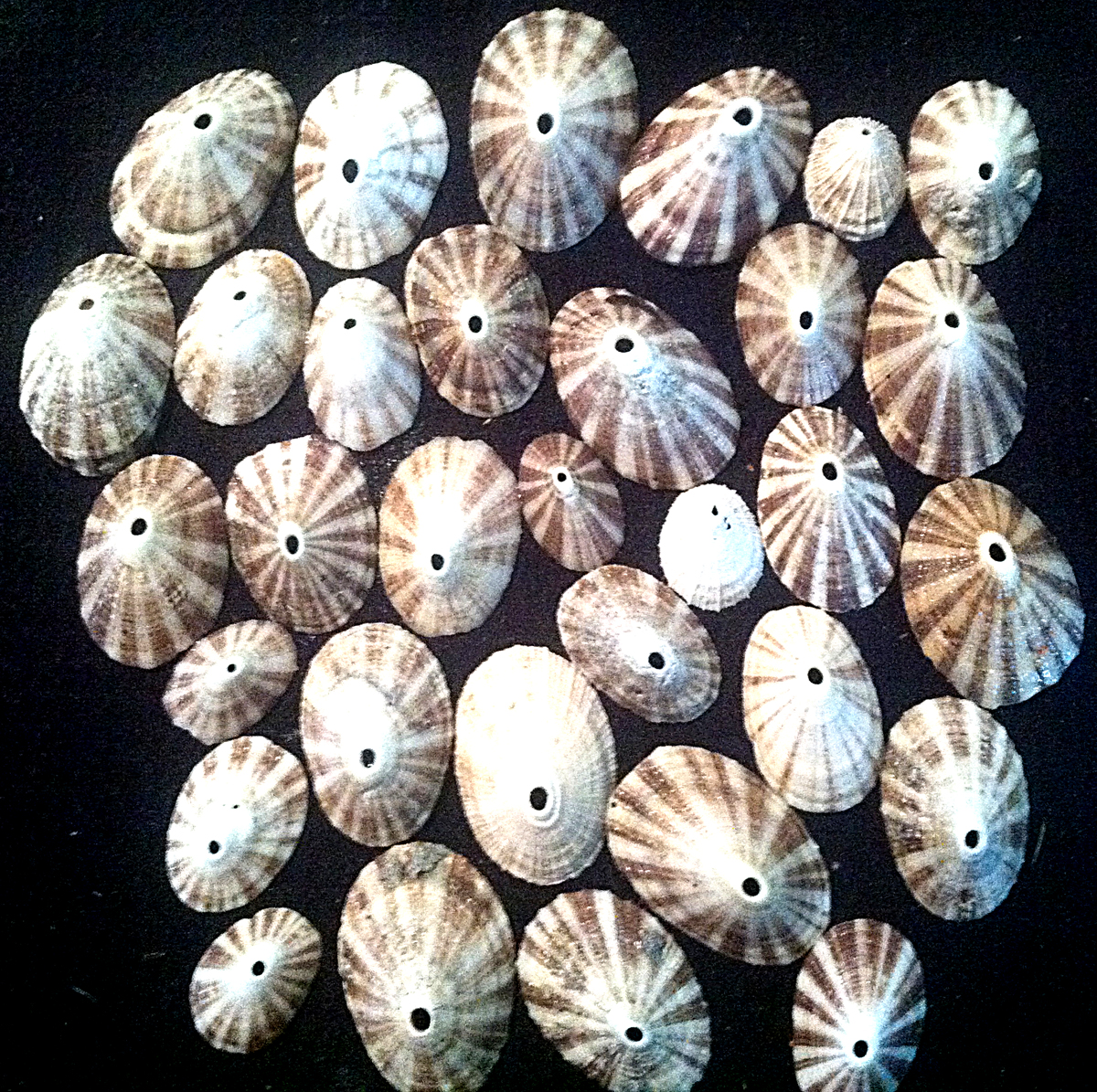
A keyhole limpet is a marine sea snail that has a conical shell. It lives on intertidal rocks and eats algae as it scrapes along the surface. The average keyhole limpet gets hit by 8000 waves a day and can exert up to 80 pounds of pressure on a rock. When keyhole limpets die, many of their shells end up on secret Oregon beaches, where obsessed humans (and some dogs) hunt for them and amass astonishing collections that defy reasoning.

Many collectors swear the shells of keyhole limpets frequently bestow magical powers if worn around the neck. These powers include clairvoyance, clarity, presence, higher math, philanthropy, healing, sagacity, spiritual transformation, incantations, romantic advice, charming eccentricity and creative inspiration. The wearer merely needs to hold the shell aloft, look through the keyhole, open the mind…and keep looking until…something…unlocks…

The Keyhole Limpet Magical Necklace is 100% guaranteed grown and harvested organically on the Oregon Coast. Suitable for humans ages 1-101, dogs, too. The necklaces cost $5.99 each or two for ten bucks. A bulk discount rate is also available for retailers, shamans or other individuals. Just imagine how popular and clairvoyant you’d be if everyone in your workplace or social circle was wearing keyhole limpets around their necks. To order, contact NSP through the web site. We also are willing to donate necklaces for fundraisers.

[themify_col grid=”2-1 first”]Single Keyhole Limpet Shell Necklace
$5.99 (+ $2 shipping)


[/themify_col][themify_col grid=”2-1″]Keyhole Limpet Shell Necklaces
2 for $10 (+ $2 shipping)


[/themify_col]

March 25, 2017

On Detective Fiction and a Writing Workshop in Astoria

Matt Love NSP Meditations, Writing Astoria, detective fiction, Oregon Coast, writing, writing workshop

I came to detective fiction late in life but now love reading it, the classics and new coarse masters, and sometimes writing with that terse, hardboiled tone. Right now, I think contemporary detective fiction is exploring American issues of race, class, political corruption and police brutality in much richer ways than so-called literary fiction, at least in my reading.

In 2015 I published my own detective novel, The Great Birthright, a parody of the genre, and hope to write another one next year. There is something liberating in the writing of fiction with a detective in mind who drives the narrative, investigates this or that. It’s also a good way of investigating one’s self with a bit of detachment and I have certainly been doing a lot of that in recent months.

I am teaching a fiction/nonfiction writing workshop with a detective-based theme on Saturday, April 29 in Astoria. Details are below. Check it out and sign up if interested.

Sherlock Holmes. Nancy Drew. Longmire. Marvel’s Jessica Jones. Shaft. Sam Spade. Nick and Nora. Maigret. Miss Marple. Perry Mason.

The list of famous detectives is endless. Writers create new detectives all the time. All successful stories present unique and compelling protagonists, usually flawed, eccentric, gifted or world weary. The detective almost always reveals some shadow or desire of their creator’s psyche. The writer creates someone he or she wants to be or doesn’t want to be. Sounds like fun, right?

Creating a detective to investigate one’s self, either in the first or third person, is a fascinating exercise in exploration for possible memoir or fiction writing. Who doesn’t remember playing the board game “Clue” and feeling the sheer pleasure of being caught up in becoming a detective and solving a mystery?

On Saturday, April 29 in Astoria, I will teach a writing workshop called, “Finding the Detective Within.” The workshop is a good fit for writers of nonfiction and fiction alike and offers them the rare opportunity to come together, write, collaborate and discuss the role of detecting and investigating in memoir and fiction.

In the workshop, I will present a questionnaire to build a detective, a deduction exercise using physical clues brought by the participants, short readings of real-life mysteries that inspire fictional or personal reflection, and a series of noir prompts that a writer of memoir or fiction can take anywhere they want.

The workshop runs from 10:00 a.m. to 1:00 p.m. in Astoria in a private home. The class costs $65 and will cap at 12 participants. Participants will pay at the beginning of the workshop. Scholarships are also available. To register, contact me via the Nestucca Spit Press web site or my email address.

March 25, 2017

Lost and Found in Our Lives; the Beginning of My Journey

Matt Love Lost and Found, NSP Meditations Astoria, deer, jim harrision, lost and found, matt love, Oregon Coast, rebecca solnit

Lost and Found in Our Lives

In January 2017, I pled guilty to a misdemeanor count of “luring a minor.” In my case, there were no allegations of any physical contact, nor any explicit images received or sent. The person involved was one month short of 18. This also didn’t involve someone under my supervision. My written communications were construed by the Clatsop County DA as “creating a sexual narrative.” The quoted phrase is directly from the statute, enacted in 2012. As part of my sentence, I served ten days in the Clatsop County Jail, three more weeks under house arrest, surrendered my teaching license, had to register as a sex offender (for ten years), and will spend two years on probation. Throughout this ongoing experience, I have thought a lot about the theme of “Lost and Found” and in this blog I will occasionally share my journey.

In the aftermath of losing everything that I thought was important in my life, I began finding things—some new, some old. I began noticing the theme of “Lost and Found” everywhere and it became impossible to ignore as I went about finding myself.

Here is a partial list of what I have Lost and Found:

• The incredible essay titled, “Losing Streak” by Kathryn Schulz in the February 13-20th, 2017 edition of the New Yorker. In the essay, which feels like required reading for anyone who has lost anything, she writes: “We lose things because we are flawed; because we are human; because we have things to lose.”
• The novel Dalva by Jim Harrison. I read it for the first time in 25 years and instantly realized how much of its earthy spirit that once imbued and directed my life has been totally lost to me in recent years.
• The three deer in my back yard on a rainy day that helped me find my way back to the importance of rain’s powerful metaphors.
• My sister. I found that I had a really great sister who would not let me drift into a perpetual losing state of mind.
• Meeting a young man recently released from prison living in the woods near Tongue Point who seems almost effortless in his attempt to find himself.
• Listening to a dear friend describe gradually losing the mental ability to perform her job at a high standard. Hearing her relate her fear about finding a different path for her professional life. We made a pact to help one another navigate each other’s state of being lost and fight the fear and dread of traveling in that unknown territory.
• A message in a bottle washed ashore on an Oregon Coast beach that read: “In loving memory of dear GCH on his 78th birthday.”
• Playing a long-lost cassette tape of BB King’s “The Thrill is Gone” and thinking: Isn’t all blues music the story of Lost and Found? And isn’t that also true for virtually every song from the great era of country music as defined by mid-career Merle Haggard and George Jones?
• Reading Rebecca Solnit’s remarkable book, A Field Guide to Getting Lost, where she writes, “Never to get lost is not to live…Leave the door open for the unknown, the door into the dark. That’s where the most important things come from, where you yourself came from, and where you will go.”
• A nameless journal discarded in a garbage can on Alameda Street in Astoria. A friend found it several weeks ago and brought it to my attention. The extraordinary journal—all five pages of it—documented a woman’s sense of being lost and trying to find herself after a suicide attempt the previous year. She writes: “Things don’t always make sense even when you want them to. Stories don’t have those endings where all the loose ends and details come together into a resolution that leaves the audience feeling satisfied. This is real life…”

Yes it is real life, I thought to myself when I read this passage. It is the only life where the ongoing art or artlessness of losing and finding represents quite possibly the one universal human process we all experience.

Ask yourself: what have I lost in life? What does it mean to be lost? What do I hope to find? What found me when I least expected it? The figuring out of the Lost and Found takes time. It also requires an open mind, and of course, the willingness to look.

March 25, 2017

Shipwreck Tuesday and Oregon Tavern Age Life

Matt Love NSP Meditations, Oregon Tavern Age bars, drinking, Iredale Inn, Oregon Coast, Oregon tavern age, OTA, shipwrecks, taverns

I have written many, many words about taverns and bars on the Oregon Coast because I have found some of my greatest stories in them. I recently put out an e-book on the subject called Oregon Tavern Age (OTA): Sketches from Coastal Drinking Life. (You can purchase it from the web site.) Below is an excerpt from the book, a piece called “Shipwreck Tuesday.” By the way, Oregon Tavern Age is defined as “anyone appearing from 40 to 70 years old.” I coined that phrase years ago to describe the appearance of the many men and women I encountered in Oregon Tavern Age country. Readers can expect more pieces about OTA life in future blogs and I hope to publish an updated print magazine version of the book in the fall that will only be distributed in OTA bars and taverns from Astoria to Brookings.

Rain fell in Warrenton on a Tuesday afternoon. It was some Tuesday afternoon in October. I walked into the Iredale Inn, named for the Peter Iredale, the four-masted barque that wrecked on Clatsop Spit just south of the Columbia River on October 25, 1906.

Incredibly, none of the crew died. Remains of the wreck are still visible at Fort Stevens State Park. Over the years, about 10,000 local high school students have had their senior portraits framed through the rusted steel ribs of the ship’s derelict hull. It became an instantly clichéd shot, but a beautiful Oregon Coast one at that, and soon to go extinct. Give the ocean about another decade and the wreck will disintegrate into salt. Give the ocean another millennium and the same could be said for humanity.

I ordered the $3 social service draft special. The joint was trying to empty an unpopular keg and raise a few bucks for the kids.

The beer tasted good. I was saving sick children by drinking beer. That felt good on a weekday in October with absolutely nothing to do but try to figure out my entire life.

I looked around:

A businessman sat at the bar by himself and sipped a Jameson neat. An OTA man gave the bartender some homemade sausage. A game show aired on television. Two feral young men played pool and fiddled on their phones. They were dressed in the most curious fashion: one wore a black leather jacket straight from Starsky and Hutch while the other had on a black baseball cap turned sideways and a silver pendant swinging across his wife-beater tank top. Bud Light football shoulder pads dangled overhead. A female OTA clerk from the gas station across the street was on a break and losing at video slots. She was swearing at the machines. Memorial photo collages and black and white images of the Iredale decorated the walls. About a half-dozen autographed life preservers hung near the roof. In a booth, an obvious assignation was underway. Who would ever see them in here? An injured OTA woman sat a table and discussed with another regular how the joint could improve the Inn’s multiple charity drives. She finagled a contribution from him right there, and another one from a total stranger!

They could do a lot better, she said. Let’s get it together and raise more money!

We all could. Many of the OTAs inside the Iredale Inn were trying, this particular Tuesday. Others were not. I guess I was doing my part with the beer. I ordered another one, for the kids, you know?

Somewhere else in America, people were making money, killing this and that, lying, playing golf and shipwrecking spaceship Mother Earth.

But not in here.

(Please consider supporting this blog by purchasing an annual subscription at a price you want to pay.)

March 24, 2017

The Beavers in My Life

Matt Love NSP Meditations Beaver Man, beavers, gigging, Oregon Coast, writing

I recently came into possession of the most wonderful piece of beaverwood I have ever seen. It’s more of a log really, two feet in length, willow, gnawed in four places. Some beaver in the Columbia River Watershed feasted upon it, thereby setting the log loose in a river or stream, where it floated and floated until it floated across the bar and came to rest on a beach at Fort Stevens State Park. A curious human being discovered it and brought the log into my care. It’s now in a window of my writing parlor. Found art. Free of charge.

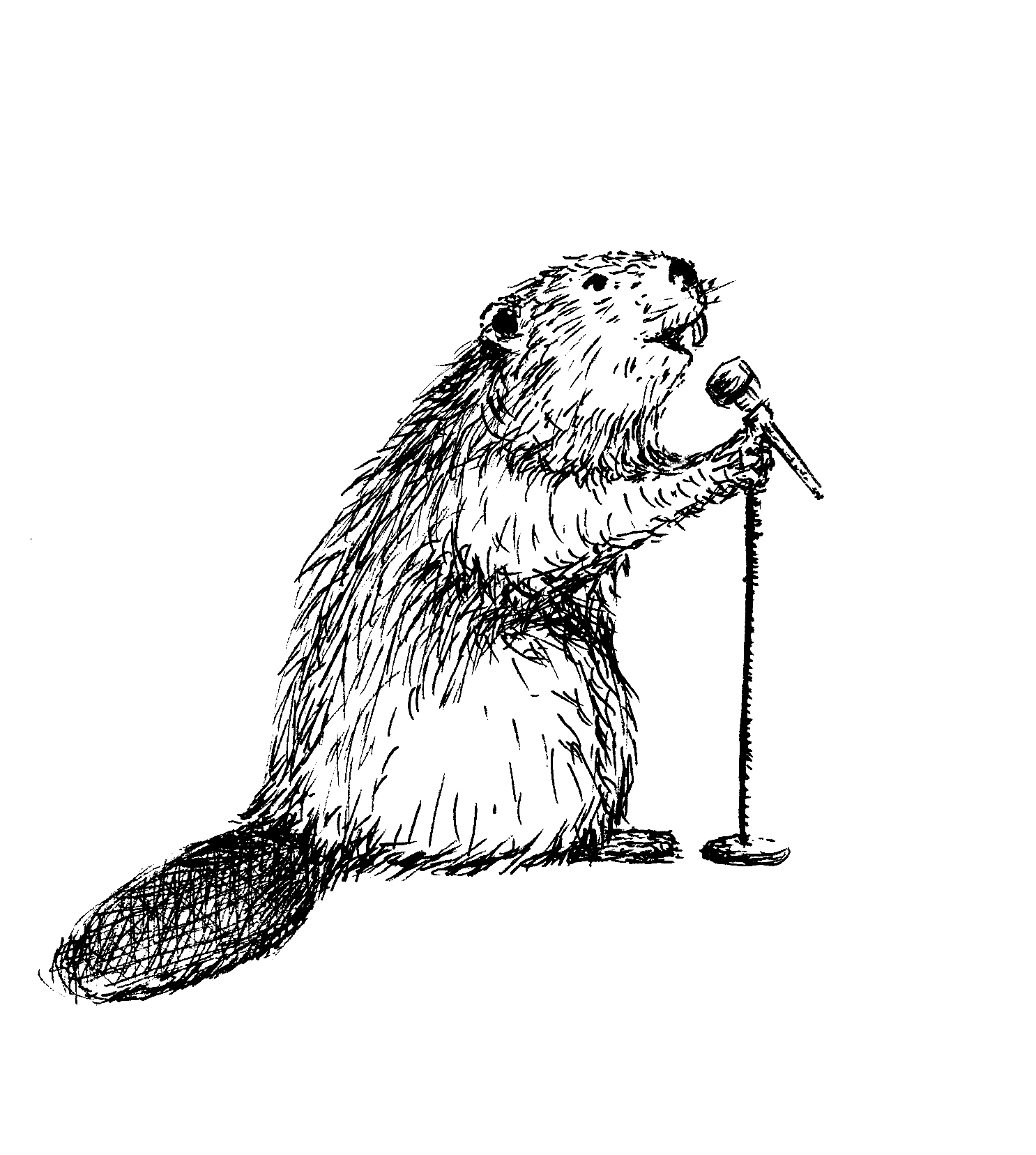
As I stared at the log on a rainy afternoon the other day, a thought occurred to me: Beavers have circled through and around me my entire life. I lost my virginity in Beaver Creek, Oregon. I taught at Beaverton High School. I once dated a nurse who lived in Beaver, Oregon. I much prefer the OSU Beavers when it comes to college football even though I attended UO.  I wrote something called the Beaver State Trilogy. I find and then display interesting pieces of beaverwood in my home. I used to have a friend who dated a biologist whose expertise was beavers. I now have a friend in Astoria who met in Seattle a visiting biologist from Scotland who hopes to reintroduce beavers into the moors. I’ve created a writing workshop that is beaver-themed. I collaborate with beavers to build driftwood forts on Oregon’s beaches. My publishing company recently added a new logo of a bucktoothed beaver holding a microphone like some furry beatnik poet. I love informing people that Oregon has the only two-sided state flag in the nation and a golden beaver is on that other side. I once watched a beaver build a dam in a remote creek way up in a coastal watershed. It was probably the best silent hour I’ve ever spent in the woods. I recently adopted the beaver, along with a wooden tennis racket, (naturally), as the two critical metaphors I need to channel a means of reinventing myself. (More on the tennis racket later.)

And then there was the Beaver Man. I’ll never forget my magical encounter with him. It was almost two years ago when I unexpectedly walked into his beaver gig. I love walking unexpectedly into other people’s gigs.

He pulled his pickup truck next to mine in the graveled lot of a Seaside park overlooking an estuary. It was a spring or summer morning. The Ford truck was red and green, dented and ancient. The neatly painted white lettering on the truck read: SAVE THE BEAVERS. YOU NEED THEM. THEY NEED YOU.

I had to meet him. I got out of the truck and went up to him. I asked if I could take a photograph of him standing by the truck.

“Sure you can brother!” he said. “It’s all for the beavers and getting the word out!”

The word?

We started talking. Five minutes into our conversation, I knew I had met the world’s most passionate spiritual advocate for beavers and walked into one of the best Oregon gig stories of my life.

His name is James Murphy and he owns a romping tan lab named Marley. He has a house in outer SE Portland but hated Portland now and rarely went back. He was a wandering man of the North Oregon Coast now, evangelizing for the protection of beavers.

James riffed with the most interesting and unconventional grammar and I thought it the most beautiful stream-of-conscious speechifying I’d heard in years. Who cares if it was almost impossible to quote him properly? Beavers don’t care about conventional grammar or proper quoting! They just want to be left alone, eat wood, build dams, create marshes and salmon rearing habitat, and play their antediluvian role in the ecology of healthy watersheds.  James understood this perfectly and wanted to educate others about the benefits of this maligned animal that was once nearly hunted to extinction because of a fashion trend.

This crusade began a year ago after angels told him to take care of animals. “I’ve known for years about beavers,” said James, “and it was time to start doing something for them. I had to.”

James scouts the local creeks, wetlands and rivers for signs of beaver activity and also imagines their return to places where they are needed to restore damaged watersheds. He’s documenting beavers and beaver dams in some way that doesn’t involve conventional scientific documentation. He’s seeking, finding, observing, and rhapsodizing. James is a “naturalist” of the very old school. He’s gigging.

At one point in our conversation, James broke out a little book with a cork-like cover. “It’s my Beaver Book,” he said, handing it to me. He told me he’s collecting names, telephone numbers and email addresses of people who will go to Washington D.C. and lobby for the protection of beavers. I happily signed it and provided my contact information. I was surprised by how many names were in there. He’s been, well, busy as a beaver, and people are responding.

James exploded into a smile when I asked if it would be okay to write up his story and help spread the word. The Word.

“Yes brother!” he said. “Yes. Do whatever you can!”

“I’m calling you the Beaver Man,” I said.

“Yes I am!”

As a postscript to all of this, I have a friend in Portland who recently saw James’ rig parked in front of a home in outer SE Portland. I told her she had to contact James and let him know that I had included his story as a chapter in my book about gigging. I wanted to get him copies, hundreds of copies, so he could give them away to people who signed up for duty in the Beaver Book. We would gig within each other’s gig and keep spreading the word! She left a note on his truck and we are still waiting for a response.

March 24, 2017

NSP Meditations Blog Welcomes You

Matt Love NSP Meditations, Writing blogs, forts, matt love, nestucca spit press, writing

Dear Readers:

Welcome to the next chapter in my writing career. Thank you for joining.

In 2016/17 my life took an unexpected direction that ended my professional, personal and creative life as I knew it. I lost a lot, but found much, too. In this blog, I will meditate on that experience, perhaps figuring out ways to rebuild and reinvent myself. I will also write about other subjects that interest and intersect with me or that connect to the primary mission of Nestucca Spit Press, which is having writers explore all things uniquely Oregon. Some of the topics I will write about include: dogs, rain, driftwood forts, books, pot shops, beer, love, friendship, Astoria, Portland, the Oregon Coast, coyotes, gigging, running a small business, my status as a pariah, hiking, walking, the ocean, gulls, the state’s unique legacy of publicly-owned beaches, teaching, music, Vortex, writers, writing, publishing, tennis, limpets, Oregon City, dive bars and taverns and more.

At times, other NSP correspondents will join me on this blog because I want to keep publishing other voices, new and old, lost and found. If you might want to be a correspondent, let me know.

I hope readers can make a financial contribution to support this new editorial endeavor and help writers do their work. Give what you can and collaborate with us. Spread the word, too.

Matt Love


«‹ 313 314 315 316

Teacher of the Year: A Novella

By Matt Love

A reluctant teacher becomes advisor to a moribund high school newspaper. He meets the new editor, a dynamic 18-year-old senior, and together they begin a unique creative collaboration that revives the publication and slowly slides into gray areas. As the poet Octavio Paz wrote, “To realize itself, love must violate the rules of our world...committed by two stars that break out of the conception of love, which implies breaking away and a catastrophe..."

Teacher of the Year
Amazon's Kindle Edition $6.99

Teacher of the Year unfolds in an energetic mixture of epistle, stream-of-consciousness, narrative and meditations on the craft and alchemy of teaching. There is no other more authentic literary exploration into the agonies and ecstasies of teaching in the annals of American literature than this novella.


A Substantial but Incomplete Autobiography in Poems

By Matt Love

In perhaps the largest, most eclectic volume of previously unpublished poetry in the history of Pacific Northwest literature, Matt Love presents 148 poems written over a 30-year span.

As he writes in the introduction to A Substantial but Incomplete Autobiography in Poems, “I have organized this collection into six categories: Ocean, Love, My Life, Oregon Tavern Age, Homelessness, Probation. These poems serve as a substantial but incomplete autobiography.”

“Confessionals, odes, scatological doggerel, polemics, tankas, haiku, prose, psalms, requiems, observations, love letters, lamentations, lyrics, stream of consciousness, meditations, lists, riffs, a eulogy, a sermon, a commencement speech, found poetry, tributes, elegies. I threw it all into an ancient cement mixer and hand cranked that concrete beast while watching blue herons undulate overhead and drinking red wine as the husky snoozed in his dirt fort. The result: A Substantial but Incomplete Autobiography in Poems, something merging where Charles Bukowski, Richard Hugo, Mary Oliver and Liz Phair blend together.”

None of Love's poems were ever submitted to poetry journals, contests or magazines, making this collection a true renegade project of passion and readable to any denizen of a coastal dive bar.

A Substantial but Incomplete Autobiography in Poems

Print Edition

$21.99 + $4 Shipping


Amazon's Kindle Edition $7.99 (Free if you have Kindle Unlimited)

Recent Posts

  • A Substantial but Incomplete Autobiography in Poems Just Released!
  • Assisted Living Christmas
  • Eulogy for Mark
  • Mark Leavenworth RIP
  • Roast Ruminations

Categories

  • Astoria
  • Bonnie and Clyde Files
  • Coos Bay
  • Corona Virus Thoughts
  • Driftwood Forts
  • Fiction
  • Lost and Found
  • NSP Correspondents
  • NSP Meditations
  • Of Walking in Rain
  • Oregon Beaches
  • Oregon Coast_History
  • Oregon Tavern Age
  • Pioneer Pride
  • Poetry
  • secret coast radio
  • Sports
  • Writing

↑

© Nestucca Spit Press Meditations Blog 2026
Powered by WordPress • Themify WordPress Themes