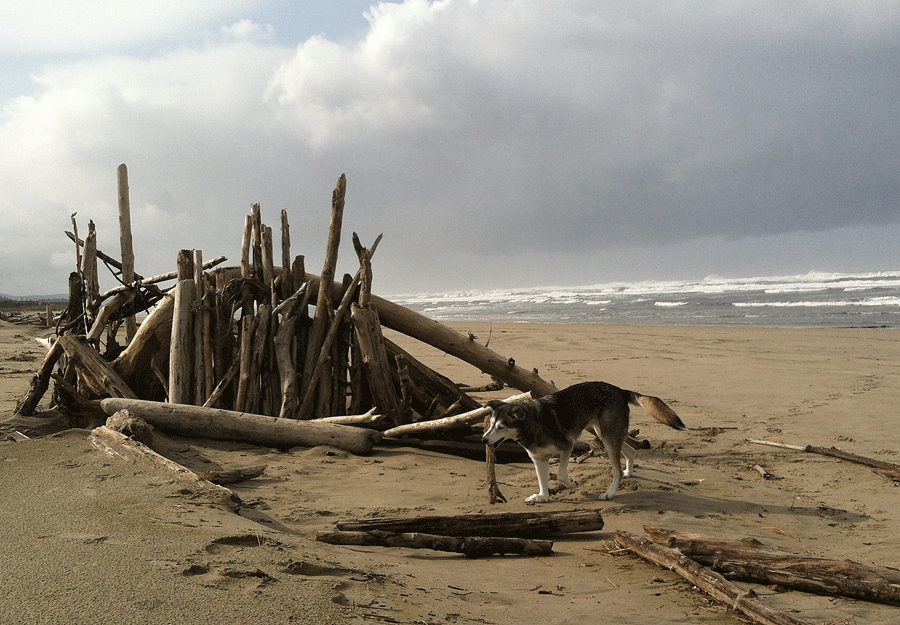
My name is Kali. I am an easy-going black and brown dog that hails near the ocean. I am writing to alert you about an ominous political development in the Oregon Legislature that could have dire consequences for our future. I write with the intention of rallying us all to a great cause.
That cause is treats!
The aforementioned development is a proposed bill to increase self-service gasoline in Oregon. Do you know what that portends, my friends? Let me tell you: the spread of loathsome self-service gasoline means disappeared station attendants, which means no treats for us when our owners’ vehicles need refueling and we bound along for the joyful ride, often with our heads out the windows, tongues rolling wild.
Here is the cruel reality of self-service gasoline: No treats! No goofy greetings! No special scratches! No inquires about our lovable or annoying characteristics. Not even the occasional surprise high of a pot-laced treat given by mistake! Self-service will also lead to the terrible loss of close friends at our regular station or a one-time acquaintance with a working class man or woman in the hinterlands. It means the loss of a unique Oregon quirk that either delights or vexes a visitor but that all dogs love.
What is happening to Oregon? We dogs want to know!
House Bill 2482, which allows 24-hour self-serve fuel on most counties in Eastern Oregon, passed unanimously in the House last week and is now scheduled for consideration by the Senate. Rep. Cliff Bentz, R-Ontario, introduced the bill and claimed in an interview, “The bill affects 5 percent of Oregonians.”
This is the incremental Beginning of the End for dog treats at gasoline stations in Oregon because in a few years, there won’t be anyone employed to give them out. Representative Bentz thought we weren’t paying attention. He was wrong. If he has a dog, he should have consulted it first. Bad law!
According to a news account of the legislation’s debate, Rep. Paul Evans, D-Monmouth, said the purpose of the bill is to make sure that people are not stranded in remote areas. “This is not an endorsement of self-service state-wide,” he said, of House Bill 2482.
Sure it is. It has already begun and it creeps west, into the rainy heart of Oregon.
Should this heinous bill pass the Senate, and it probably will, and should Governor Brown sign it into law, and she probably will, I predict within a short time, the total end for our happy canine way of road-trip life.
I might also add that this law will eventually lead to the total end of something else, something truly terrible for our owners—the ability to strike up a conversation with the folks who fill the tanks, a conversation that often ensues because of our excitable reactions to the prospects of treats ingrained in our memories. We never forget the face of our favorite treat men and women!
These conversations, mostly about dogs, but often about rain, restaurants, and better directions when smartphones miserably fail, are good for humans and they need more of them, just like I need treats at the gas stations. They make us all happy.
Sincerely,
Kali
(If you found this post enjoyable, thought provoking or enlightening, please consider supporting a writer at work by making a financial contribution to this blog or by purchasing an NSP book.)
Recent record rains in Astoria brought to watery life some new, old, refashioned, repurposed meditations on rain. They are not about weather. Good hard rain rarely is about the weather.
In Sometimes a Great Notion, Ken Kesey wrote: “Give me a dark smeary shiny night full of rain. That’s when the fear starts. That’s when you sell the juice.” Charles Bukowski wrote, “People run from rain but sit in bathtubs full of water.” Henry Miller wrote, in Tropic of Rain, “These are night thoughts produced by walking in the rain after two thousand years of Christianity.”
These are my thoughts produced by walking in morning rain for 20 years on the Oregon Coast:
Rain is born to run, the sun born to sit in a soft chair. Rain is random, exciting, the sun constant, boring. Rain gallivants, the sun merely beams. Rain ruins guns, the sun keeps powder dry. Rain ruins smart phones, the sun facilitates their non-stop use. Prometheus stole fire from the gods. Who stole rain? No one. Rain was an anonymous gift. The sun compels people to pay for dangerous indoor tans. Rain costs nothing. Rain plays chess and solitaire with you at the same time. The sun plays no games. If you could be any type of rain, what would it be? What’s cooler? Sleet or drizzle. Rain exudes perpetual ruth; the sun often shines ruthlessly. Who would you rather play outside with? Rain or the sun? Puddle smashing is the best kind of smashing. Join the monochrome adventure club. What is your rain dance? What is your best rain story of all time? Lawnmowers loathe rain, grass loves rain. Rain is a bindle, the sun carry-on luggage. What is the color of rain? What’s in a box of rain? You can slide in rain. You can smear rain, but never touch the sun. Rain sluices gold. Rain inspires calm. The terrain of rain is unknown, so go exploring. Rain lubricates the organic machine and pedals the water cycle. Rain is the ultimate in evolution and revolution. Rain transmits, the sun dehydrates. Rain never gives you the whatever. Corduroy is not a great rain repellent fabric yet wearing it feels like rain. Bill Murray character in Tootsie said, “I want 90 people who just came out of the worst rainstorm in the city’s history. These are people who are alive on the planet until they dry off.” Rain strops those who walk into it. Strop! What a verb! Football is always more memorably played in rain because there is mud. I was water-boarded in a junior high football game during a deluge when I went to recover a fumble and became submerged in standing rainwater on the field; ten players buried me face down and I nearly drowned. It was back and forth under the water, gasping for air, until the referee unraveled us. I recovered the football and came out alive. I later scored a touchdown to help my team complete a perfect season of no losses.
Skateboarding in rain is totally bitchin.’ Using an umbrella is cheating rain, a chastity belt. Eliminate all umbrellas from your life! Steal them from bars and hotels and let rain do its proper magic on arid, rainless people. In The Warriors, the boys almost get undone by a gang of girls wielding umbrellas. There is only one rule for rain: advance directly into it. Never let it rain on your parade; rain is the parade. Rain is democratic, the sun a dictatorship. Rain is a woman. America is not a nation of rain. Even corporations need rain. Walking in rain is the beginning and end of understanding yourself. Rain is mystery, the sun obvious. Rain is sonic, the sun silent. Rain meanders; the sun stays put. Rain grays; the sun blinds. Rain makes you improvise; the sun makes you rehearse. Rain is a semi colon, the sun a period. Rain is a noun and verb. Rain doesn’t need an article to introduce it in a sentence; the sun does. Reflections generated from rain are the most beautifully mirrored images in the world. Rain portends nothing. It means everything. Rain falling on the ocean is the waking dream of life. More Portlanders are using umbrellas; this trend will not end well for Oregon. The eleventh episode of the second season of Barney Miller is the greatest existential mediation on rain in the history of television. Dial it up on YouTube and see for yourself. When I served ten days in jail, the only time I saw natural light was on the roof of the jail; it was ten o’clock at night and it was raining and I played the basketball game of horse with other inmates while it rained. I wore an orange windbreaker, decent rain apparel. My rooftop moment was most certainly not like the great ablution rain escape scene in The Shawshank Redemption. My great ablution rain scene after leaving incarceration has yet to occur. It will. It’s gonna be awesome.
I wrote a book about rain that only sells when it rains. I tried to make it rain for me, like the rappers rap about. I broke even on rain. I have about a hundred copies of the book left. I recently met a new friend precisely because of my rain book. She is as eternal and analog as rain, although she must move like stereo in rain. Dire Straits is a remarkable rock band of rain. Bebop jazz is the music of rain. In the song “Raspberry Beret,” Prince sang:
The rain sounds so cool when it hits the barn roof
And the horses wonder who u are
Thunder drowns out what the lightning sees
U feel like a movie star
Prince is dead and there isn’t any rain in Purple Rain, but nevertheless he is still a prodigious man of rain with many more rain songs in the sacred sonic vault just waiting to leak out.
I miss Sonny, my beloved husky. I put her down after almost 17 years and countless moments of walking in rain together. During our last visit to the beach, 20 minutes before euthanasia, it rained. A few weeks later, I let her ashes loose upon the ocean; it rained that afternoon, and one day I will recognize when she falls upon me…as rain…and I will cry with joy.
(If you found this post enjoyable, thought provoking or enlightening, please consider supporting a writer at work by making a financial contribution to this blog or by purchasing an NSP book.)
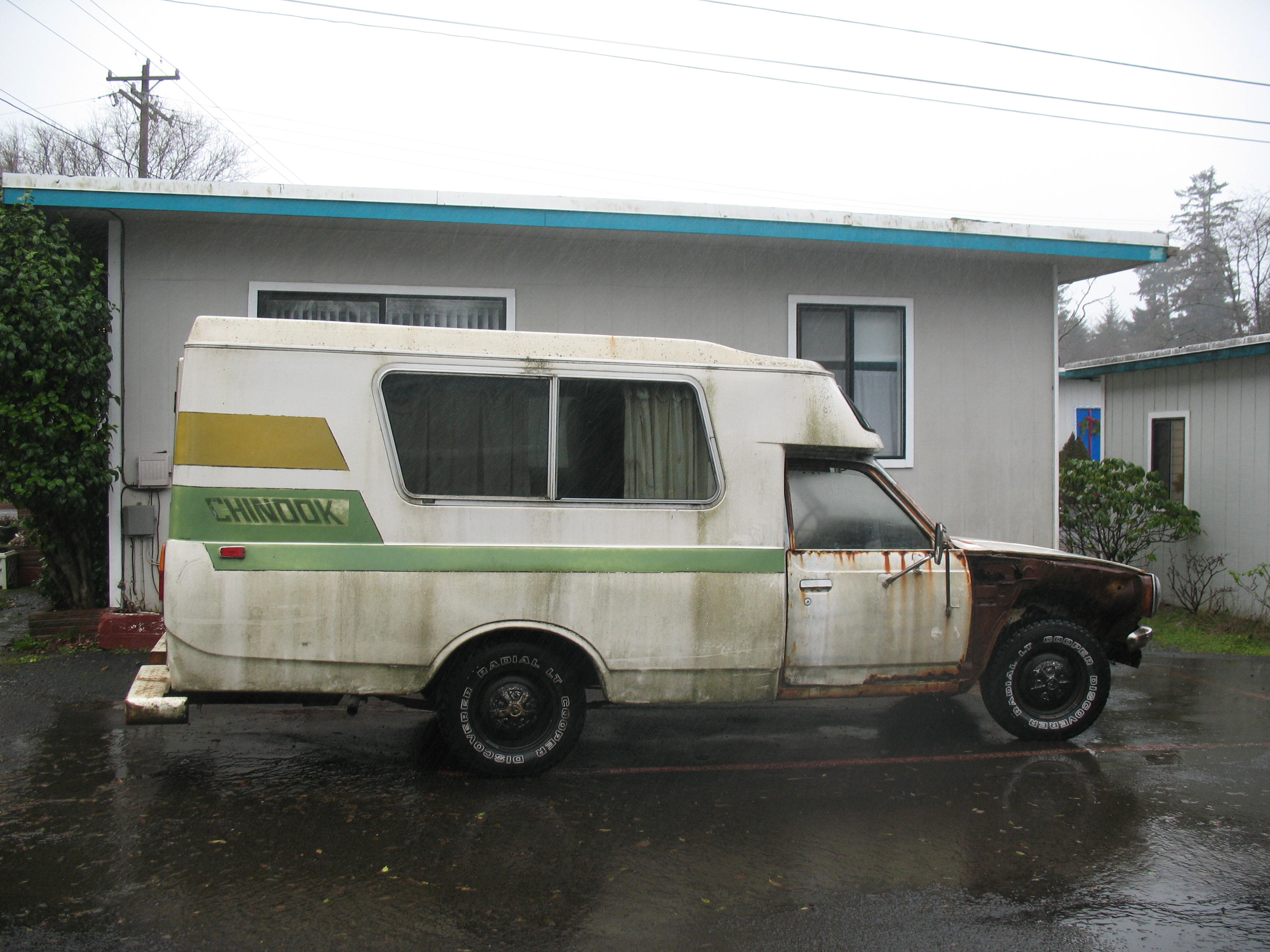
In 20 years of residing at the Oregon Coast, I’ve observed and met a lot people living out of backpacks, bindles, totes, cars, trucks, ancient RVs, buckets strapped to bicycles, even a briefcase once. Most of the people were men and they came in all ages. Most were alone. Some had dogs and one had a pot bellied pig. One carried a ferret in his pocket. A few carried cheap guitars or ornate walking sticks.
They were all on the move at different speeds. Often the movement was in circles or meanders. I’ve met these people in state parks, parking lots, beaches, clearcuts, street intersections, dive bars, coffee shops. I’ve met them during all seasons but the encounters in the winter rain particularly stand out. Many of them remind me of lyrics from Bob Dylan songs. I saw a multitude of them in the aftermath of 2008’s Great Recession.
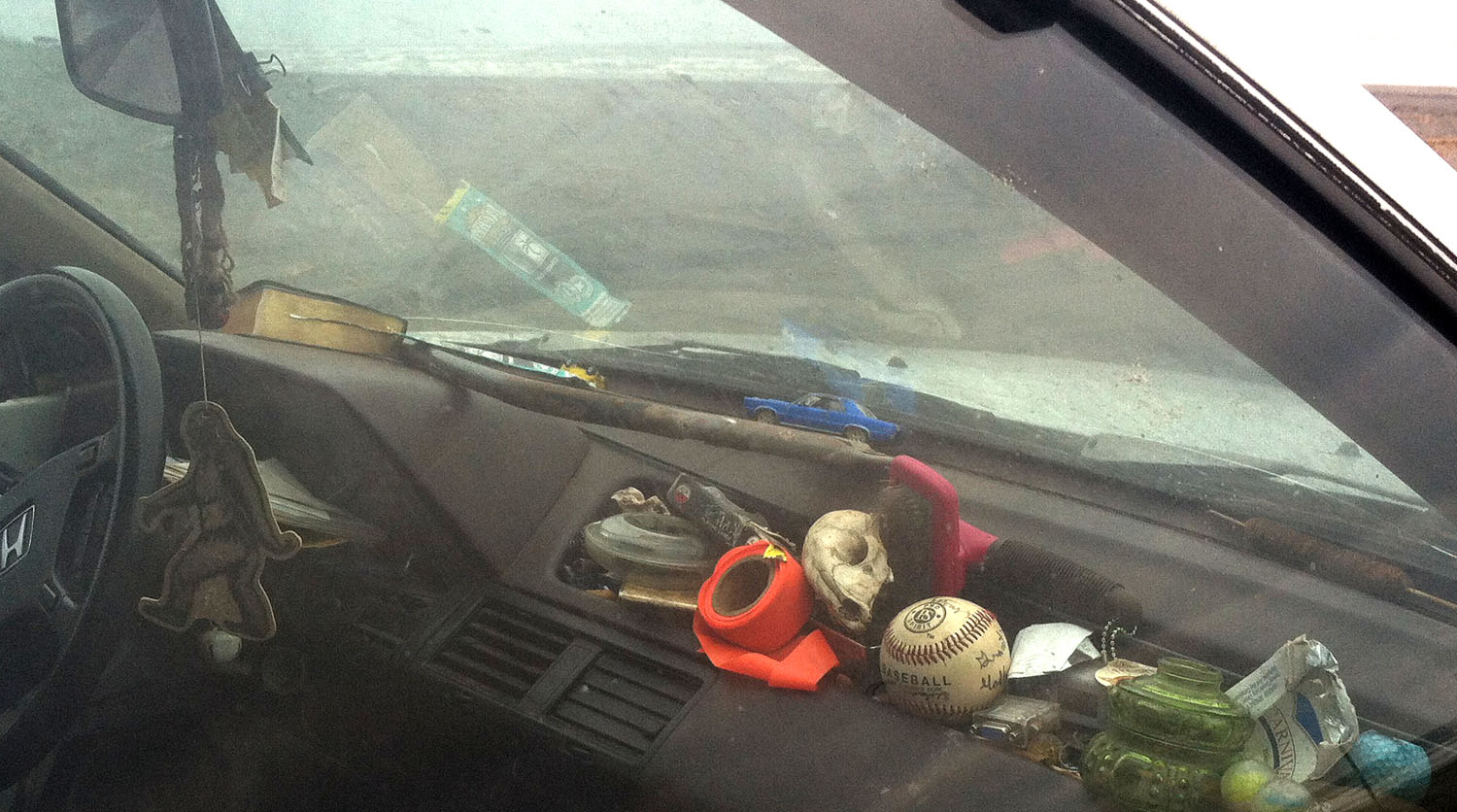
We talk about their rigs, some of them quite astonishing to behold in their jury rigging with wire and duct tape. The displays in the dashboards of their vehicles were often quite remarkable. We talk about their dogs, destinations, driftwood and whatever else drifts through at the moment. Frequently, our talks don’t contain any linearity to them. I’ve asked these men a million questions and they have always responded with complete candor. It’s like Bob Dylan said: You’re invisible now / you’ve got no secrets to conceal.
A guitar is always a good conversation starter and I often pay for a gig right there. (Big tip for any Rolling Stones tune.) When we part, I typically give them one of my books or a can of dog food if they have a dog. I’ve written about these men for years in my essays and books but recently reconsidered their fluid situations with new questions after listening to mix tape of Bob Dylan songs I made 30 years ago. I hadn’t heard it in two decades.
Are these men lost in life? Are they attempting to find something? Have they, in fact, found it by living the way they live? Might I be one of these men one day?
In another era, these men might have been called, “drifters.” It was a semi-pejorative term, but there are countless examples where the drifter character exerted a powerful, nearly mystical anti-hero presence in books, movies and songs. To quote Bob Dylan from his most famous song: How does it feel / how does it feel? To be on your own / with no direction home / a complete unknown, like a rolling stone. Bob Dylan has drifted for over half a century and chronicled insights from his remarkable personal journey into a Nobel Prize for Literature. Drifting got him somewhere.
I often caution myself from overly romanticizing these men. Several were outright miscreants. Some appear wracked by addictions and mental illness while others suffered from obvious poverty. A few seemed on the run, perhaps from bad divorces, bad raps, bad luck, bad decisions, bad debts, capitalism, trauma of one sort or another, maybe even a sex offender status.
Does this constitute being lost? Being lost to a productive role in the economy? Do these men need help finding themselves a new, healthier path? I have no idea.
In my experience, though, this type of wandering men is not the majority. I have met many who demonstrated ingenious creative skill in a variety of fields: art, crafts, poetry, mushroom sales, music, healing, spirituality, conserving nature. Many of these men can, if prompted, instantly articulate a philosophy of life in considerable detail. How many of us can do that standing in the parking lot of a grocery store? In the rain?
Have they found the unique ability to live absolutely in the moment? Have they found the utter simplicity and non-materialism that so many of us crave? I have no idea.
I don’t know where I’m really going with this discursion. Sometimes writing on a subject without a direction is the best place to get somewhere interesting. I do know I want to learn more about this curious rambling version of the Lost and Found story on the Oregon Coast. There are many layers to it, some concrete, some opaque, just like a great Bob Dylan song.
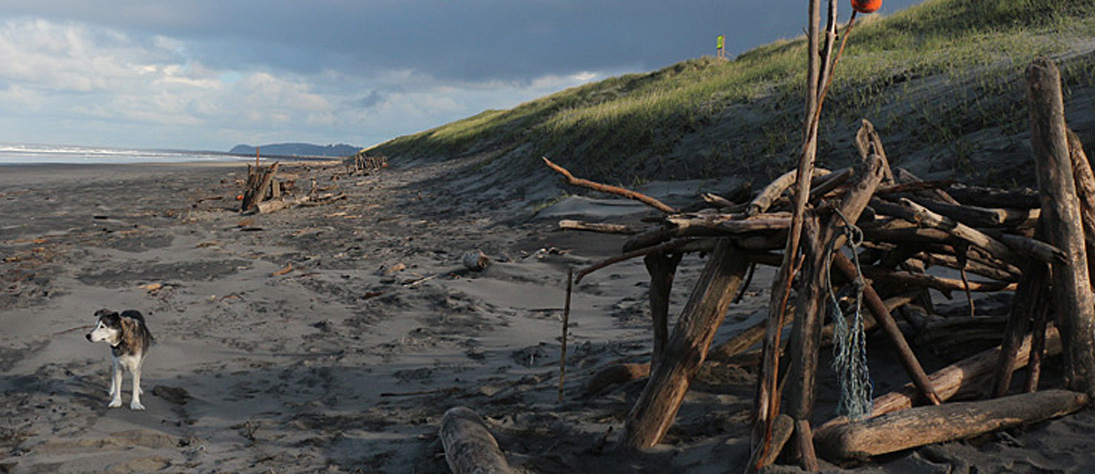
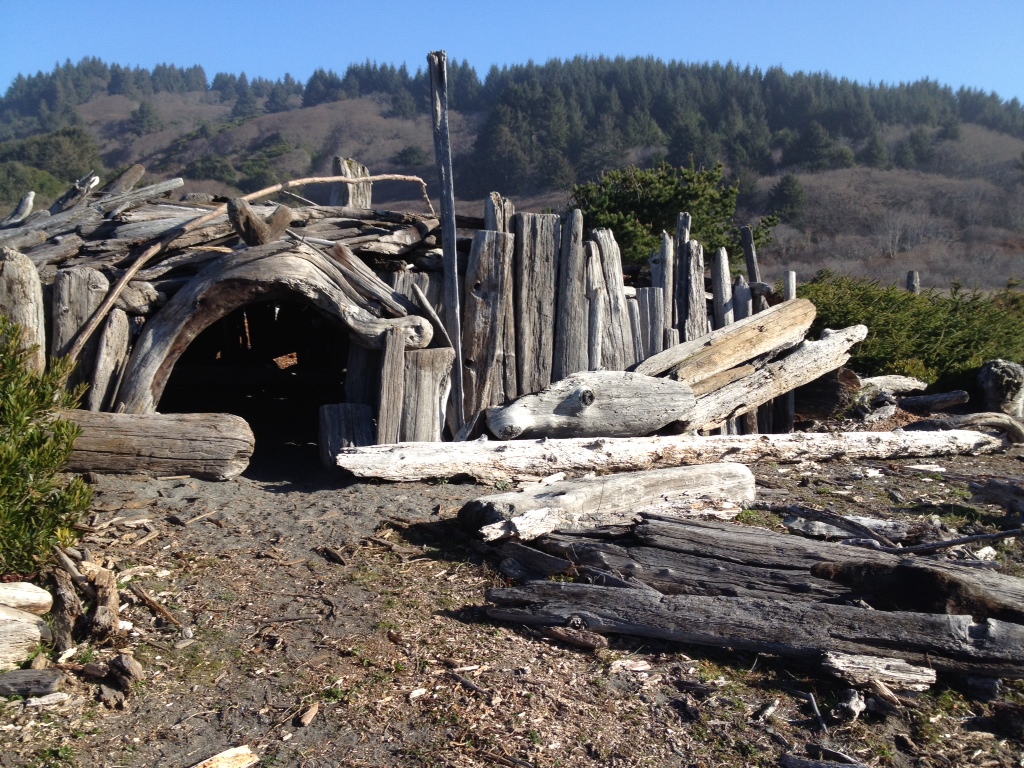
I once had a husky that brought me sticks and logs to help build driftwood forts. After she died, I spread my husky’s ashes inside a fort I built for her. Fort Sonny, I called it. It washed away with the next high tide, sort of what happened to my life recently. Life is like that, though.
When I am gone, and if my body is found, I want my ashes spread inside a driftwood fort. But who will do it? Can I train a dog?
I had a first date building a driftwood fort. I made a five-star barbecued salmon dinner inside a fort. I once sat in a fort with meth addict and watched her drink a beer and scratch scars on her face. I once built a fort with the most beguiling woman I’ve ever met. We were drinking wine and taking photos and I thought she was the one who would merge with me on the Oregon Coast and make a valiant stand against conformity. She wasn’t the one, that was my fault, but she was a damn good builder, with those great arms of hers. I once thought I would get married inside a huge fort constructed beforehand by the wedding party. Then we’d burn it down.
With several friends, I built the biggest driftwood fort in Oregon history not far from Lost Creek on the Central Oregon Coast. It lasted two days before authorities tore it down. They simply couldn’t grasp its audacity and magnificence and I think it struck fear in them. A rich beachfront property owner once destroyed a favorite fort of mine with his accursed placement of riprap to safeguard his mansion. He spent one week a year in that mansion. I met his wife near the ruins a few days after the destruction and she’ll never forget that meeting, I assure you.
About building: relish the labor. Collaborate. Support one another. Talk. Invent. Try out ideas. Invite ideas. Amend them. Discard what doesn’t fit. Embrace what does. Seize the metaphor you are fashioning with your own two hands. Erect spars and stanchions. Hoist, maneuver and interlock crooked wood into shelter, art, studios, secret passages; make pure whimsy or precise architecture that enchants fellow beachcombers. Watch from afar as they crawl inside the structures and return to childhood. Watch them take naps, too. It always happens. Turn detritus into delight, flotsam into fun. Add a little cairn here and there for extra measure. Let everything go with the old sound of the ocean roaring in the background. Relaxation will infiltrate every atom of your existence. Forage for wood! Fetch branches and finagle logs. Fortify your life and find the fort within. Forswear the fiendish foes that finagle frantic fatigue from your soul. Fight the fastidious factory mentality with the fulminations of facetiousness that enable you to forget the furor. Find the best F word in the fort lexicon and free it to fly like a falcon and float on forever. Fort fairies will dance and fort minstrels will sing. Frolic with fort scout dogs. Realize the driftwood fort you will build is unique and belongs to no one except all of us and the eternal cycle of nature. It will not last—that is its simple beauty and profundity.
Several years ago, I built 17 driftwood forts on Ona Beach with 60 sixth graders. They were an astonishing collection to say the least. The most intriguing one was constructed by a group of three girls. It had no walls, just a framed entrance with two poles that balanced upright against one another. When I asked them about this curious design, they didn’t have an answer. Perhaps their fort was built on a purely subconscious adolescent desire to create or find a portal to a different dimension. I walked through the entrance and instantly felt a good vibration. I told the girls and they merely nodded. They already knew.
I once built a super fort at Fort Stevens State Park and left behind a little waterproof notebook and pen encased inside a freezer bag. I called this notebook the Fort Registry. The first page contained these directions: “Please leave your name and your story in building or enjoying this fort.”
Over the next few weeks, I checked the registry for comments. Here’s what was written:
• We came and found shelter in this driftwood forts. The view spectacular, provisions lacking.
• First day on the Oregon Coast Trail. Started today at south jetty. Headed to Florence or beyond. Saw this fort and had to stop. Love it! A great place to take a rest and smoke break.
• Me and my nine-year-old girl found good shelter in this finely built fort. It proved to be a great resting stop on our journey. Wish we could have stayed longer but nightfall is coming and we need supplies from town.
• Help me! I’m on the worst date of my life!
• Cool spot. Me and my girl sat here before it rained and drunk (sic) a beer here.
• Beautiful fort. The ocean air warms my face and the breeze forces salt air into my throat—pushing away fear and worry. In this sum and shade I trust myself and enjoy the moment. Hi! We were following animal tracks and stumbled upon this fort. It’s very nice.
Building driftwood forts during my ordeal perhaps kept me from committing suicide. It certainly kept the writing alive in my mind and positive energy flowing through my body.
Consider this: virtually all driftwood forts are initiated by adults. Why?
I led 27 field trips with Oregon Coast students to build driftwood forts. That’s got to be some kind of record. I’ll never forget teaching a new student from Mexico how to build a fort. He came alive. He was trying to drag logs twice his size. He fell down. He laughed. He was born into Oregon that very moment. We went inside his fort and I ordered pizza for his classmates with my phone. The pizza delivery dude brought them right to the fort!
I’ve built forts in snow, sleet, rain, wind, fog, sunshine, at morning, noon, midnight, sober, drunk, alone, with people. I’ve built forts in the presence of eagles, ospreys, falcons, murres, coyotes, raccoons, gulls, sanderlings, pelicans, sandpipers, ravens, crows, bumblebees, hummingbirds, seals, sea lions, whales and dolphins. I build in collaboration with my bucktoothed friends, the beavers, Oregon’s official state animal, who feast upon willows, alders and cedars in the upper watersheds and let the wood loose into creeks and rivers, where it floats and floats out to the ocean and then comes to rest, gnarled, chewed and stripped, on a beach. Clearcuts help furnish the construction materials, too, the absolutely only beautiful benefit to clearcuts.
I once built seven forts in seven days and it was good. I once built a fort at the same time the incoming tide was simultaneously destroying it. I loved that juxtaposition. Heavy. By the way, that is the only time I have ever seen a fort collapse. They all collapse eventually, but one seems to witness it. Interesting. There is a lesson in that.
I would estimate I’ve built 92-percent of forts by myself (here, I’m not counting the dogs). I have never seen another person building a fort with the exception of people I’ve brought along to build them. I’ve built forts from Hammond to Brookings. It typically takes me a half hour to get a fort going. I never have plan when I begin building one. Something takes over. I would say I complete one out every two forts I start in a single time period but often return to a fort for days or weeks and keep adding to it. A fort is never completed. I will say that corral forts are probably my favorite design because you can easily nap, make out, eat or write inside them and take refuge from the wind.
I published a book about driftwood forts by an inspiring Oregon artist and author. The book sold out in less than a year. It’s a cult tome now. We started an organization called The Driftwood Forts Association. It’s easy to join. Go build. I helped oversee the publication of what surely must have been the only publication ever produced by high school students on the practicalities and metaphysics of building driftwood forts. I wonder if any of them remember that rainy afternoon or have built a fort since then.
What is it about these driftwood forts? Why do I evangelize them so? Why I am writing 2100 words on the subject this morning when I should be trying to write something that will help save my house? I have my various theories: the perfect blend of spirituality, silence, getting off your ass, making art, making mystery, building shelter, exercising, meditating, entertaining and enlightening one’s self and others, building something anonymous and evanescent. They will always go away and in that they last forever. People have scoffed at my passion for fort building. That doesn’t bother me at all because I know how the activity instills goodness in my heart and puts smiles on faces of people I will never meet. What’s wrong with leaving something fun and enchanting behind for others to encounter at the beach? That seems to me a fine metaphor for how to live. It is a completely tactile metaphor as well.
It never costs a cent in Oregon to build a driftwood fort on an ocean beach and never will.
There really are no rules to building forts. I just like using only what it is found on the beach and not bringing tools. Tools clutter the mind. The idea is to use your hands. I also never steal wood from another fort to create my own. I like decorating forts with kelp, shotgun shells, clam shells, skeletons, beer cans, bottles, rope, cigarette lighters, children’s toys, whatever washes ashore and strikes my fancy. I once wrapped a fort with the brown film of a cassette tape. I vaguely recall it was Bob Seger or Paula Abdul.
I was never able to interest a national magazine about driftwood forts and I tried a dozen times, including Architectural Digest. The editors probably thought my queries childish and photographs strange. Imagine them reading those queries in glass towers overlooking cars and concrete inhabited by creatures utterly disconnected from the natural world. If I could lead the Oregon legislature in a fort building session it would change the fortune of this state. I always wanted one of my principals to hold a faculty meeting at the beach where we would build forts instead of looking at screens and papers. My requests were never taken seriously.
And finally, a remembrance of my last moment as a high school teacher: It didn’t happen in a classroom. It was on a beach, Clatsop Spit it used to be called, near the South Jetty. Forty two students and I were building eight or nine forts on the first day of June. Almost a year later, one of them is miraculously still standing, high up in the dunes, an outpost with a tremendous field of fire.
We christened ourselves the Oregon Driftwood Brigade. I recall not teaching particularly well that afternoon, stewing needlessly over a few recalcitrant students, but nevertheless, I felt that I had inculcated the tradition. Perhaps they will continue to build and teach their children to build. It’s been that way in Oregon for a long time. My work in this field is done. It was a good run and I got to run with some incredible young people. The last thing I ever did as a teacher was build driftwood forts. Is there a word for that kind of ending? I can’t think of one, but it might come to me when I build my next fort.
There I was running around, commanding the brigade with shouts and driftwood riding crop, and offshore, an invisible tsunami of opaque law and order was about to rise up from the gray depths, move inland with the speed of social media, and drown me. It did. I never saw it coming. I had my back to the ocean building forts, but it wouldn’t have mattered anyway had I been facing my dearest friend.
I did drown that day, but began breathing later, when I started building driftwood forts again, this time as a physical and mystical act of repurposing and a sweaty reminder that nothing last forever.
Forts have moved to another realm for me now. I gladly went.
Long ago, I dated (and eventually married) a remarkable woman who taught me some of my greatest lessons on the meaning of Lost and Found. One lesson in particular has always stood out, but it recently evolved because my circumstances dramatically changed.
The original lesson unfolded in the slower days before cell phones and a stray dog crossed our path as I drove us to a movie in Portland. Rain fell in walls across the streets. It was one of those Oregon rains where drivers pull over to wait out the deluge.
She told me to stop—now!—but I objected because arriving late to a movie then ranked as my worst pet peeve. She raised her voice, commanding me to stop. I did. She said, “There are three kinds of people in the world: 1) people who help lost dogs when it’s not convenient; 2) people who help lost dogs when it’s not convenient and raining; 3) people who never help lost dogs. I only date the second person.”
The rescue mission was on right there. It required considerable effort, but we corralled the dripping dog in the car, and read a phone number on his tag. We drove for what seemed like forever until we found payphone. She made a call and left a message. A few hours later, we reunited the dog with its overjoyed owner and celebrated by cooking a fancy Italian meal and going bowling.
Ever since that rainy afternoon a quarter century ago, I have made it a point to help lost dogs (and cats) who stray across my path. Naturally, every time I render aid, I am on my way to doing something else: work, an appointment, meeting, grocery shopping, social occasion. Aren’t we always doing something else when we encounter a lost dog?
In 20 years of living at the Oregon Coast, I have encountered 15 dogs that were strays and rescued 11 of them (yes, I keep score.) Sometimes, a lost dog simply won’t come to me and I lose it during the chase. I’ll never forget my failed attempt at tackling a greyhound on a beach; it was never seen by its owners again.
My most recent successful mission occurred a year ago in Astoria. I was driving the hills of the south slope when I saw what appeared to be a discarded stuffed animal in a drainage ditch. But then the stuffed animal moved, so I halted the truck and got out. Moments later I was loading an elderly white lapdog into the back of the truck. A day later, with the help of a friend, we reunited the dog with her owner. I no longer recall where I was going or what I was supposed to be doing when the dog appeared. I got there eventually and did what needed to be done.
As I said, the lesson imparted to me long ago about the importance of attempting to rescue lost dogs has taken on new meaning because of my unexpected immersion into the criminal justice system.
The number of lost human beings I’ve encountered wandering through this system has been staggering, and I partially count myself as one of them, although I sense, with the help of new friends, family and ineffable forces, I am on my way to finding myself. Still, there is a long way to go because I have learned the journey of finding yourself is a life-long endeavor.
Back to rescuing lost dogs. A thought occurs to me: could I apply the lesson when I encounter lost people? I can easily think of a dozen reasons why the analogy falls apart in reality and metaphor. But I can also think of ways it does hold up in both categories.