Nestucca Spit Press Meditations Blog
A Blog by Matt Love
  • Home
  • About
  • NSP Categories
    • NSP Meditations
    • Lost and Found
    • Writing
    • Driftwood Forts
    • Oregon Beaches
    • Of Walking in Rain
    • Oregon Coast_History
    • NSP Correspondents
    • Oregon Tavern Age
    • Astoria
    • Fiction
    • Poetry
  • Back to NSP
  • Contact
RSS
July 10, 2017

Bonnie and Clyde Files 10

Matt Love Bonnie and Clyde Files, NSP Meditations boats, Bonnie and Clyde, dog sanctuary, dogs, Oregon Coast, Oregon rivers, toy boats

I gathered proper stones from the bank of the river and surveyed a suitable site for a harbor. In short order, I had built a harbor for my toy boat. I reached into my coat pocket and pulled out the boat. Clyde came over and tried to bite it. He thought it was a treat!

Bonnie showed up. Treats from my other coat pocket subdued the team and I placed the boat in the harbor—a snug fit. I watched the boat in the safety of the harbor for a few seconds…and…something seemed amiss.

Toy boats are meant to float, follow a current, take the wind. What kid playing with a toy boat wants to watch it in a harbor, just resting there? Where’s the adventure in that? Certainly the captain and crew are bored. So are the sirens and sea hags waiting to inflict torment on distant seas.

My friend had found the plastic tri-colored boat, a steamer of some design, in dry dock, in the basement of a forlorn old house. When I first inspected it, I felt her in decent seaworthy condition and that she would become the flagship of my fleet that I would collect and bring to the river. Launching any vessel never crossed my mind.

It certainly did now! It was obvious the boat must sail! I had to release it to the river this very gray morning.

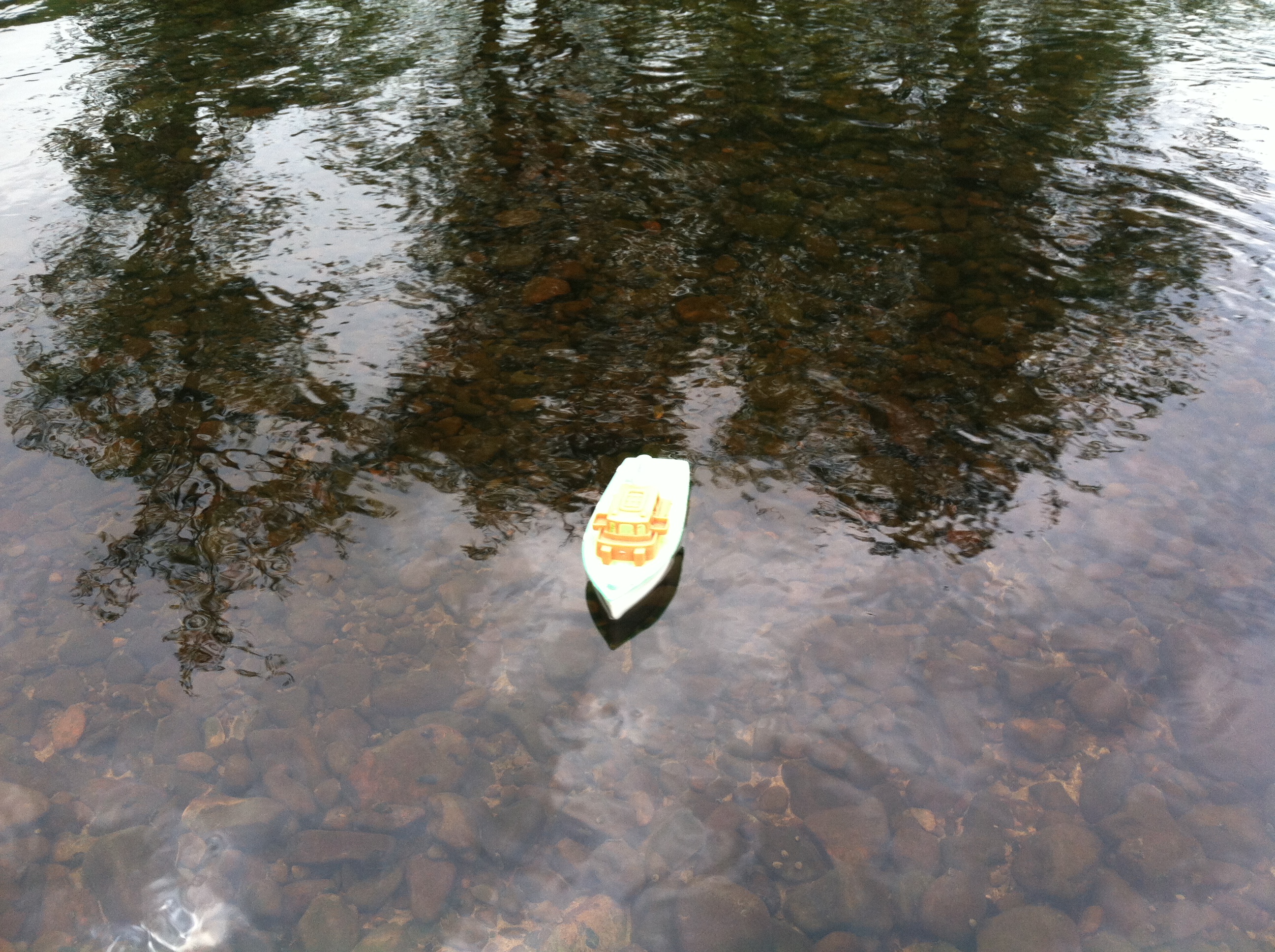
I knelt down and picked up the boat. Bonnie and Clyde came over to observe. I walked upriver 20 yards and the dogs followed. I knelt down again and set the boat upon the water as far as I could reach out into the channel. I stood up and watched.

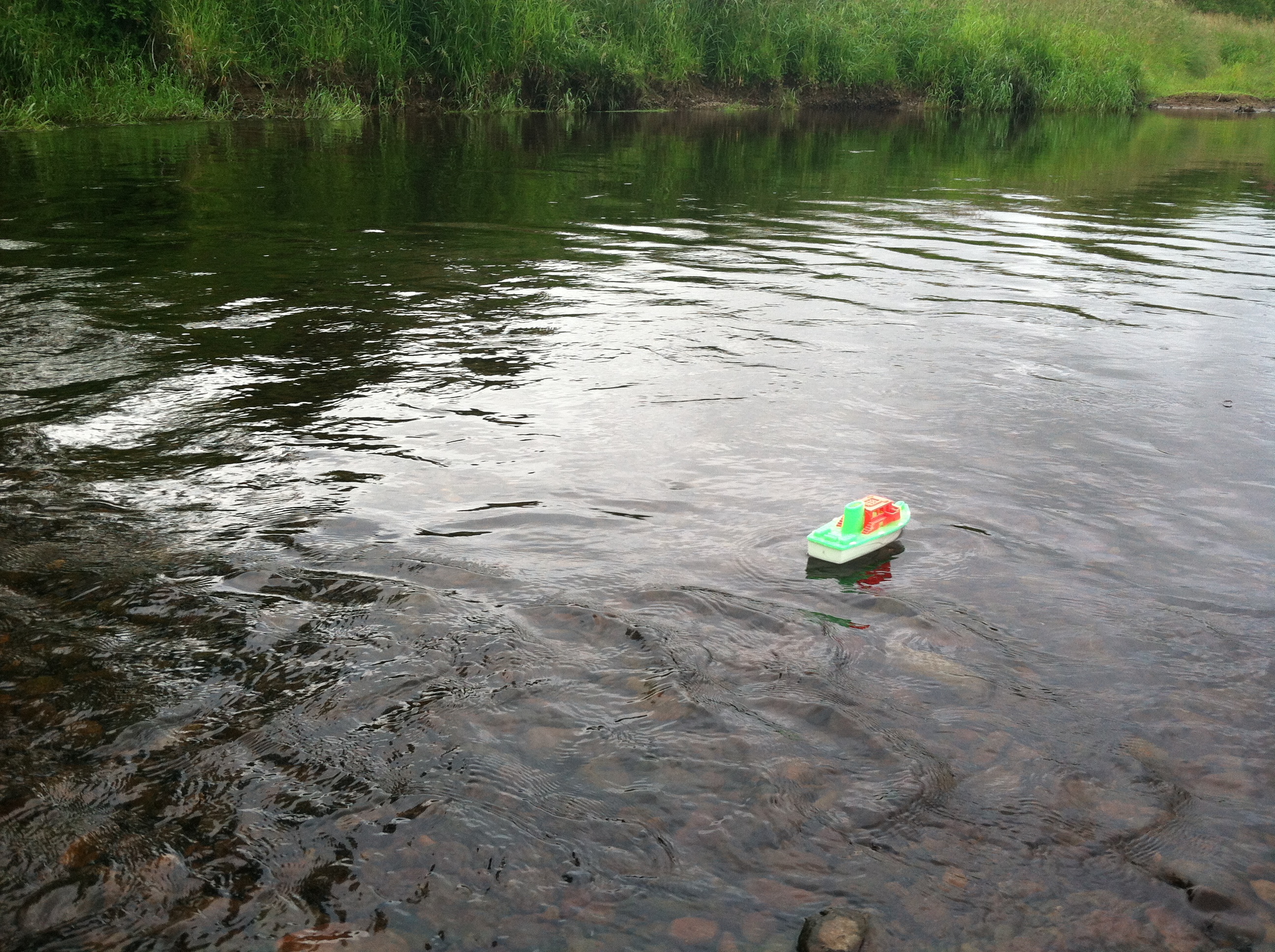
The boat spun in slow circles, then caught the current, nosed forward, and started floating down the river. Clyde thought about going in after it, but I held him back.

I followed the boat as it picked up speed. I snapped a couple of photographs continued to follow. A short stretch of mild rapids approached and I wanted to see how the boat handled that challenge. At that moment, it occurred to me that I had forgotten to name my boat or christen her on the maiden river voyage. What blundering!

She spun around twice and the bow went under more than once, but she survived the rapids in fine shape and then found a slack side channel and got pointed in the right direction. She floated around a bend and my nameless toy boat vanished from my sight, heading down the Lewis and Clark River, into Young’s Bay, into the Columbia River, across the roiling bar, into the Pacific, and undoubtedly to Japan, where some child would find her at the wrack line, and wonder how she ever got there.

(If you found this post enjoyable, thought provoking or enlightening, please consider supporting a writer at work by making a financial contribution to this blog or by purchasing an NSP book.)
July 8, 2017

Return to Saddle Mountain

Matt Love NSP Meditations, Oregon Coast_History Coast Range, matt love, Oregon Coast, oregon hiking, Oregon mountain, Saddle Mountain, writing

(This an updated version of a personal essay I wrote a couple of years ago. This piece has taken on considerable new meaning in the last year, as has Saddle Mountain.)

Two years ago, I took a “float” in a sensory deprivation chamber in Astoria. It was my first time doing so and I went into the experience with all sorts of expectations. None of those expectations materialized.

Instead, while floating, my mind flooded with images of Saddle Mountain and the imagery was so intense that I sensed the mountain calling me to return after a 28-year absence to reconsider a poignant episode from my past.

Only a fool doesn’t heed a call like that.

A few weeks after the float, I climbed Saddle Mountain with a good friend (now gone from my life.) Someone else was there with us, too, in spirit. Her name was Janet. We hiked the mountain together in 1987, as boyfriend and girlfriend. We were both 22 years old.

I’m 53 now and Janet is dead. Twenty-two years ago she died from breast cancer after a two-year battle that included experimental procedures that later helped many women survive. Her departure from this world was the most devastating loss of my life.

Saddle Mountain is a 3,288-foot peak in the Coast Range, southeast of Astoria. It’s a challenging but popular hike of 2.5 miles to the viewing platform with a sharp 1640-foot gain in elevation. The last 200 yards are arduous but worth it for the stunning panoramic views of the surrounding mountains, Columbia River and Pacific Ocean. The view is the ultimate reward, of course, but another wonder of this hike is walking through an astonishing variety of different floras.

On the Sunday afternoon my friend and I made our ascent, the parking lot at the trailhead was jammed and we encountered dozens of friendly people of all ages and all nationalities during the two-and-a-half hours it took to reach the top and 90 minutes back down. We also met some of the coolest dogs I’ve come across in recent memory, including a pug and a dachshund. Yes, a dachshund made it to the top of Saddle Mountain!

As I hiked, I thought about Janet; she was attending an art school in Los Angeles when we met on the patio of a Portland bar that overlooked the Willamette River. I was working as a teacher’s aide in an elementary school, coaching junior high football and basketball, and thinking about a possible future career as a teacher.

We hit it off in spectacular fashion and immediately started going out. I was blown away by her talent as a graphic designer and she was the first woman who introduced me to the importance of having a defined aesthetic in the creative things you accomplish. She was a great teacher of art and beauty. She had the greatest laugh I’ve ever heard. I confided in her my secret desire to become a writer and she encouraged me—with a little profanity—to get on with it.

During the course of our 18-month relationship, I wrote her at least 300 letters, sometimes three a day. It was probably my first book even though I didn’t realize it at the time.

I visited her in Los Angeles on several occasions and helped move her back to Portland after she graduated. We drove Highway 101 all the way to Oregon in a 30-year old pickup truck that seemed right out of The Grapes of Wrath with all her stuff loaded up and tarped down. It was the road trip of a lifetime.

Eighteen months. That was it. Back in Portland, I made a fatal error with her and she abruptly moved to Seattle and disappeared from my life for what I thought was going to be forever.

Janet reappeared out of the blue a few years later, newly married to a fine man, forgave me, and wanted to forge a new friendship with me. I couldn’t believe her compassion toward me. I didn’t deserve it. I learned a lot about forgiveness from her. Actually I learned everything. We forged that new friendship on a new foundation and it imbues me to this day.

When we reconnected, Janet had become preeminent in her professional field and I hadn’t written a word for publication. She kept encouraging me and insisted that I give up conventional wisdom in pursuing my dream.

It was and remains the best advice about writing I have ever received. I only wish she could have read some of my books, especially the one about rain, which is a lot about having your heart broken and forgiveness.

My recollection of our 1987 hike is vague; most of it derives from a photograph of Janet and me at the summit. I don’t recall who took it. She’s wearing a gray hooded sweatshirt and I, a light blue jacket. There is a sliver of snow in front of us and that confuses me. What time of the year did we take the hike?

We are both wearing Converse Chuck Taylors—she white low cuts, me black high tops. Today, that makes me laugh. The very idea of hiking Saddle Mountain in Chuck Taylors is ludicrous. But then again, maybe not, since I wore shabby skate shoes this time and found them totally inadequate. Hiking tip: if you decide to climb Saddle Mountain, wear proper hiking shoes or boots. They are absolutely essential for the last brutal stretch over rock scrabble and wire mesh.

When Janet and I reached the top, I thought our future together seemed limitless. It was not.

When I reached the top the second time, I was hoping I would remember more about that day with Janet. I did not.

After she died, her husband graciously returned all the letters I wrote to her. I still have them; I’ve never read them. They have always made my hands tremble when I hold them.

(If you found this post enjoyable, thought provoking or enlightening, please consider supporting a writer at work by making a financial contribution to this blog or by purchasing an NSP book.)

July 7, 2017

A Phone Call for The Beach Bill

Matt Love NSP Meditations, Oregon Beaches, Oregon Coast_History Beach Bill, beaches, Matt Kramer Memorial, oregon, oregon beaches, Oregon Coast, oregon history, Oswald West, Tom McCall

Today marks the 50th anniversary of Oregon’s famous Beach Bill. Undoubtedly, many of us will commemorate this visionary law by going to the beach and cutting loose or taking a nap in a driftwood fort. Either way doesn’t cost a cent.

Besides celebrating, we might also considering educating others about this important anniversary.

To that aim, I have a somewhat guerrilla teaching method to help.

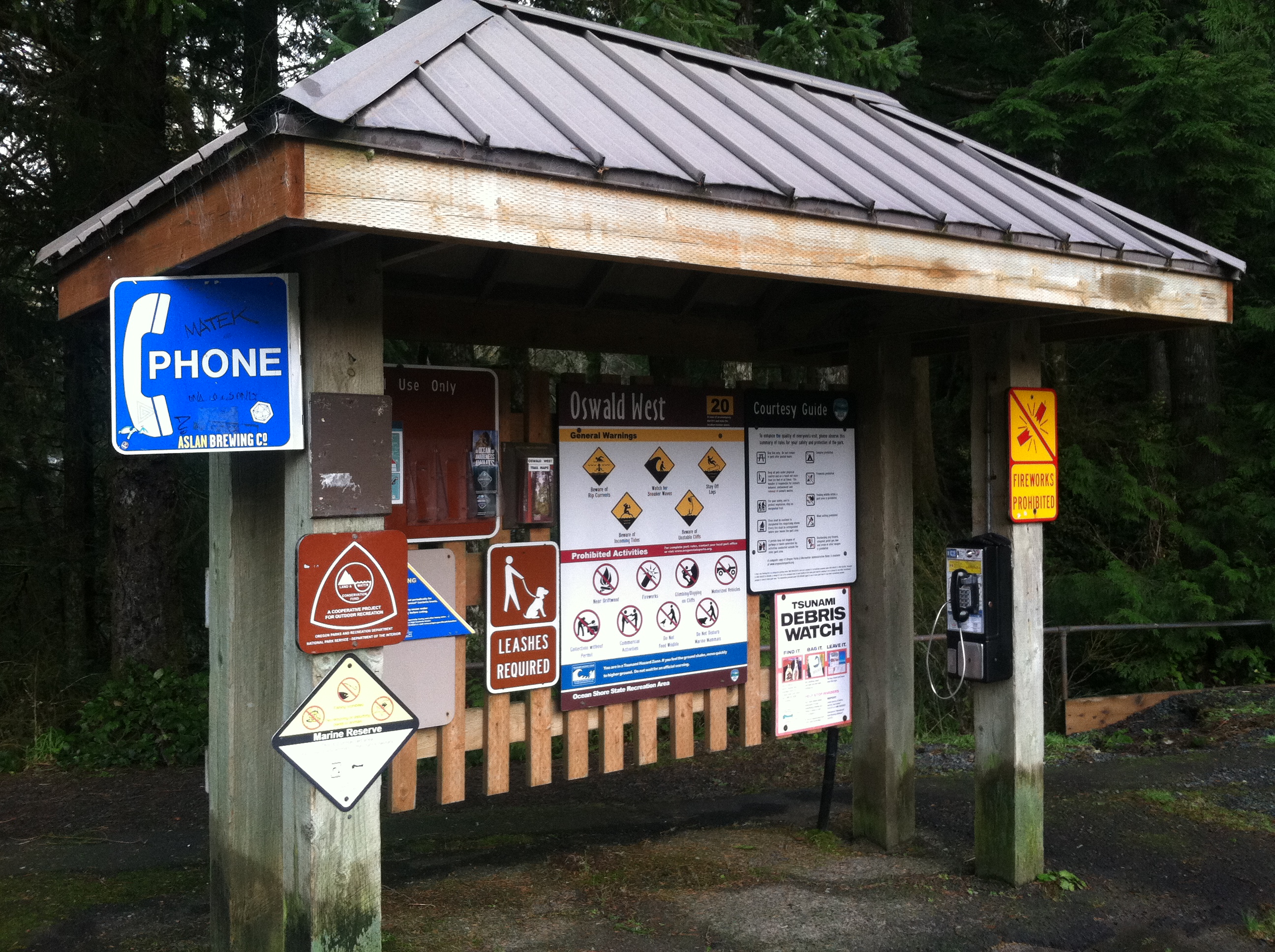
The telephone number in this photograph is from a pay phone at Oswald State Park. This park is nothing less than holy ground in the creation of Oregon’s unprecedented legacy of publicly-owned beaches, one of the greatest spots to surf in the state, the site of the Matt Kramer Memorial, and a perfect place to observe how free beaches enrich our lives.

I would like everyone reading this who cares passionately about Oregon’s beaches to call this number. Someone will answer because the park is sure to be mobbed and the phone is located at the beginning of the trail to the beach and adjacent to the restrooms.

And what person wouldn’t pick up! Hearing a pay phone ring represents an utter novelty in American life and is sure to intrigue park visitors on their way to and from the beach.

Below is a suggested script to use to use with people who answer. Or you can just wing it on your own.

You: Hello, did you know today is the 50th anniversary of the Beach Bill, a law which forever ensured that Oregon’s ocean beaches would remain publicly owned and free to use?

(The person may or may not know about the Beach Bill.)

If the person answers “yes,” then ask: “How are you celebrating the anniversary today?”

If the person answers “no,” then say: “Well, now you know. Spread the good word.”

I encourage readers of this blog to share this post on social media. Get that phone in Oswald West State Park ringing off the hook!

(If you found this post enjoyable, thought provoking or enlightening, please consider supporting a writer at work by making a financial contribution to this blog or by purchasing an NSP book.)

July 6, 2017

HB 1601: The Beach Bill

Matt Love NSP Meditations, Oregon Beaches, Oregon Coast_History Beach Bill, beaches, dogs, driftwood forts, oregon, oregon beaches, oregon history, oregon travel, Tom McCall

Below is the text of Oregon’s landmark Beach Bill, signed into law by Governor Tom McCall on July 7, 1967. Read it. Read it to your dog. Live it. Love it. Raise a glass to it. Build a driftwood alter to honor it. Sing praise to it around a beach bonfire. Notice those words “forever” and “free” in the text. It is important to remember that 50 years ago, Oregonians, our Governor and our legislature came together to save our beaches from privatization and exploitation. What are we, our Governor and our legislature doing today that will have a similar monumental benefit?

Be It Enacted by the People of the State of Oregon:

Section 1. The Legislative Assembly hereby declares it is the public policy of the State of Oregon to forever preserve and maintain the sovereignty of the state heretofore existing over the seashore and ocean beaches of the state from the Columbia River on the North to the Oregon-California line on the South so that the public may have the free and uninterrupted use thereof.

Section 2. (1) The Legislative Assembly recognizes that over the years the public has made frequent and uninterrupted use of lands abutting, adjacent and contiguous to the public highways and state recreation areas and recognizes, further, that where such use has been sufficient to create easements in the public through dedication, prescription, grant or otherwise, that it is in the public interest to protect and preserve such public easements as a permanent part of Oregon’s recreational resources.

July 5, 2017

Homage To Matt Kramer

Matt Love NSP Meditations, Oregon Beaches, Oregon Coast_History Beach Bill, beaches, Matt Kramer Memorial, oregon, oregon beaches, Oregon Coast, oregon history

Oregon’s revolutionary Beach Bill, which celebrates its 50th anniversary this Friday, nearly died a quiet death in a House subcommittee until Oregonians began to realize what was at stake if their beaches fell into hands of private property owners. That realization transformed the Oregon political landscape overnight and came about, in large part, thanks to Matt Kramer’s reporting on the issue

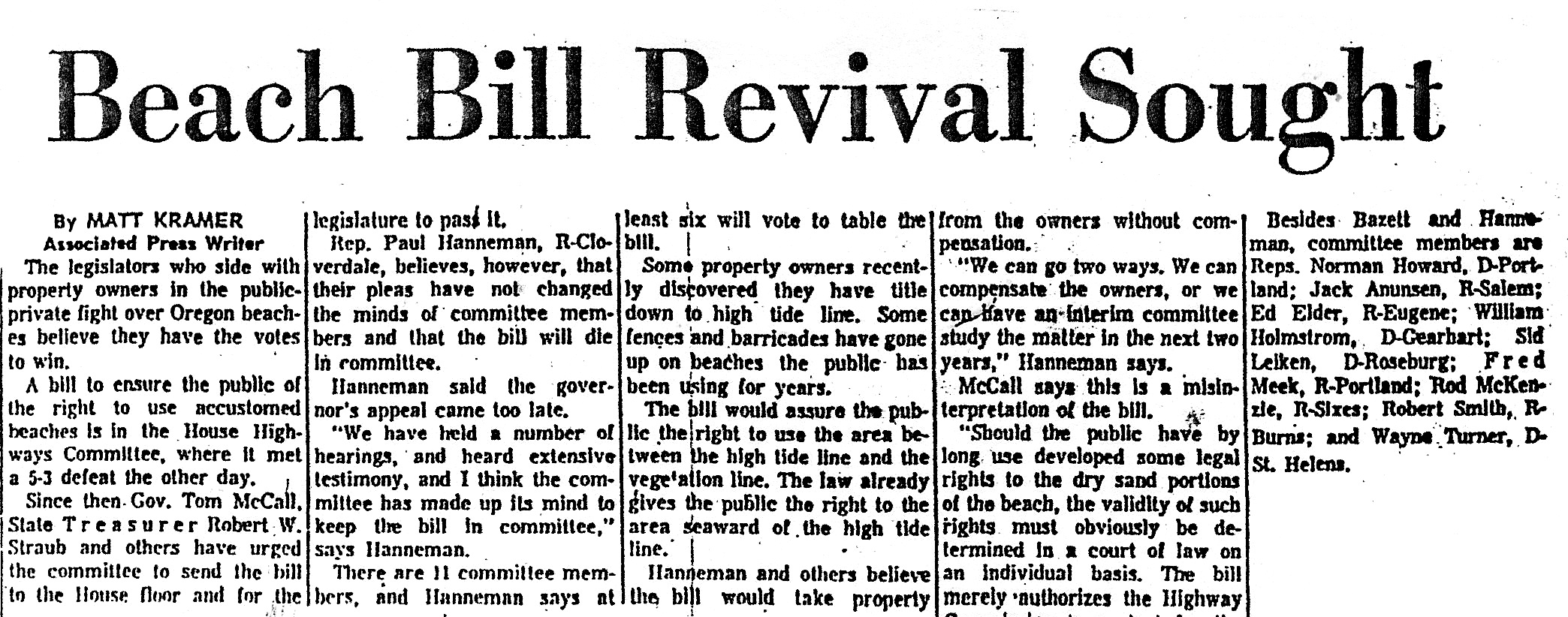
Matt Kramer was a veteran Associated Press reporter covering the Capitol beat in Salem during the battle to pass the Beach Bill. In the space of three months, he wrote approximately 50,000 words of hard news alerting and educating readers about the threat to the state’s beaches if the bill suffered defeat. One article in particular, headlined “Beach Bill Revival Sought,” appeared May 5, 1967 in newspapers across the state, and helped galvanize public support for the bill.

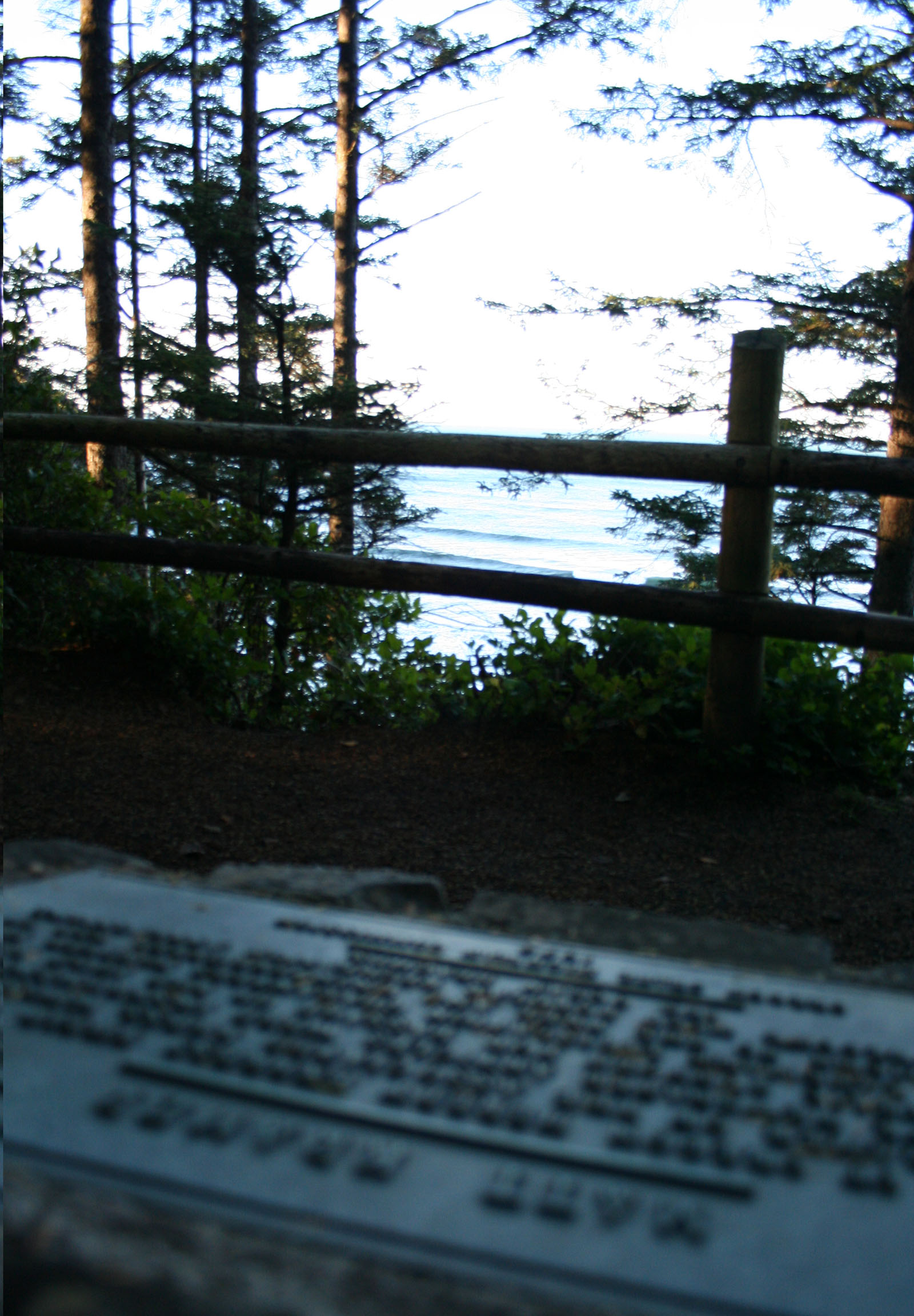
To honor Kramer’s journalism, the state erected a memorial plaque to him in 1972 in Oswald West State Park, overlooking Short Sands Beach.

The plaque reads: “The people of Oregon hereby express their gratitude to Matt Kramer of the Associated Press, whose clear and incisive newspaper articles were instrumental in gaining public support for passing of the 1967 Beach Bill.”

Anyone who loves Oregon’s ocean beaches should make a pilgrimage there and lay hands on the memorial. I visit all the time and always gain incredible inspiration from Kramer’s journalistic accomplishments. I guess you might say I consider him a hero.

July 4, 2017

Celebrate 50th Anniversary of The Beach Bill This Friday!

Matt Love NSP Meditations, Oregon Beaches, Oregon Coast_History Beach Bill, beaches, oregon, oregon beaches, Oregon Coast, Oswald West, Tom McCall

Twenty thousand times. That’s a conservative estimate of how many walks, romps, runs and meanderings I’ve taken down Oregon’s socialist ocean beaches in 20 years of living on the Oregon Coast.

I have never paid a cent for this privilege and that fact always amazes me. How did Oregon establish its unique legacy of publicly owned beaches and guaranteed free access for everyone? Over the years, I’ve thought about this a lot and believe it’s the single most inspiring Oregon story of all time and I never tire of telling it.

The story began in 1913, when Oregon Governor Oswald West signed a law declaring the wet sand areas of the state’s ocean beaches a public highway and thus in the public trust forever. He later wrote: “No local selfish interest should be permitted, through politics or otherwise, to destroy or even impair this great birthright of our people.” West defined Oregon’s “great birthright” as our publicly-owned beaches. I agree.

Five decades later, the looming threat of privatization of the dry sand areas of the beaches imperiled The Great Birthright’s legacy. In response to public outcry, a bipartisan Oregon legislature passed the Beach Bill that protected the public’s right to use the dry sand areas where Oregonians had done so for time immemorial. Governor Tom McCall signed into law the Beach Bill in 1967 and cemented Oregon’s special relationship with its ocean beaches.

If West, McCall and company hadn’t saved the beaches, well, where would be as a state? Where would I be as a person?

In 1997 I fled Portland and moved to the Oregon Coast to reinvent myself in a last ditch effort to become a writer. Not long thereafter, I discovered the awesome legacy established by West and the Beach Bill (never taught to me in school). The discovery quickly became the most potent force in my creative life and I’ve written hundreds of thousands of words extolling what the legacy has meant to me and hundreds of thousands of Oregonians. I’ll never stop writing about it. Here I am again!

I am not alone in my passion for our beaches. Virtually every Oregonian has a special and longstanding connection with their free ocean beaches, one that is dramatically different from residents of other coastal states. I’ve heard or observed hundreds of incredible beach-themed stories from a teenage Steve Prefontaine training in the dunes around Coos Bay to a woman throwing her wedding ring in the Pacific City surf to meeting what I think was a mermaid sunning herself in some South Beach riprap to building 17 driftwood forts with schoolchildren in three hours. And of course, all my adventures with the dogs. These have been the best moments of my life and I hope to have 20,000 more before I walk into the ocean to end my sentient life and return to the beginning of all things. A kind of a welcome-home party. That won’t cost a cent, either.

This Friday, July 7, 2017, Oregon will celebrate the 50th anniversary of the Beach Bill, arguably the most important piece of legislation in state history. If Oregon’s beaches mean anything to you, find some creative or banal way to mark this event. That might call for playing hooky from work or some other responsibility and driving to the beach. Do it. Concoct a lie.

(If you found this post enjoyable, thought provoking or enlightening, please consider supporting a writer at work by making a financial contribution to this blog or by purchasing an NSP book.)

«‹ 297 298 299 300›»

Teacher of the Year: A Novella

By Matt Love

A reluctant teacher becomes advisor to a moribund high school newspaper. He meets the new editor, a dynamic 18-year-old senior, and together they begin a unique creative collaboration that revives the publication and slowly slides into gray areas. As the poet Octavio Paz wrote, “To realize itself, love must violate the rules of our world...committed by two stars that break out of the conception of love, which implies breaking away and a catastrophe..."

Teacher of the Year
Amazon's Kindle Edition $6.99

Teacher of the Year unfolds in an energetic mixture of epistle, stream-of-consciousness, narrative and meditations on the craft and alchemy of teaching. There is no other more authentic literary exploration into the agonies and ecstasies of teaching in the annals of American literature than this novella.


A Substantial but Incomplete Autobiography in Poems

By Matt Love

In perhaps the largest, most eclectic volume of previously unpublished poetry in the history of Pacific Northwest literature, Matt Love presents 148 poems written over a 30-year span.

As he writes in the introduction to A Substantial but Incomplete Autobiography in Poems, “I have organized this collection into six categories: Ocean, Love, My Life, Oregon Tavern Age, Homelessness, Probation. These poems serve as a substantial but incomplete autobiography.”

“Confessionals, odes, scatological doggerel, polemics, tankas, haiku, prose, psalms, requiems, observations, love letters, lamentations, lyrics, stream of consciousness, meditations, lists, riffs, a eulogy, a sermon, a commencement speech, found poetry, tributes, elegies. I threw it all into an ancient cement mixer and hand cranked that concrete beast while watching blue herons undulate overhead and drinking red wine as the husky snoozed in his dirt fort. The result: A Substantial but Incomplete Autobiography in Poems, something merging where Charles Bukowski, Richard Hugo, Mary Oliver and Liz Phair blend together.”

None of Love's poems were ever submitted to poetry journals, contests or magazines, making this collection a true renegade project of passion and readable to any denizen of a coastal dive bar.

Amazon's Kindle Edition $7.99 (Free if you have Kindle Unlimited)

Recent Posts

  • Eulogy for Mark
  • Mark Leavenworth RIP
  • Roast Ruminations
  • Stand Em’in the Corner
  • Fasting Ruminations

Categories

  • Astoria
  • Bonnie and Clyde Files
  • Coos Bay
  • Corona Virus Thoughts
  • Driftwood Forts
  • Fiction
  • Lost and Found
  • NSP Correspondents
  • NSP Meditations
  • Of Walking in Rain
  • Oregon Beaches
  • Oregon Coast_History
  • Oregon Tavern Age
  • Pioneer Pride
  • Poetry
  • secret coast radio
  • Sports
  • Writing

↑

© Nestucca Spit Press Meditations Blog 2026
Powered by WordPress • Themify WordPress Themes