Nestucca Spit Press Meditations Blog
A Blog by Matt Love
  • Home
  • About
  • NSP Categories
    • NSP Meditations
    • Lost and Found
    • Writing
    • Driftwood Forts
    • Oregon Beaches
    • Of Walking in Rain
    • Oregon Coast_History
    • NSP Correspondents
    • Oregon Tavern Age
    • Astoria
    • Fiction
    • Poetry
  • Back to NSP
  • Contact
RSS
May 3, 2017

Remembrances of Father Andy Duffner and a Certain Gravel Road

Matt Love NSP Meditations, Oregon Coast_History Father Andy Duffner, gravel road, jesuits, matt love, Nestucca Sanctuary, nirvana, Oregon Coast

I’ve met one person who attained my conception of nirvana in his lifetime and his name was Father Andy Duffner. I’ve been thinking about him a lot in recent months, as my mind returns to a time when I was better connected to the land and beginning to find my way as a writer.

When I say he attained nirvana, or awakening, I mean that Father Andy was fully present at all times, had let go of all ego, material possessions, or professional aspirations. He had obliterated all desire. He understood with perfect clarity his role in the watershed—ecological and spiritual. He expected nothing. He served others and nature without any expectation of reward. He was calm every moment I was with him, and that included many contentious public conservation meetings where many people lost themselves in bitterness. He modeled the fading American art of composure. Animals and wildlife responded to him with incredible serenity. My three big dogs adored him and Sonny the husky particularly so. His precise daily practice in life was his meditation and I saw him practicing it all the time. I used to watch him repair a certain gravel road and that’s when I always intuited he had gone beyond us, and attained nirvana. More on the gravel road later.

I further make my case for his attainment because of that beatific look on his bearded face and the deliberate way he smoked a pipe.

We first met in 1998 when I became caretaker of the Nestucca Bay National Wildlife Refuge. Father Andy was a Jesuit priest from the Jesuits Oregon Province who administered the Nestucca Sanctuary, a lay and clerical retreat center that abutted the refuge. We were neighbors and became friends. He also became a teacher to me although I didn’t really recognize it at the time.

Father Andy passed away from pancreatic cancer in 2005, three years before I left the refuge, and it was a devastating loss to me, his Oregon Coast ecological community, and foremost, the Nestucca Sanctuary. He’s buried in a Jesuit graveyard in Spokane and that has always struck me as the wrong place for his final remains. They should have been interred or spread to the winds at the place he loved and cared for, but that is not the official Catholic way.

Nestucca Sanctuary was founded in the late 1930s. From what little I learned about Father Andy’s personal history, (and some of the following could be wrong) he arrived there in the early 80s after leaving a career as a professor of physics at Gonzaga. The Sanctuary was in pretty bad shape when he assumed leadership, and over the course of the next 25 years or so, he whipped it into shape, into one of the magical secret healing spots on the Oregon Coast. The complex consisted of a hard-wood-floored yurt, office, chapel, main lodge (with an incredible library packed with arcane books), dining hall, cabins, bunkhouse, and various other structures. Deer, hummingbirds and chickens roamed around the complex. Whenever I visited the Sanctuary, I often felt I was entering another world, a better one, and certainly one that had absolutely nothing to do with organized religion.

There was no telephone. In the event that someone from the Sanctuary had to use a phone, they had to visit my house on the refuge, two miles away, and knock on the door.

Father Andy used the telephone once, in 1998, after a huge storm knocked out power and dropped a dozen trees across the gravel road that led from Highway 101, past my house, wound around Cannery Hill, and ended at the Sanctuary. He called the local PUD and they sent a crack crew to cut us all out. Later, Andy thanked me for the use of the phone by buying me a six pack of Guinness beer and leaving it in my garage. There was no note.

Nothing is left of the Sanctuary today. It was purchased by USFWS a few years ago and they razed all the structures to the ground, or so I was told. The Jesuit land is now part of the wildlife refuge and that’s a great thing, because it was almost developed into a commercial retreat.

As I mentioned earlier, a gravel road, Christensen Road to be exact, played a significant role in constructing my belief about Father Andy’s attainment of nirvana. The Sanctuary was obligated to maintain the road due to an easement agreement with a dairy farmer who sold the land to the Jesuits many, many years ago.

For the uninitiated, maintaining a three-mile gravel road on the Oregon Coast where it rains 70 inches a year is a formidable task. It involves constant maintenance that includes scraping out potholes and replenishing of gravel. Father Andy had a little orange Kubota tractor to assist him and it was in immaculate condition. He would drive up and down the road, grading shoulders, repairing potholes, spreading gravel. He smoked a pipe while he worked. He wore ear protection. He was out there for hours and hours. He always waved to me and the dogs as he passed us on our two or three daily walks up the road to the top of Cannery Hill, where the best moments of my entire life occurred and I have never written about and probably never will.

Christensen Road was easily the best maintained gravel road on the Oregon Coast. It was no miracle that a pothole never lasted more than a single day. Father Andy met the obligation of the easement with a methodical and expert practice that he clearly took great joy in doing.

We never once talked about the road. There was nothing to say because it existed in perfection without a shred of pride attached to it.
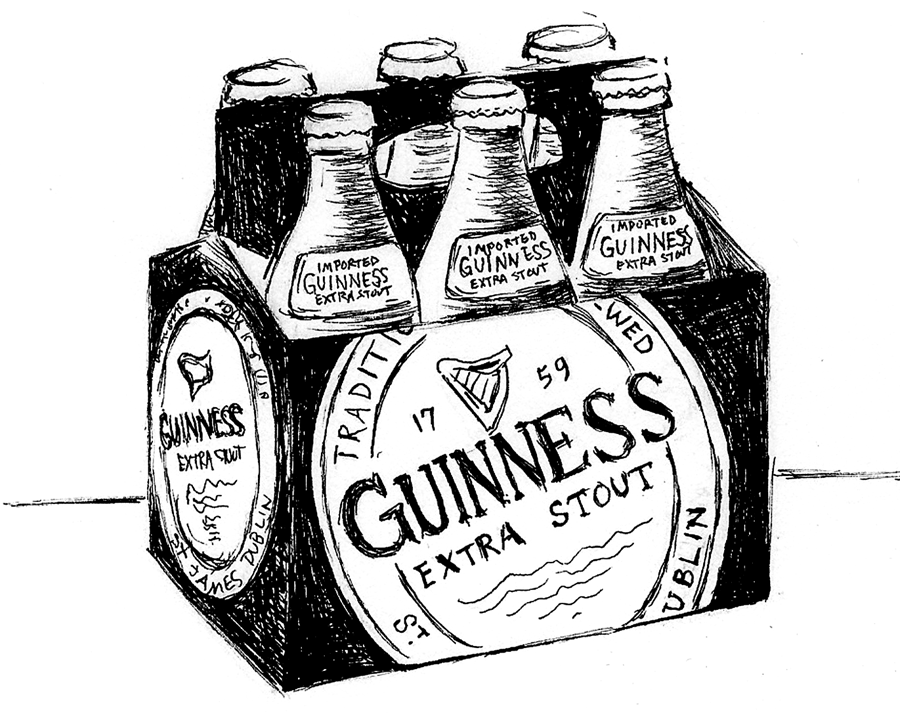
A few days after Father Andy’s death, I drank a six-pack of Guinness on Cannery Hill, where I sometimes watched him jog. The dogs were with me. We sat down in the grass and watched the ocean—and the road. I went there not to grieve, but to celebrate his extraordinary, sublime life, his attainment. The sun was setting and I wrote this haiku for him:

His orange tractor

Smooths away our road’s potholes

Pipe smoke fills the air

In my all my times together with Andy, a few dinners, many conservation meetings, chance encounters on the road and Cannery Hill, I think we might have said a thousand words—total—between us. Where we lived, we didn’t need to say much more.

I sure would love to talk to him now. He’d help me find a new path and help me to let go.
May 2, 2017

Whales and Bumblebees

Matt Love Fiction, NSP Meditations bumblebee, flash fiction, prince, short fiction, whales

(This is a short story inspired by watching a teenager try to stomp bumblebees while he waited for a school bus. I intervened. A previous version of this story has appeared in various places, and it was also later turned into an incredible hand-made book with illustrations by my greatest collaborator, whom I dearly miss. Print run: two copies. I wish there were more.)

At a historic summit that went unreported in the press, the whales and bumblebees decided by unanimous acclaim—we’ve had enough of humans. They take. They destroy everything. They’ve got to go.

It was quite the party at the summit. Many attendees cut a dashing, revolutionary figure. Whales drank krill from champagne flutes and bumblebees smoked hand-rolled nectar cigarettes. Raspberry berets and purple ascots were worn. Speeches were fiery. The dancing got dirty. They cut loose to Prince, their favorite performer. Right before he passed away, he gifted them with unreleased tracks about whales and bumblebees. He’d recorded a triple album on the subject. Prince knew what was coming.

The whales and bumblebees issued a manifesto at the summit. It was written in a big fat weird cursive script that humans couldn’t read on their tiny phones. It said, in part: “We only want to bumble among pretty flowers and swim unfettered through the seven seas. We shall not go extinct. We shall bumble in the meadows and prowl the silent depths forever.”

The whales knew a little something about humans. Call it inside information. They once lived on land like humans, but they had the good sense to return to the oceans. That was their secret weapon—this ancient secret knowledge that humans were too dumb to grasp because they believed they stood atop of everything. Bumblebees knew something about humans, too. They knew humans raised children who were so depraved that they enjoyed killing bumblebees for sport on warm summer days.

The summit didn’t offer any military strategy to defeat humans. The whales and bumblebees didn’t need one. They didn’t have to do anything but wait. Humans were withering, clocking out; it was in all the papers.

In order to survive, humans needed only to pay better attention to the whales and bumblebees. The answers were staring them in their blank faces. That was not going to happen.

The whales and bumblebees merely had to hang on a little while longer, and they knew how to do that. The music of Prince would inspire them along the way.

(If you found this post enjoyable, thought provoking or enlightening, please consider supporting a writer at work by making a financial contribution to this blog or by purchasing an NSP book.)

May 1, 2017

Rain and Rain and Rain and a Favorite April Rain Story

Matt Love NSP Meditations, Of Walking in Rain Oregon Coast, rain, teaching

The news reported that over 80 inches of rain fell in Astoria between October and late April, a record amount in 96 years of keeping such records. I hope the trend continues into May and all summer.

I wrote a weird book about rain. The essay below didn’t make it into that book because some of the best rain stories of my life came after the book was released. It’s always like that with me; a book about a subject, say the Portland Trail Blazers 1977 Championship, or Vortex I, or gigging, or the Yaquina Bay Bridge, or Sometimes a Great Notion (the movie) comes out, and then the best stories emerge after the release when people start coming forward or you remember more about the subject.

This rain incident took place four years ago in Newport and involved one the best students of my career. The photo here was taken by her.

“The coach told us we had to go out and immediately get a spray tan because she needed to see how we looked,” said Lily, a senior, who abruptly stopped writing an essay in my classroom during my prep period.

It was raining outside, classic April showers that bring endless lawn mowing and the slug patrol. I had just casually asked Lily about her mid-week tryout to become an Oregon State University cheerleader. A day ago, I heard it through the rain vine that she had fulfilled a lifelong dream and made the team.

She turned to me and continued. “The coach said it was because we’d be appearing on national television at football games.”

“What? With a fake tan?” I screamed. “This is Oregon. Cheerleaders should look Gothic!”

Lily was getting upset. From my desk a few feet away, I detected red streaks upon her face. I knew a genuine teenage tirade was coming and I relished the thought because when Lily went on a tirade, it is a wonder to behold. I’ll never forget the one last spring about mold contaminating Newport High School. It had since entered legend.

It was time to crush the eggs and egg her on. She wouldn’t be around much longer and that saddened me because she was a uniquely talented and eclectic student who could fly through the air with the greatest of ease or tell a story of picking up European hitchhikers on Highway 101 and debating the merits of socialism. She was also gloriously pale!

Yes, I wanted a final tirade, one for the ages, fulminating on the indigenous beauty of Oregon rain, and against the blonde, bronzed, vacuous cheerleader, a stereotype Lily had fought to annihilate her entire high school career, most recently at the senior poetry slam where she slyly confronted those who dared to typecast: Like hanging files in a cabinet we are categorized / and only by what people see on the outside.

The very notion of any football cheerleader in Oregon having a real, let alone cultivating a fake tan was utterly heretical and preposterous and certainly portended the wrong direction for the state.

Some deluded coach, most likely from Arizona or Florida, who thinks of rain as the R Word, was asking a young woman who grew up in place where it rains an average of 70 inches a year, to embrace a Southern Californian identity for the sake of recruiting star athletes from the Umbrella Lands to compete for Oregon’s Pac-12 universities. It was all about establishing a new brand for Oregon’s gray sunshine to sell more apparel made by child slaves in Asia.

Did I mention Lily is an incredibly accomplished photographer who has taken the best photographs of rain I have ever seen? Or that she’s probably set a world record for cheerleading in rain? Or that she would break up with a boy on the spot if he ever transgressed with an umbrella? In fact, she once expressed her desire to get married in rain!

Lily told me more about the tryout and I witnessed the vexation mounting. As her teacher, I had a clear professional duty to calm her down and thereby see the big business picture of the sun triumphing over rain. Perhaps I should have even suggested that she consider quitting rather than compromising her integrity and betraying her heritage.

No, never. Advance, always.

I brought out a dozen more eggs, shattered them against the wall and painted my face with the yolks. I became unhinged in my attempt to foment Lily into leading a revolution where she would storm the ramparts of this pretentious Oregon facade and blast it to smithereens with rain and her blinding white complexion as her only weapons.

I exhorted. I cajoled. I beguiled. I demanded. I begged. Just do it Lily…and refuse to tan. Make your refusal a civil right. Take to the slick streets. Gather signatures for a ballot initiative. Enshrine pallor in the state’s constitution. Take a righteous stand for the sake of color-free rain. Tell them, “Blanche you!” Bring these fools in the sun some hard slanting rain like they’ve never seen before. Do this, Lily, and you’ll become an Oregon legend.

April 30, 2017

Gold Beach Memoir Part 3

Matt Love NSP Meditations, Oregon Beaches Gold Beach, matt love, Nesika Beach RV Park, oregon beaches, Oregon Coast, rain, writing

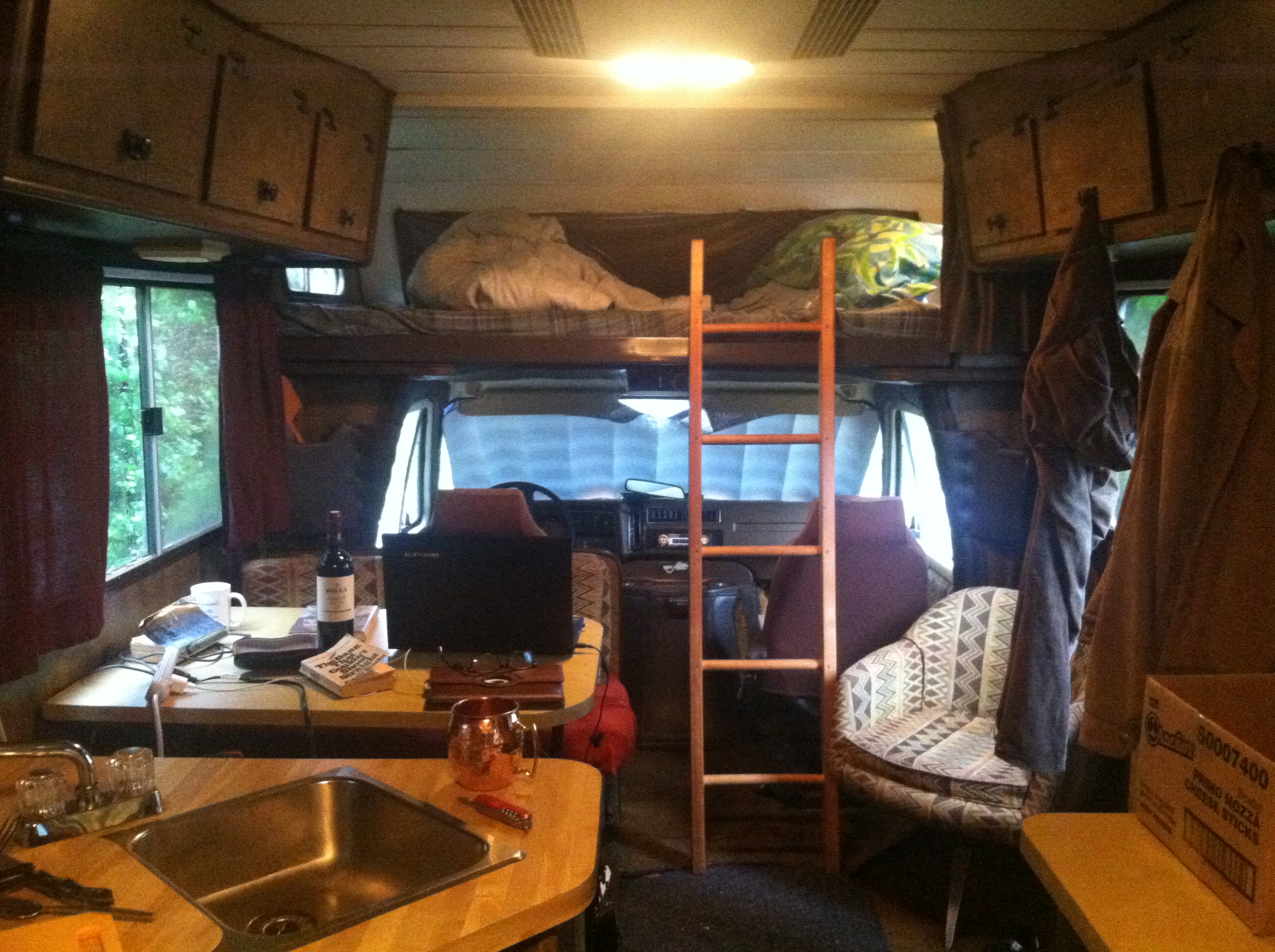
I returned to the park in late September and Bruce took me to see the rig—a 1977 Winnebago Minnie Winnie, approximately 22 feet in length. A metal rectangle on wheels splashed up with gold and orange stripes. I vaguely recalled the same graphic design style adorning the walls of my junior high school.

Bruce opened up the door and I stepped inside. A mild aroma of cigarette smoke and Oregon Coast motel mold hung stale in the air. I inspected the interior appointment: worn shag carpet, four-burner propane stove with oven, cabin lights, slider windows with blinds, dark wood paneling, fridge, table with bench seating, a cabover bed accessible by wooden ladder, a swivel reading chair, overhead electric heater, and an 8-Track player, the works.

It was certainly better than a couple of studio dumps in Portland I’d rented during the late 80s and early 90s.

I opened a cupboard and read a sticker: this Minnie Winnie was union made in Wisconsin. I liked that. I read the rig’s odometer: less than 60,000 miles—1500 miles a year.

My first thought: I need Bob Seger on 8-Track, any Bob Seger. Second thought: buy incense and smoke this rig out. Third thought: I was now living in a RV, sort of like my favorite heroic anti-hero, James Rockford from The Rockford Files. He was right on the beach. I was a block away. He was an ex-con. At the time, I didn’t think that would ever apply to me. It sure does now.

Bruce told me the previous owner’s name was Joe and he had died of cancer. There was no one left for Joe at the end except Bruce, who provided hospice care. Bruce told me in recent year he’d done the same sort of care-giving for three other long-term residents of the park. After they passed away, he’d inherited their ancient rigs as well. Bruce owned a collection of Dead Men RVs. I thought about that and knew there was an incredible story (or great name for a rock band) in there.

Years from now, will I end up dying alone this way, hitting the sauce, popping pills, writing illegible journals that no one will ever read, leaving a dog behind? Will I be consigned or consign myself to this fate if I can’t ever get back into the game of helping others and write something that can save me?

I have no partner. I have no children and my older sister has no children. My financial future is bleak. There is no such thing as good luck or the big break. No one is coming to save me.

The Dead Men RV syndrome haunts me. I try to retain the Rockford ideal as a happier counterpoise.

Bruce left me alone and I instantly dubbed the rig, Hey Joe. He left behind a Mr. Coffee coffee maker and wooden cane. I drank coffee every morning brewed from a dead man’s coffeemaker and once or twice twirled the dead man’s cane like a dandy.

I stowed my gear, set up the bed, arranged the kitchen, wiped down the surfaces, and put up a watercolor painting of me and Sonny on the beach, a gift from a friend. I sat down in the swivel chair and rested. I dozed off, awakened a half hour later, and noticed my Pendleton wool shirt was covered in Sonny’s fur. It occurred to me that her fur will be in my things the rest of my life. I got up and took the painting down. Out of sight, out of mind, the saying it goes. It seems true for people in my life these days, but not so much with the dog.

Bruce had positioned Hey Joe alongside the office for the best Wi-Fi reception in the park. I tested it and the signal looked strong. I had total privacy and a short walk to the restrooms and showers, past hummingbirds and a toppled statue of Buddha under a rhododendron. There was a little picnic table out back, on a lawn that needed mowing. I could drink coffee and write there. Birds and small woodland creatures would most likely put an appearance.

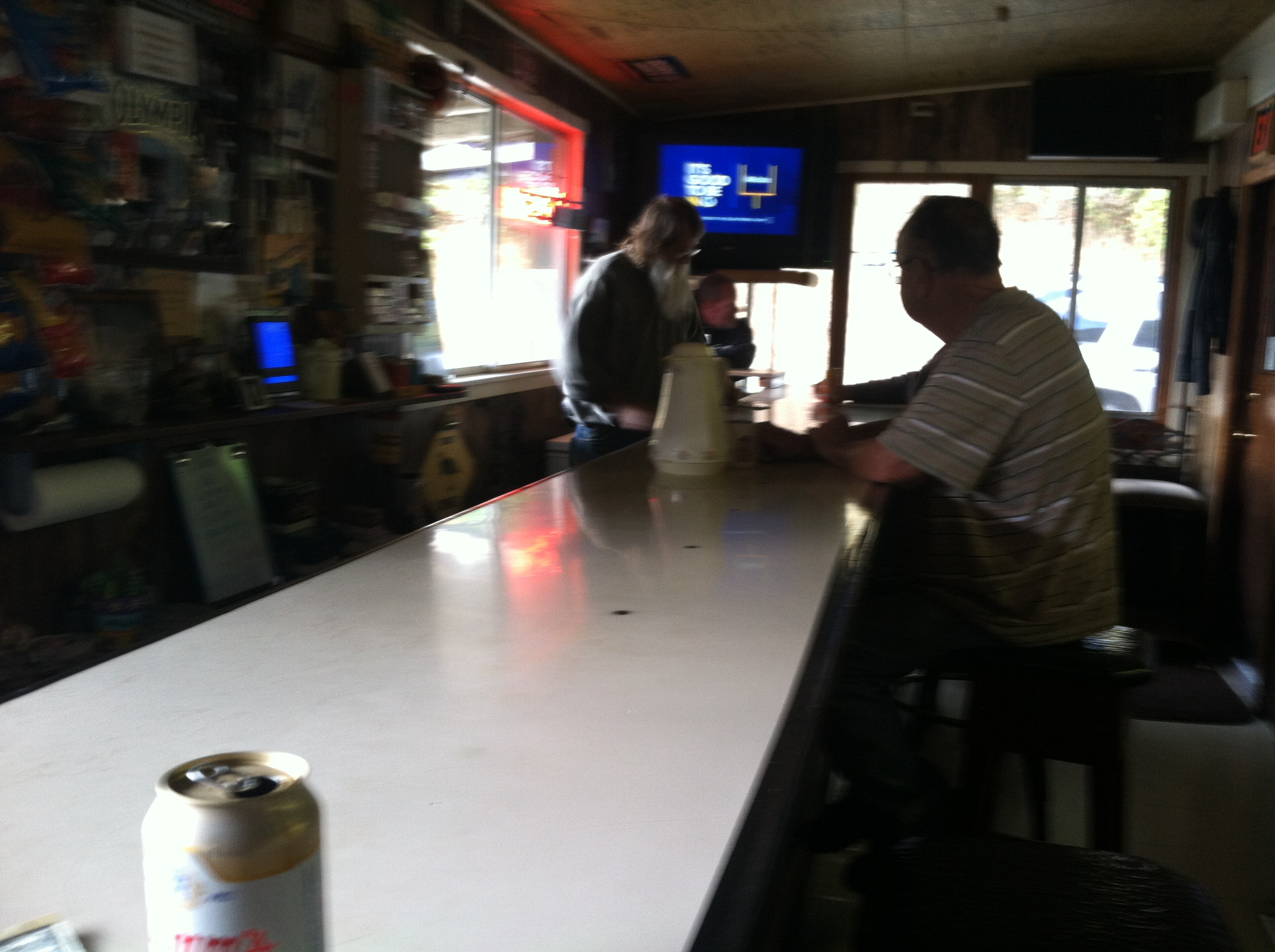
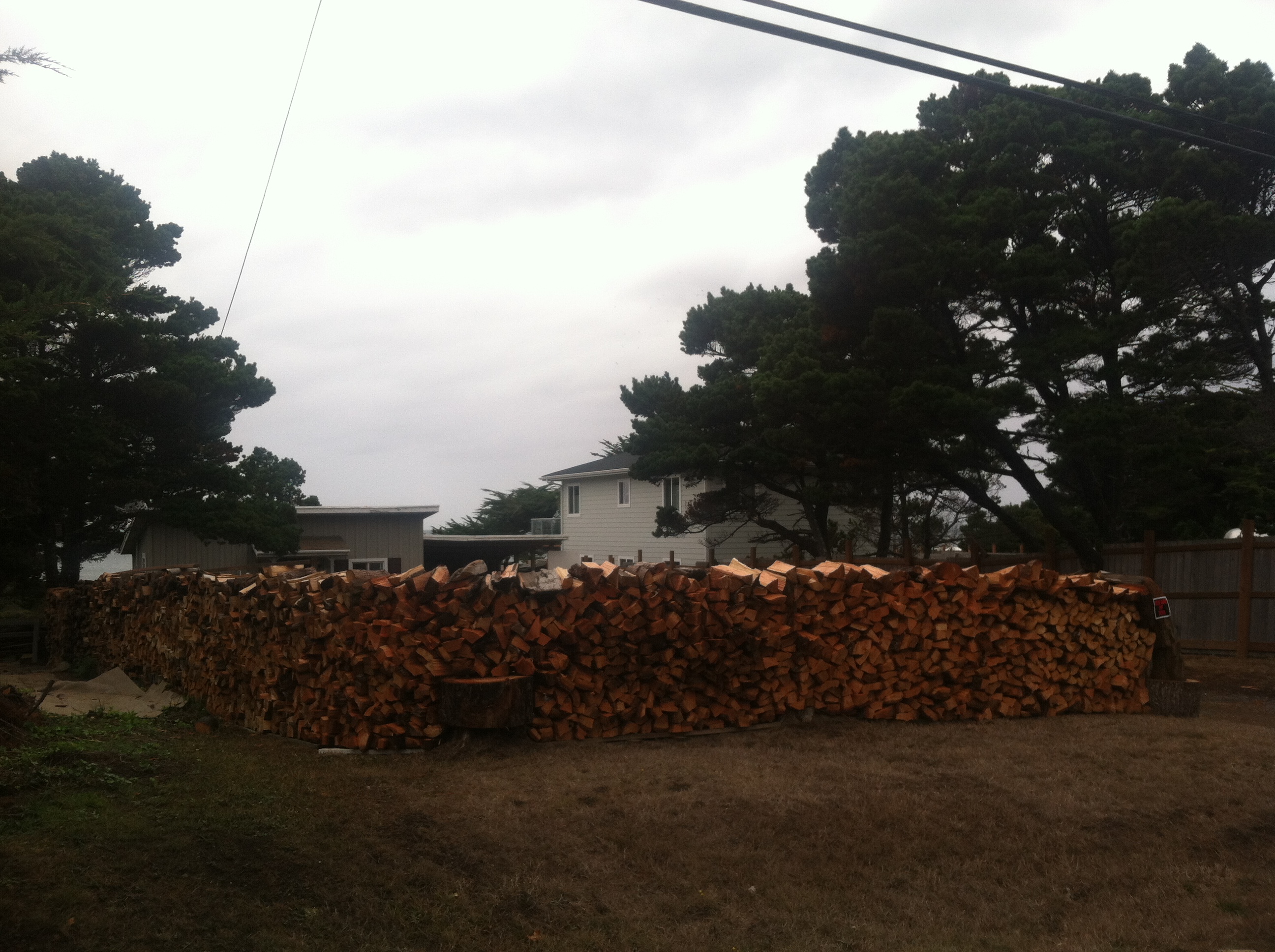
In the mornings I would write in the rig and also at Gold Beach Books. In the early afternoons, I explored beaches and collected limpets and hairy tritons. I built a few forts. I walked for miles and miles and never saw another person. I met an old man panning for gold on Nesika Beach and got the lowdown on his subsistence hobby. I took photographs for the web site. I saw a dog named Tickle eat salmon smolts in Hunter Creek. I drank a beer or two in Turkey’s, watched turkeys from a bar stool, and listened to priceless Oregon Tavern Age stories. I met a man in the park who had just spent three months in the Curry County Jail after violating a restraining order against his estranged wife; he was a concrete man and had found a job and new girlfriend in Roseburg, a nurse, and it was working out fine. I visited an old golf course and watched an old man strike balls on the driving range. I found a locally-grown poetry pamphlet out of Port Orford and read it. I gave it to one of the park’s residents who remarked he used to write poems. He was excited and said he would type up his old poems and submit them. On one of my morning walks, I met a former rapist and registered sex offender who cut up and sold firewood scavenged from the beaches and slash piles. He lived down the road from the park in a cabin with an ocean view, owned a dog, and had the greatest display of firewood I have ever seen in my life stacked on his front lawn. He told me sometimes got up in the middle of the night, turned on the truck’s lights to illuminate the yard, and rearranged his stacks. He was an artist. I ate the last blackberries of the season. I never did find a good 8-Track tape. I often drove slowly by the Gold Beach animal shelter to watch dogs in their outside kennels. One brown mutt was always standing on his little house staring at the ocean, never barking.

Whenever I passed Gold Beach High School, I thought about the English teaching going inside. Was my counterpart there? I noticed the building was a short walking distance to a pioneer cemetery, an animal rescue thrift store, the South Jetty of the Rogue River, and the beach with piles of driftwood for fort building. I was still thinking like a teacher and planning lessons for Gold Beach High School students, the Panthers, students I would never teach. I would never build forts with young people again or instruct them to read old headstones and riff into stories.

In the evenings, inside Hey Joe, I cooked wonderful meals, drank some wine, watched war movies on bootlegged streaming services, and listened to Gold Beach’s FM radio station and their broadcasts of Panther 2-A football games. The announcer once played “This is Radio Clash” by the Clash, during a break and I could not believe it.

I have never felt more lonely in my life. That loneliness taught me much of what I needed to learn about myself.

During my Hey Joe residency, I corrected the proofs of the gigging book, the last one with my great collaborator, as it turned out. The book went to press. I wrote up copy for the website, processed the photographs and the collaborator weaved her technical magic. In short order, the website sparkled. I wrote a book proposal for The Secret Oregon Coast and sent it out to a far flung NY publisher. Actually I wrote the entire book inside Hey Joe. I wrote half of what would become Oregon Tavern Age: Sketches from Coastal Drinking Life. I wrote tens of thousands of words in my journal. I wrote letters and mailed them. Something about working inside Hey Joe brought forth a torrent of writing. Or maybe it was being on the existential lam and trying to keep myself alive. I’ll never know.

The weather remained sunny and clear for the first few weeks.

And then came rain in mid October. The heavens opened up with its surly wet multitudes and soaked the parched watersheds, and sluiced gold onto Gold Beach’s beaches. The old panner was going to finally get rich if he didn’t drown first.

It rained 15 inches in five days. The local record was smashed. The Panthers’ football homecoming game was canceled. I rode out the deluge in Hey Joe and the sound of the rain inside that metal rectangle was a sound and vibration of rain I had never heard or felt before. Sometimes, watching movies and listening to the radio became useless because there was no way to hear anything but rain machine-gunning the roof. I was living rain passages from Ken Kesey’s Sometimes a Great Notion, the greatest book of rain of all time, and these moments made me laugh; I needed to laugh.

At one point, I considered downloading a decibel meter app for my phone and determining the sound level. Was it the equivalent of  rock concert or jet taking off? Could it damage my hearing? Maybe there was a world record of rain in that deafening level, too.

I decided against the decibel meter. The science didn’t matter. I would just imagine the world record I endured, relished and created in my own mind.

Near the 15-inch mark, Hey Joe started to leak; how could it not? No RV ever built by union men could withstand that assault. It was time to go. The work was wrapped up.

I stayed almost a month at the park. I thanked Bruce the evening before I departed, told him to check out the updated site and he promised he would. We shook hands and he said I was welcome back any time.

“We can always find a spot for you, Matt,” he said.

Perhaps he really meant it. I believed him.

Later that night, I cleaned up Hey Joe and wondered what Bruce would do with it. I dearly wanted to buy the rig and have him store it for me, but I couldn’t afford that. There was so much still unknown then. There still is. Waiting, waiting, waiting.

The next morning, I left at dawn after a last cup of joe in Hey Joe. I had to return to Astoria, a town utterly dead to me then and even more so now. I twirled Joe’s cane one last time and said goodbye to his spirit, whoever he was. I like to think I honored his last real resting place with some good writing and honest self reflection.

I have contemplated, from time to time, moving away from the ocean, and perhaps seeking rebirth in the deserts or mountains of Oregon. There would be total extinction and anonymity there. No one would ever look me up or read another word of my writing. I could go deep into nothingness.

When that thought has occurred I always stop myself: have you gone insane!  The ocean has been my home for 20 years. All my creative and spiritual forces emanate from my intimate engagement with it. It’s where I want to end my sentient life—walk right into Hart’s Cove on Cascade Head.

Also, I need rain like it rains on The Oregon Coast.

I have to make my stand at the ocean. I might have to make it in an RV. That seems like a great notion.

(If you found this post enjoyable, thought provoking or enlightening, please consider supporting a writer at work by making a financial contribution to this blog or by purchasing an NSP book.)


April 29, 2017

Gold Beach Memoir Part 2

Matt Love NSP Meditations, Oregon Beaches Gold Beach, matt love, Nesika Beach RV Park, oregon beaches, Oregon Coast

On my initial visit, I spent one week at Nesika Beach RV and Campground and made it my base to explore every beach, trail, museum, port, bridge and dive tavern and bar from Port Orford to Brookings.

It was the peak of summer but there was hardly any tourists around. The extreme South Oregon Coast was hipster and traffic-free. It reminded me of the North Oregon Coast when I first moved there in 1997.

Bruce and I struck up a friendship and he gave me the lowdown on the park and his history of ownership. He ran a tight and quiet ship and I liked that. During the mornings I reconnoitered, walked dogless for miles on beaches and stashed my books in bars, shops and laundromats. In the afternoons I cooked supper and conversed with the park’s long-term residents. In the evenings, I was reposed in the back of the truck reading whatever books I found in the lending library or thrift shops. Mario Puzo’s The Godfather was one of them and I underlined a few passages, particularly the ones about the importance of family. My family was constantly on my mind and I felt despair that I had dragged them into my mortification.

The long-term residents fascinated me. All were white. Most were older and retired, but a few commuted to work in Gold Beach. Some of them seemed to have shipwrecked at the park and I wondered how their rigs ever arrived there. All of them had cable television wired in or a dish connected to satellite. Often, a resident wouldn’t emerge from his RV for days. Many of them had rescue dogs. One man suggested I join him for Sunday service; another man was running out of Adderall and couldn’t afford a refill unless he went to Mexico; another was a former jazz saxophonist from the Bay Area who was a pioneer in medical marijuana; one flew a drone for fun; a younger man had fallen off a roof on the job and was waiting for disability claim to go through. Most of the long-term residents never went to the beach but they all knew it was there and that was enough.

I talked to as many residents as I could and some revealed their American diaspora stories. There was a very checked-out quality to many of them. They came across as a mixture of fixed-income Grapes of Wrath, Raymond Carver short stories (if his characters had 300 television channels at their disposal instead of three), and On The Road if Sal Paradise and Dean Moriarty were in their Medicare years and had driven a 22-foot rig for kicks but never left a parking lot.

There is a great American novel of a dying demographic in the park, but I won’t write it. I have another book to write.

No one asked me about my diaspora story. I was still working on it. I still am. I do know I don’t want to check out of American society. I still feel like I have a lot to offer.

At one point,I gave Bruce a copy of my Sometimes a Great Movie book for the lending library and he was excited. He showed it around to some of the residents and I was a mini-celebrity for a day or two, the book writer camping out and eating cold vegetarian chili from a can.

I don’t think anyone bothered to Google me. These people do not belong to Google. They prefer the face-to-face gathering of information and then take it from there. I think that’s a good way to live.

Or maybe they had Googled me and read the reports. If they had, no one said a thing.

On a lark one afternoon, the day before I was set to depart, I checked out the park’s web site and mentioned doing so to Bruce. He commented that it wasn’t very good and had done it himself.

That instantly inspired a bartering scheme. I wrote it up later in the day, emailed it to Bruce in the early morning, and then hit the road back to Astoria. I didn’t want to leave Gold Beach.

Bruce emailed me that afternoon and loved the idea. I would redo his web site in exchange for a month’s free stay at the park later that fall in one of the RVs he owned. He had one in mind, too, a 40-year-old Winnebago. One of the park’s residents had recently died and the rig had come into Bruce’s possession because the resident had no relatives to claim it. Bruce assured me the resident had not died in the RV.

That would have hardly mattered to me. In fact, I would have preferred it. The dead guy and I had a lot of dead in common.

April 28, 2017

Gold Beach Memoir Part 1

Matt Love NSP Meditations, Oregon Beaches Gold Beach, matt love, Nesika Beach RV Park, oregon beaches, Oregon Coast

When I was on the existential lam last summer, in full flight mode, I ventured to the South Oregon Coast, Gold Beach, actually Ophir, a few miles north of Gold Beach proper. Something called to me and I took off in a Ford Ranger with a battered canopy and 275,000 miles on it. The plan was to camp out of the back of the truck and…I had no plan. There was nothing. There was only flight, sheer dread and being lost on a highway I’d driven a thousand times.

There was also no dog with me for the first time in 17 years. Sonny the husky was dead and I hardly knew how to live without a dog, let alone as a pariah.

Why Gold Beach called to me as my life blew up remains a mystery. I’d gigged there the previous summer, at the wonderful Gold Beach Books, and discovered the greatest tavern in Oregon, Turkeys. Are a great bookstore and the best Oregon Tavern Age joint in existence a reason to relocate? Yes, of course, but that wasn’t it.

Maybe it was that word “gold,” or the dream of a “golden country,” something that kept Winston Smith going in Orwell’s 1984 until he discovered the hard way it was all a totalitarian artifice masterminded by O’Brien. I knew something about that as well. The language of totalitarianism is always the same and there are O’Briens everywhere constructing Room 101s to break us apart and destroy who or what we love.

I fled south and ended up in the Nesika Beach RV Park and Campground. On two separate visits, I spent almost six weeks there. I no longer recall how I found the park. I was just driving and driving, pushing past Coos Bay, Bandon, Port Orford, the gold calling me down Highway 101.

Maybe it was seeing the sign on the highway because I didn’t consult a map, brochure or the internet. Maybe it was the sound of “Nesika,” very much like “Nestucca,” and I was seeking subconscious shelter with alliteration.

I took a spur road off the highway and found the entrance to the park. I saw a faded wooden sign and admired its antique, hand-crafted, appearance from an era when hand-written fonts ruled the typography of campground signs. I pulled into the gravel driveway and passed large, sleek RVs on either side of the drive. Some had decks, sheds, canopies and massive barbecues near them. Many had flowerpots, flags and lawn gnomes for decoration.

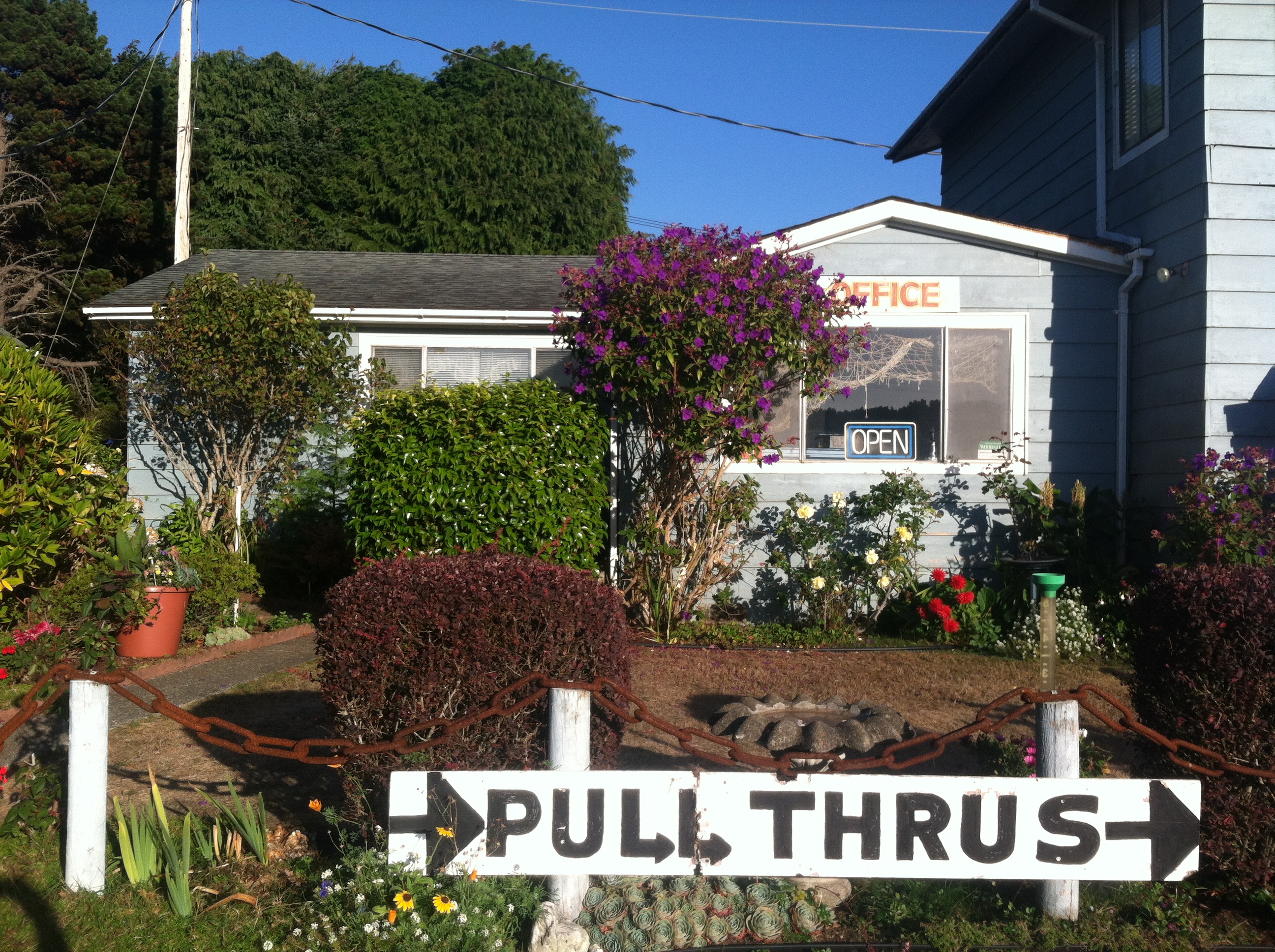
The office came into view. I stopped the truck in front and got out. A swarm of hummingbirds flitted around me and I opened the door and went inside. A bell jingled. There was no one around. I inspected the office’s interior: glass counter, wood paneling, nautical displays, faded brochures, laundry soap for sale and groovy plants. It was 1975. I felt safe.

A woman entered and said the owner would be back shortly. I checked the rates for tent camping: $18 a night and that included showers, washer and dryer, a lending library, Wi-Fi and hummingbirds galore.

The ocean was a block away. I could smell it. There was a convenience store a block away. I could smell hot dogs.

I put $18 in cash on the counter, left a note, drove to the tent camping area 30 yards away, and set up camp. I crawled into the back of the truck, ate a cheese sandwich, drank a beer and fell asleep in my makeshift bed. When I awakened, I walked over to the office and met the owner, an older man with a gray mustache. His name was Bruce. I introduced myself and said I was the one who left the note.

“How long you want to stay?” said Bruce.

“I have no idea,” I said.

I would take it one day at a time.

Bruce never asked me to register, or provide any information. It was a handshake deal and cash.

«‹ 307 308 309 310›»

Teacher of the Year: A Novella

By Matt Love

A reluctant teacher becomes advisor to a moribund high school newspaper. He meets the new editor, a dynamic 18-year-old senior, and together they begin a unique creative collaboration that revives the publication and slowly slides into gray areas. As the poet Octavio Paz wrote, “To realize itself, love must violate the rules of our world...committed by two stars that break out of the conception of love, which implies breaking away and a catastrophe..."

Teacher of the Year
Amazon's Kindle Edition $6.99

Teacher of the Year unfolds in an energetic mixture of epistle, stream-of-consciousness, narrative and meditations on the craft and alchemy of teaching. There is no other more authentic literary exploration into the agonies and ecstasies of teaching in the annals of American literature than this novella.


A Substantial but Incomplete Autobiography in Poems

By Matt Love

In perhaps the largest, most eclectic volume of previously unpublished poetry in the history of Pacific Northwest literature, Matt Love presents 148 poems written over a 30-year span.

As he writes in the introduction to A Substantial but Incomplete Autobiography in Poems, “I have organized this collection into six categories: Ocean, Love, My Life, Oregon Tavern Age, Homelessness, Probation. These poems serve as a substantial but incomplete autobiography.”

“Confessionals, odes, scatological doggerel, polemics, tankas, haiku, prose, psalms, requiems, observations, love letters, lamentations, lyrics, stream of consciousness, meditations, lists, riffs, a eulogy, a sermon, a commencement speech, found poetry, tributes, elegies. I threw it all into an ancient cement mixer and hand cranked that concrete beast while watching blue herons undulate overhead and drinking red wine as the husky snoozed in his dirt fort. The result: A Substantial but Incomplete Autobiography in Poems, something merging where Charles Bukowski, Richard Hugo, Mary Oliver and Liz Phair blend together.”

None of Love's poems were ever submitted to poetry journals, contests or magazines, making this collection a true renegade project of passion and readable to any denizen of a coastal dive bar.

Amazon's Kindle Edition $7.99 (Free if you have Kindle Unlimited)

Recent Posts

  • Mark Leavenworth RIP
  • Roast Ruminations
  • Stand Em’in the Corner
  • Fasting Ruminations
  • Scenes from Two Weeks of Early Morning Homelessness in Empire

Categories

  • Astoria
  • Bonnie and Clyde Files
  • Coos Bay
  • Corona Virus Thoughts
  • Driftwood Forts
  • Fiction
  • Lost and Found
  • NSP Correspondents
  • NSP Meditations
  • Of Walking in Rain
  • Oregon Beaches
  • Oregon Coast_History
  • Oregon Tavern Age
  • Pioneer Pride
  • Poetry
  • secret coast radio
  • Sports
  • Writing

↑

© Nestucca Spit Press Meditations Blog 2026
Powered by WordPress • Themify WordPress Themes