
Nestucca Spit Press Meditations Blog
A Blog by Matt Love
  • Home
  • About
  • NSP Categories
    • NSP Meditations
    • Lost and Found
    • Writing
    • Driftwood Forts
    • Oregon Beaches
    • Of Walking in Rain
    • Oregon Coast_History
    • NSP Correspondents
    • Oregon Tavern Age
    • Astoria
    • Fiction
    • Poetry
  • Back to NSP
  • Contact
RSS
April 27, 2017

Steve Prefontaine on My Mind

Matt Love NSP Meditations, Oregon Coast_History, Sports Coos Bay, Coos Bay Art Museum, distance running, matt love, oregon beaches, Oregon Coast, oregon history, Prefontaine Memorial Gallery, Steve Prefontaine, track and field

“A lot of people run to see who’s the fastest. I run to see who has the most guts.”

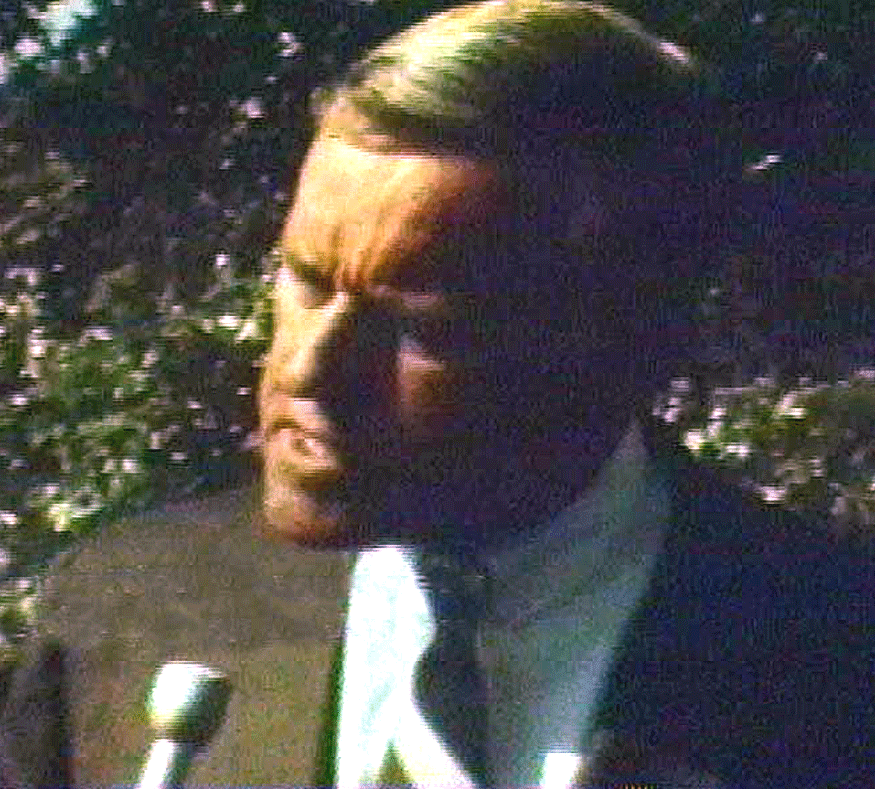
So said Oregonian Steve Prefontaine, who died in 1975 at the age of 24 when he crashed his sports car into a rock and prematurely ended a running career that saw him set 14 American records, including the high school two-mile mark (on a cinder track) that still stands. (Photograph of Pre here by Gerry Lewin.)

Pre hailed from Coos Bay, a gritty mill, fishing and port city on the remote South Oregon Coast. He was a logger’s son, too runty (or brooding) for football, so he took up running, trained relentlessly in the dunes, graduated from Marshfield High in 1969, and ran track for the University of Oregon where he turned running into a combination spectacle of performance art, animal instinct, existential abandon, rock and roll, Zen Buddhism and rebellion that nobody had ever seen before and would ever see again. Loggers and fishermen used to root for him to win. He got a whole state to take up running as exercise.

I’ve been thinking about Pre a lot these days—his reality, his metaphor, and the aforementioned quote. Do I have the guts to finish this race? It’s not about running the fastest. It’s not a race I can possibly win because it has no set distance or even a direction. It just keeps going and going, not around a track or along a cross-country course. It’s a race through the labyrinth of The Registry. I doubt Josef K would have finished or even broke a sweat.

“Guts.” Who uses that word in sports or life anymore? Let’s bring it back.

Pre would party all night and then wake up, win with a hangover and set an American record. He had hot groupies. He took off at the gun and ran competitors into the ground. People flocked to Hayward Field in Eugene to see him race and he made the city the track and field capital of the United States. He didn’t have a corporate sponsor. No one did then. It was the sham era of “amateurism” in world track and field (tennis too), and it amounted to one of the biggest cultural farces of the 20th century. He tended bar to make ends meet. He bucked hay.

I absolutely relish the idea of Pre serving dime drafts of Pacific Northwest lagers then brewed in the Pacific Northwest to Oregon Tavern Age men in Eugene. They probably hated his long hair but they had cheap beer in common and that soothed it out.

Pre won the 5000 meters at the 1972 Olympic Trials, went on to compete at the cursed Munich Games. As an eight-year old living in Oregon City in 1972, I was glued to a huge Zenith for the 5000-meter Olympic final. All of Oregon was. I will never forget watching that race, Pre running an uncharacteristic conservative race and getting nipped at the finish line for third place, losing out on the bronze medal. But we all knew he would back in ‘76, our Bicentennial year, to defeat the blood doping Finns and the chemically-enhanced East Germans.

I went out for track my seventh grade year in 1976 and ran distance. I wanted to be Pre. I had some success and even set a school record that spring for the 1320-yard race (three times around), a record that will never be broken because everything track and field in America changed over to the metric system a year or two later and they started running the 1500 meters. Thus, I live in sports immortality at Gardiner Junior High in Oregon City. I’ll gladly take it.

Really, though, I wasn’t Pre and couldn’t hack distance running. I quit that summer and took up tennis. I was never able to transfer his energy and spirit to the tennis court. I wish I had tried.

Pre is an American distance running legend and the toughest, most famous Oregon athlete of all time. It’s not a debate. They made a couple of movies about him, Billy Crudup and Jared Leto in the leads. They were mediocre and offered nothing in the way of mysticism about Pre. He was a mystic of movement and competition. His kind is impossible for a professional athlete today. Too much money at stake. Budweiser and a shoe company would own and geld him.

Several years ago, I found myself in Coos Bay with time to live. I suddenly remembered reading something about a Pre museum somewhere in the city. I found it by asking around town.

Located in a small room on the second floor of the Coos Art Museum, is the Prefontaine Memorial Gallery.  I was alone during my visit. It didn’t cost a cent.

There are photographs, his medals, trophies and awards. There is a Joint Resolution by the Oregon Legislature passed after Pre’s death that reads:

Whereas Steve Prefontaine died May 30, 1975; and

 Whereas Steve Prefontaine was the nation’s most outstanding distance runner, holding American records at 3,000 meters, two miles, three miles, 5,000 meters, six miles and 10,000 meters; and

 Whereas Steve Prefontaine came out of the Oregon coastal community of Coos Bay where he had been a national high school champion, went to the University of Oregon where he won the NCAA three-mile championship three times and the cross country title four straight years, and went to the 1972 Olympics in Munich where he placed fourth in the 5,000 meters; and

 Whereas Steve Prefontaine drew admiration and respect as a sincere, outspoken and indefatigable advocate of a national program to enable amateur athletes to more effectively participate in international competition; and

 Whereas Steve Prefontaine served as an inspiration for all those who wish to excel in life; now, therefore,

 Be It Resolved by the Legislative Assembly of the State of Oregon:

 That the Fifty-eighth Legislative Assembly mourns the death of a truly dedicated runner who brought much to all who were privileged to know him, Steve Prefontaine…

The crown jewel of the museum, easily my favorite museum in the world, is a large, handsomely bound register where visitors can record in their own writing what Pre meant to them. It took me 30 minutes to read all the messages, dating back to the late 1980s.

I started crying when I read them. People poured it out. There is nothing like this in the annals of American sporting history. When I finished, I knew I had read one of the most unique and moving testaments to the spirit of an American life that exists in our culture. And it’s in Coos Bay, Oregon! In a handwritten ledger!

Who signed in? Entire high school cross-country teams on a pilgrimage. Those who raced against Pre—and lost. His hometown buddies. Former Oregon Ducks. Europeans. Fans. What did they write? How about lines like, “I find Steve’s pure focus replenishing…Pre, thanks for reminding me why sports matter…I liked watching you run…”

I too, left my message for Pre: “You were a Stone Oregon God!”

Oddly enough, in the museum, I found no framed copy of a poem about Pre by Charles Ghigna that has been widely included in anthologies of sports poems. I tracked down Ghigna and secured his permission to reprint the poem. So here it is, from a poet who competed against Pre and LOST. (Who writes a poem about someone you beat?)

Prefontaine

 He wore old Oregon on his chest,

a new mustache on his 24-year-old lip

and a scowl on his brow

that could jump out of his mouth

quicker than that famous final kick.

We all agreed

he could run and run and run

after women and whiskey and ribbons,

a chip off the old lumberjack block.

We in the stands gave our clapped-red hands

to him and his victory laps.

We watched and prayed for his runty form

under suns, gym ceilings and television rooms.

He stood us wild after each mile

witnessing his sudden bursts of speed.

We curse a coffin car we never saw.


You can’t Stop Pre. That kick. The guts.

(If you found this post enjoyable, thought provoking or enlightening, please consider supporting a writer at work by making a financial contribution to this blog or by purchasing an NSP book.)
April 26, 2017

Late April Dick Dale Riffage

Matt Love NSP Meditations, Writing Alphasmart, detective fiction, Dick Dale, matt love, nestucca spit press, Stevie Wonder, tennis, writing

(Written while listening to Dick Dale and his Del-Tones. Loud.)

How does one get started with a writing idea? I am often asked at events or workshops. Or used to be asked.

There are no rules or guidelines or oracles. Put all creeds in abeyance. (I ripped that off from Whitman.) Every writer finds his or her subject by any means necessary. Sometimes it lands on you like a tank falling 10,000 feet from hell. Sometimes it bumbles in like bumblebees drinking nectar from dandelions when a homeowner neglects to mow the lawn and his husky chases the bumblebees in a loping dance and never catches a single one.

I often suggest to writers that they sit down at the computer, or better yet, with a trusty Alphasmart in a dive bar, or a legal pad and golf pencil in jail, or a driftwood beaver stick in the sand, and just start riffing on whatever comes to mind, whatever is stimulated by the ambiance. Could be the ocean. Could be the Crown and coke tinkling at a nearby table. Could be your dog dying. Could be Dick Dale shredding.

Here’s what’s coming to me right now for story ideas:

George McGovern won Coos County over Richard Nixon in the 1972 Presidential election.

Herman Melville wrote the first Oregon Tavern Age story in Moby Dick 15 years before Oregon became a state. It took place in chapter three in the Spouter Inn and the OTAs drank gin and molasses.

My time in Brazil as a missionary kid from 1968-70. Our mission was called Operation 68’.

Something about a certain someone wearing macramé.

An idea for a detective show called The Watershed.

Tennis, tennis, tennis in Oregon City in the 70s and 80s. Wood rackets and concrete courts. We were the loosest of loose in that era. I see an HBO series with my high school team.

My little league baseball coach, Jim Ritacco. His kindness still inspires me. We weren’t very good and he didn’t care. He had something better to teach us than winning and he taught me well.

The pet psychic who reached out and said Sonny was worried about me.

My unique history with calligraphy and Steve Jobs.

The late Father Andy Duffner, the only man I have ever met who attained Nirvana. He was a wonder to behold and I feel his presence from the river of beyond. I can still smell his pipe smoke on the wildlife refuge where we met and healed that good ground together.

An essay exploring why Stevie Wonder’s Innervisions isn’t considered the best concept record of all time. It blows away Sgt. Pepper. Innervisions feels more relevant today than when it was released in 1973. Pepper is nostalgia now, at least to me, gimmickry and acid in the studio. It has no street value. Innervisions does. Listen to “Living for the City.”

How I can’t get a job but I keep applying because I want to push the boundaries of my marginalization.

Rain.

All the incredible people who have reached out to me, unsolicited, offering help and encouragement. I will honor their faith in me, but not sure how to at this point.

The power of letting go. To quote James Brown, “It feels good.”

April 25, 2017

Some Personal Reflections on “So You’ve Been Publicly Shamed”

Matt Love NSP Meditations, Writing Jon Ronson, mass online destruction, matt love, public shaming, So You've Been Publicly Shamed

A couple of months ago I was feeling whipped over my situation, almost forlorn, when out of the blue my attorney and friend called and we talked through my dejected state of mind. He recommended a book. He not only made the recommendation, he bought it for me. A few days later, Jon Ronson’s 2015 bestseller, So You’ve Been Publicly Shamed arrived, and I pretty much read it in one sitting.

The experience was utterly revelatory and I urge everyone to read it, particularly those who have participated in the public shaming of anyone via the internet, or mass online destruction as Ronson calls it. From what I read, this amounts to many people in the country, around the world, millions and millions taking part in destroying someone they have never met, let alone know what really happened before any facts come out, if any facts ever come out. As Ronson documented, some of these public shamings have led people to kill themselves.

I would be curious to know how many people reading this blog have taken part in this process. I have never participated in a public shaming. I have never been tempted. I have, however, been subjected to one and I think it’s still going on in some quarters. Or perhaps not. Maybe the shamers have moved on to shame someone else. That seems to be their nature.

Reading this book helped me understand why people choose to aid and abet a public shaming. Why do people debase others in the privacy of their homes, in their cars, at dinner in a fancy restaurant, when hiking through a forest, in restroom stalls, at work on the company’s dime?

In the book, Ronson finds and interviews people who were subjected to a public shaming and those who perpetrated the destructions. As he writes, “Shamings are always about more than the transgressions.”

Ronson did not, however, interview a single sex offender and elucidate their experiences of being publicly shamed. It seemed like an egregious oversight from an excellent reporter, but then again, that’s the largely silent mass marginalization that occurs with enrollment in The Registry, one I know all too well in recent months—and for years to come. I do plan on contacting Ronson one day and asking him about the oversight. I bet it never occurred to him to include this type of public shaming in the book, but it is perhaps the most collective, pervasive one in our society. And it’s codified in law.

I never felt any anger toward people who ripped me online and elsewhere. I actually felt sorry for them to spend a large or even tiny part of their lives in this manner. What higher purpose does it really serve to shame others? What about getting off the computer and phone and noticing areas of our communities that need help? It’s all around us and I see it more than ever now. Somehow, I have to get back into the helping game, but it seems impossible now, unless I get a lucky break out of the blue, which I intuit is going to have to occur because of a face-to-face encounter. It’s really the only way I think I’ll ever get a job helping anyone again.

Ronson wrote, “I prefer humans to ideology.” What I think he means with that statement is declaring his preference for meeting people in the flesh, face to face, listening, asking questions, not slotting them instantly into pariah status because of some ideology they might have violated with a tweet, post, message, joke or public action. Whatever it was, the communication or action immediately inflamed a certain ideology’s followers and drove them to massing their armies for massive online destruction. Interestingly enough, Ronson shows that the ideologies that lead to public shaming do not lean more Right Wing or more Left Wing, Conservative or Progressive. In fact, those terms are sort of useless to describe the phenomenon of public shaming. Whatever the ideology is, it just gears up, grinds down, and shames, shames and shames. Could be the big game hunter who killed a legendary lion, or the female college student who mocked a veteran’s memorial, or the baker who wouldn’t make a wedding cake for a gay wedding, or the minister whose named showed up in the accounts of a local brothel, or the current President of United States, whose successful candidacy certainly benefitted from his participating in public shaming and being publicly shamed for his vast numbers and types of transgressions.

If Ronson ever updates his book, he will have to include a chapter about Trump and his weird but inevitable role in the rise of this acid-based culture, dating back to his Celebrity Apprentice show. His whole ugly hectoring persona is based on publicly shaming the “losers.”

Here’s something to consider: Is there a good kind of public shaming that leads to real social justice and a better country with better elected leaders and better citizens? Mull that over.

Like Ronson, I prefer humans to systems, a paradigm, ideological camps, righteous movements, a state-written script, blanket judgments, rumor machines. After being shamed, I did not lose my faith in people. On the contrary, I may have gained more faith because every now and then, an unanticipated letter, a new friend, a small gesture, a visit, a gift, a meal arrived in a kind of private affirmation of my character that brought joy and confidence into my life when I desperately needed them. I might also add that the unexpected appearance of three deer in my backyard also served as a private affirmation from nature, a magical one that taught me something I needed to learn that rainy, sad afternoon. I was so happy I got up and fed the deer apples. Private affirmations in the midst of public shamings can save people’s spirits, if not their very lives. I would know. All I can do is say “thank you.”

Ronson points out that on the internet people can be who they really aren’t, such as a super warrior for justice, truth teller, conspiracy buster, or heroic agent for cultural change…forward—or backward. These people convince themselves they are doing great work. This great work is posting vitriol on social media and comment boards.

I felt the grip of a public shaming, giant hands wringing me out like a wet rag. I was twisted dry and left almost debilitated. Then I read Ronson’s superb book and stopped feeling that way. Then the floodgates of my creativity blew open and the means to transcend my situation washed over me: more face-to-face encounters with people and letting them see who I really am—rather than what’s online and ranked by algorithms that help generate trillions of dollars of ad revenue for trillion dollar tech companies.

That’s going to very hard for me to do. It could take the rest of my life. I’m obviously going to need help from people I know and don’t know yet.

One of the people subjected to a publicly shaming that Ronson interviewed said, and I am paraphrasing here, “Once the person refuses to feel ashamed, the whole system crumbles.”

That was good food for thought. I ate it up.

I would like to end this post by saying, that unlike most of the people Ronson interviewed who experienced a mass online destruction at the hands of others, I never read a single word of the online public shaming of myself, nor tried to defend myself in that digital netherworld. I never will.

Read the book.

(If you found this post enjoyable, thought provoking or enlightening, please consider supporting a writer at work by making a financial contribution to this blog or by purchasing an NSP book.)


April 24, 2017

A Stream of Thoughts on The Snow Leopard

Matt Love NSP Meditations, Writing Coast Range, deer, matt love, oregon, Oregon Coast, Siletz River, teaching, The Snow Leopard, Valley of the Giants, zen


I just finished reading for the fourth time Peter Matthiessen’s National Book Award-winning 1978 Buddhist-tinged classic, The Snow Leopard.

The book recounts his journey into the Himalayan Mountains during a period of extreme personal crisis. He is trekking with a biological expedition in hope of seeing the elusive snow leopard. He never sees it and in that not seeing he sees everything. He was even happy in not seeing it.

Outside of Jim Harrison’s Dalva, The Snow Leopard is the most influential book of my life.

If you are burning up in crisis or happily content, this is the book for you.

I read The Snow Leopard in 1994, 2009, 2012 and 2017. I’ve read the same paperback copy and my annotations from each reading provide me a scrawled map of where I thought I was going that particular year.

In light of recent tumultuous events, the book has fortified me with new supernatural energy and wisdom. I wield it almost as a weapon against the forces arrayed against me, chief among them, my own doubts.

What follows are my comments and salient quotations from the book. There is no order to them. This is a flow. This is a trek.

Here we go:

I always encouraged students to go on a pilgrimage and write about it. It occurs to me that my old writing lessons and prompts are teaching me new better ways of thinking. When a student is ready, a teacher appears, the Buddhist tradition says. Have I appeared to myself? Is that possible?

Doing matters more than the attainment or reward.

“In most cases it is impossible to explain to the others what has happened, for an understanding is walled off by impenetrable prejudices.” Very, very, very true.

How you do things in everyday life is your religion, that’s your practice.

“One must go one’s self to know the truth.” I am going by myself and I am discovering truth. It is a lonely but necessary journey.

The industrial revolution created a new barbarian in the West and we’ve been vandalizing the planet ever since. I think about that former girlfriend who flew to Antarctica to run a marathon so she could say she ran a marathon on all the continents.

The ability to cultivate stillness in one’s life is important. I have redefined the meaning of stillness in my life. Try watching three deer in your back yard for three hours, you’ll find stillness.

Notice small things.

“I long to let go, drift free of things, to accumulate less, depend on less, to move more simply.”

The scene on the trail at 15,000 feet where Matthiessen competes with a goldfinch for wild Cannabis seeds.

Expect nothing.

I have experienced a great death…the rebirth is underway, but I am still wearing corduroy.

“Childhood is full of mystery and promise.” I think this is why I am writing so much about Oregon City these days. There is something in this exploration of my hometown that inspires me. The way out of this story I am living is through story. Tennis will be involved as well. With wooden rackets.

Matthiessen’s writing on a beautiful river in Nepal reminded me of a journey to see the remote awesome old growth stand of Sitka spruce called the Valley of Giants. It was on this journey to the Coast Range near Siletz with a very special hard core Oregonian that I saw the upper reaches of the Siletz River and it was the most beautiful river I had ever seen, despite the massacre of clear cuts all around.

Get back to the land! Start a farm or co-op!

Matthiessen writes about the terrific struggle between clinging to something and letting it go. Clinging is not a great verb, I think. What am I still clinging to? What must I finally let go of? Is there anything left to release?

List of Let Go, Gone:

Reputation

Teaching career

Great collaborator

Most friends

Gigging

Ego

Planning for future

Viable employment

All my musical instruments and amps

Stewardship of Vortex I and the legacy of Oregon’s publicly-owned beaches


Matthiessen writes: “If given the chance to turn back, I would not take it.”

Ask myself this: “Given the chance to turn back, would I take it?”

No, not as I write this on April 24, 2017. I wouldn’t have learned anything. Look what I have learned? Look what the learning exposed. Look at the evanescence of my accomplishments and immature notions of friendship. I say this despite knowing the hell I’ve put my family through. We are closer than we have ever have been. We are growing stronger together.

I could change my mind on this as life unfolds.

The scene where Matthiessen writes about a, “lake that has never seen a boat.” What an image that is!

“Crystal Blue Persuasion” by Tommy James and the Shondells is one of the great metaphysical rock songs of all time. It popped into my mind when reading this book. Listen to it!

I need a journey of enlightenment, a physical one into the deep woods or misty mountains. Maybe not alone, however. Who would go with me? I’m tainted. Dogs don’t care.

Matthiessen rushes to judgment many times with his native porters and is deeply ashamed when he recognizes his errors. How many rushed to judge me? Do they regret this?

Koan: All these things happen to people, why did this happen to me? The very nature of a Koan, a Zen riddle, makes it unresolvable, of course, but I try to resolve it nonetheless by not even trying.

I’ve got to write my book with a crispness of a haiku. Is that possible with prose on the subject of The Registry of Sexual Offense? Let me try here: brown rubber boots, quality green rain gear, a skateboard with a Swastika , rain moving in a phalanx, a city bus, a bike seat wrapped with a plastic bag, cigarettes and hoodies in the cover of hemlocks, an errant goose flies by the empty probation office.

Getting there.

April 24, 2017

NSP Correspondent / The Oregon Shot / Gerry Lewin

Matt Love NSP Correspondents, Oregon Coast_History, Sports Bill Walton, Gerry Lewin, Portland, portland trail blazers

(NSP Meditations features regular contributions from Correspondents. If you are interested in becoming one, contact Matt Love through the NSP web site for more details.)

Editor’s Note: NSP Meditations is proud to present, the Oregon Shot, a unique photography/essay feature by Gerry Lewin, the renowned Salem photojournalist. Lewin took news photographs around Oregon from the mid-1960s to well into the early 1990s that later became iconic images, particularly his ones of Governor Tom McCall. Lewin currently has a gallery show running at the Willamette Heritage Center in Salem.

On this day, the Blazer parade stretching though city blocks climaxed with a beer-infused euphoria just outside of Portland’s City Hall. While the celebrants shouted their Rip City slogans upon their heroes, I jumped up to a wall behind those main-celebrants, and naturally I was the only photographer around to get this historic shot of Portland’s Mayor Neil Goldschmidt, attired with the Grouch Marx glasses and nose, trying to keep Portland Center Bill Walton from pouring more bottles of beer over him.

Not many will remember how this particular day ended, however at least the camera was not intoxicated and is able to convey into our time the basic idea of what went on in downtown Portland on this day, June 7th 1977.


April 24, 2017

NSP Correspondent / Bill Hall / Oswald West and Tom McCall Meet in Heaven

Matt Love NSP Correspondents, NSP Meditations, Oregon Beaches, Oregon Coast_History oregon, oregon beaches, Oregon Coast, oregon history, Oswald West, Tom McCall

(NSP Meditations features regular contributions from Correspondents. If you are interested in becoming one, contact Matt Love through the NSP web site for more details.)

A hospital room in Portland. It’s a grey, damp Saturday morning at the beginning of 1983. The man in the bed hooked up to the machinery is Thomas Lawson McCall, thirtieth governor of the State of Oregon. He’s about to draw his last breath; his journey on earth is reaching its end after sixty-nine years.

He’s unconscious—the blessing of painkillers—but his restless mind is still active. He’s going to be sad to leave this place he loves so much; sad to leave Audrey, Tad and Sam. But he’s ready to go. The pain, oh, the pain is finally getting to be too much.

Tom McCall spent the final Christmas and New Year’s of his life in this room. It was the last battlefield in his decade-long war with cancer. Treatment had kept his prostate cancer in check for years, but it had come roaring back with a vengeance a couple of years earlier, and now wracked his bones. His sliver-gray hair was snow white. But when he was awake, his piercing blue eyes still burned with his love for his family and the special place called Oregon.

Now all the battles had been fought; land use planning, the Bottle Bill, the Beach Bill and so many more. A strange thought flashed through his brain. He remembered a story about the film comic Stan Laurel. As he lay dying in a Los Angeles hospital bed a few years earlier, a nurse had asked him how he was doing. Laurel answered, “I’d rather be skiing.”

“Do you ski, Mr. Laurel?” she asked.

“No!” he said weakly. “But I’d rather be there than here!”

Tom McCall wished he could be at his beach retreat at Road’s End. Just one more time in his old Pendleton jacket, marching across the sand, feeling the wind and breathing the salt air. Another stab of pain—damn! Were the drugs wearing off again?

But then a bracing, familiar smell filled his nostrils. He also realized the pain that had been his constant companion for so long was no more. He opened his eyes and found himself standing on the bluff above the beach at Road’s End. He inhaled the bracing salt air, felt the sun and wind against his face, the grass beneath his feet; all his senses told him where he was, yet it made no sense. How had he gone from his deathbed to paradise?

Paradise? Did this mean –

Before he could follow the train of thought to its destination, he heard a hearty voice say, “Hello, Tom!” He turned and found himself face to face with Governor Oswald West. McCall had met West a few times, and had once interviewed him for KGW, but he knew him as old man; this was a West he only knew from pictures, young and vital.

“Governor West? But—“

“Tom, let me save you some time. This is Heaven.” West stuck out his hand to clasp McCall’s. “I want to thank you, Tom.”

“Thank me? For what?”

“For preserving my legacy. For saving these beaches for the people.”

“My pleasure, Governor.”

“Os. Call me Os. That’s what my friends call me.”

“OK, Os.” Tom McCall smiled. It was the first smile he had managed in a long time.

“I should thank you for quoting me when you signed your Beach Bill. You had a pretty fair way with words yourself.”

“’The great birthright?’ That was too memorable a phrase to pass up, you know! ‘No local selfish interest shall be permitted, through politics or otherwise, to destroy or impair this great birthright of our people.’ I couldn’t have said it better myself.”

“Thanks, Tom, but I don’t think I could top your warning about ‘the grasping wastrels of the land.’ Great stuff.”

“Os, you crafty old son of a gun, that was brilliant—the way you snuck your bill through the legislature. Making the beach a public highway. Sixty-six words. It passed without a peep. The legislature never knew what hit ‘em.” McCall made a fist with his right hand and smacked his left palm. “Brilliant.”

West laughed. “No, they sure didn’t. You didn’t have it that easy. But your gift for political theater saved the day.”

“You mean my trip to the beach in the helicopter? Had the press eating out of my hand that day, I suppose. You know, I had been one of them, and they still thought of me that way. That always helped.”

“I saw the way you stared down that bastard who tried to fence off the beach in front of his motel—well, stared down his motel, anyway?”

“You saw that?”

“We can watch what’s going on in the world, though we can’t influence it in any way. Gets damn—er, darn frustrating at times. But you learn to deal with it. That’s why we knew you were coming. Some very special folks are waiting to greet you inside the house, including your dad and your grandfathers.”

Tom McCall felt a lump forming in his throat. Hal McCall had died when his son was just thirty-three. This was going to be a joyous reunion.

“Dad,” he croaked, looking away from West and at the waves crashing below. “It’s been a long time.” Then, regaining his composure, he looked back at West. “Grandpa Hal was in Congress and Governor of Massachusetts, you know,” McCall said. “Grandpa Tom Lawson…I’m sure you’ve heard of the Copper King. He was worth forty million dollars at the turn of the century. That’s still a lot of money. A heck of a legacy to live up to with those men….a heck of a legacy.”

West smiled and clasped his hand on Tom McCall’s shoulder. “Don’t worry Tom, you served their memory well. They can’t wait to see you.”

“Lead on, Os, then. Lead on.”

Bill Hall is serving his fourth term as a Lincoln County Commissioner and is the author of the utopian Oregon novel, McCallandia. Like Tom McCall, he started as a journalist and then made the transition to politics…but he says Tom did it better.

«‹ 308 309 310 311›»

Teacher of the Year: A Novella

By Matt Love

A reluctant teacher becomes advisor to a moribund high school newspaper. He meets the new editor, a dynamic 18-year-old senior, and together they begin a unique creative collaboration that revives the publication and slowly slides into gray areas. As the poet Octavio Paz wrote, “To realize itself, love must violate the rules of our world...committed by two stars that break out of the conception of love, which implies breaking away and a catastrophe..."

Teacher of the Year
Amazon's Kindle Edition $6.99

Teacher of the Year unfolds in an energetic mixture of epistle, stream-of-consciousness, narrative and meditations on the craft and alchemy of teaching. There is no other more authentic literary exploration into the agonies and ecstasies of teaching in the annals of American literature than this novella.


A Substantial but Incomplete Autobiography in Poems

By Matt Love

In perhaps the largest, most eclectic volume of previously unpublished poetry in the history of Pacific Northwest literature, Matt Love presents 148 poems written over a 30-year span.

As he writes in the introduction to A Substantial but Incomplete Autobiography in Poems, “I have organized this collection into six categories: Ocean, Love, My Life, Oregon Tavern Age, Homelessness, Probation. These poems serve as a substantial but incomplete autobiography.”

“Confessionals, odes, scatological doggerel, polemics, tankas, haiku, prose, psalms, requiems, observations, love letters, lamentations, lyrics, stream of consciousness, meditations, lists, riffs, a eulogy, a sermon, a commencement speech, found poetry, tributes, elegies. I threw it all into an ancient cement mixer and hand cranked that concrete beast while watching blue herons undulate overhead and drinking red wine as the husky snoozed in his dirt fort. The result: A Substantial but Incomplete Autobiography in Poems, something merging where Charles Bukowski, Richard Hugo, Mary Oliver and Liz Phair blend together.”

None of Love's poems were ever submitted to poetry journals, contests or magazines, making this collection a true renegade project of passion and readable to any denizen of a coastal dive bar.

Amazon's Kindle Edition $7.99 (Free if you have Kindle Unlimited)

Recent Posts

  • Mark Leavenworth RIP
  • Roast Ruminations
  • Stand Em’in the Corner
  • Fasting Ruminations
  • Scenes from Two Weeks of Early Morning Homelessness in Empire

Categories

  • Astoria
  • Bonnie and Clyde Files
  • Coos Bay
  • Corona Virus Thoughts
  • Driftwood Forts
  • Fiction
  • Lost and Found
  • NSP Correspondents
  • NSP Meditations
  • Of Walking in Rain
  • Oregon Beaches
  • Oregon Coast_History
  • Oregon Tavern Age
  • Pioneer Pride
  • Poetry
  • secret coast radio
  • Sports
  • Writing

↑

© Nestucca Spit Press Meditations Blog 2026
Powered by WordPress • Themify WordPress Themes